Rédaction Africa Links 24 with Africanews
Published on 2024-02-27 16:32:59
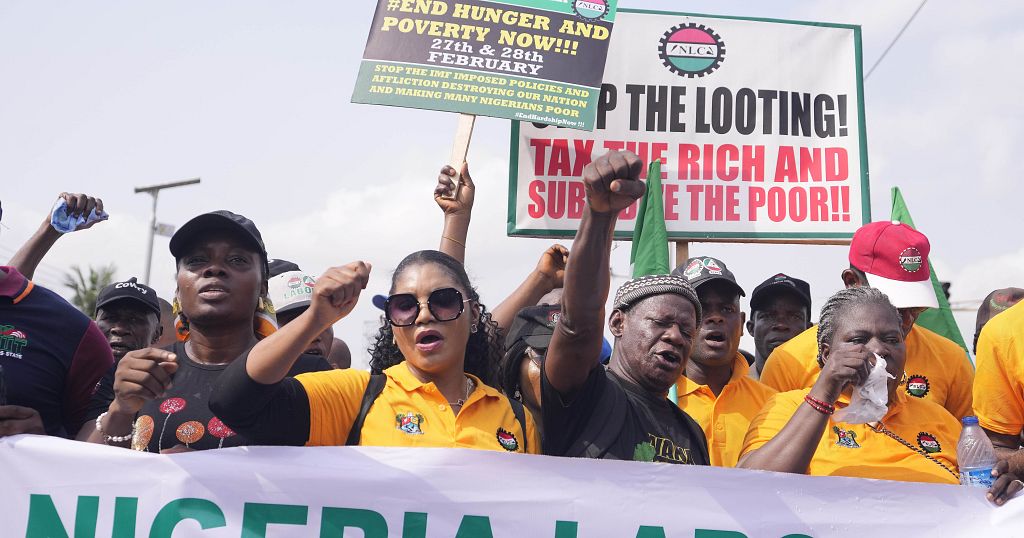
A two-day protest kicked off in Nigeria’s commercial hub of Lagos on Tuesday (Feb. 27) morning, before spreading to other locations nationwide. The Nigeria Labour Congress (NLC), one of the country’s main unions, called on workers to demonstrate their outrage against the mounting hardships and insecurity in the country. The watchword for the protest was “endhardshipnow”.
Nigeria is currently facing one of its worst economic crises in years, with surging inflation and monetary policies pushing the currency to an all-time low against the dollar. Demands included in a letter circulated in the media called for the opening of all food storage silos and equitable distribution of food across the country. The NLC urged the government to abandon World Bank and IMF policies that are believed to be contributing to the hardships faced by Nigerians.
The situation is particularly dire in conflict zones in northern Nigeria, where farming communities are unable to cultivate their lands due to violence, forcing them to flee their homes. Before the protest, President Bola Tinubu was said to be listening and acting to address the needs of Nigerians.
Nigeria, as Africa’s largest economy, relies heavily on imports to meet the daily needs of its vast population, leading to vulnerabilities when external shocks impact the economy. The country’s economy is heavily dependent on crude oil, its largest foreign exchange earner. When crude prices plummeted in 2014, the government used its foreign reserves to stabilize the currency, leading to multiple exchange rates and challenges in maintaining the value of the naira.
After taking office in May, President Tinubu implemented monetary reforms to attract investors and address the economic challenges. These reforms included the end of gas subsidies, unification of exchange rates, and other measures to stabilize the economy. However, the lack of adequate measures to mitigate the impact of reforms led to significant challenges for the population, including a sharp increase in gas prices that affected all sectors of the economy.
The naira’s value has plummeted due to tight control by the Central Bank of Nigeria in the past, forcing businesses and individuals to turn to the black market for dollars. A backlog of accumulated foreign exchange demand has further strained the official market, with limited dollar flows exacerbating the situation. Despite efforts to unify exchange rates and ease access to dollars, the naira continues to weaken against the dollar.
Authorities have taken steps to address the economic crisis, including clearing a portion of the foreign exchange backlog and releasing food items from government reserves to help alleviate hardships. Plans are also in place to establish a commodity board to regulate prices of goods and services and prevent hoarding and speculative practices that contribute to soaring prices.
President Tinubu has directed efforts to combat hoarding and price gouging, with reports of stores being sealed for unfair practices. The government is working to ensure the wide availability of food for all Nigerians and prevent saboteurs from disrupting efforts to address the economic challenges facing the country. Meetings with state governors and other stakeholders are ongoing to find solutions to the crisis and provide relief to the population.
Read Original article on Africa News