By Africa Links 24
Published on 2024-04-05 10:50:06
The Center for Global Development (CGD) has released a report suggesting that the US should consider implementing ‘negative tariffs’ in Africa, which essentially function as targeted manufacturing subsidies. The aim is to breathe new life into the African Growth and Opportunity Act (AGOA), a program established in 2001 that provides duty-free access to the US market for eligible African countries. The CGD estimates that investing $291 million in negative tariffs could generate $1.5 billion in new trade and align with US efforts to support manufacturing in friendly countries, a concept known as “friend-shoring”.
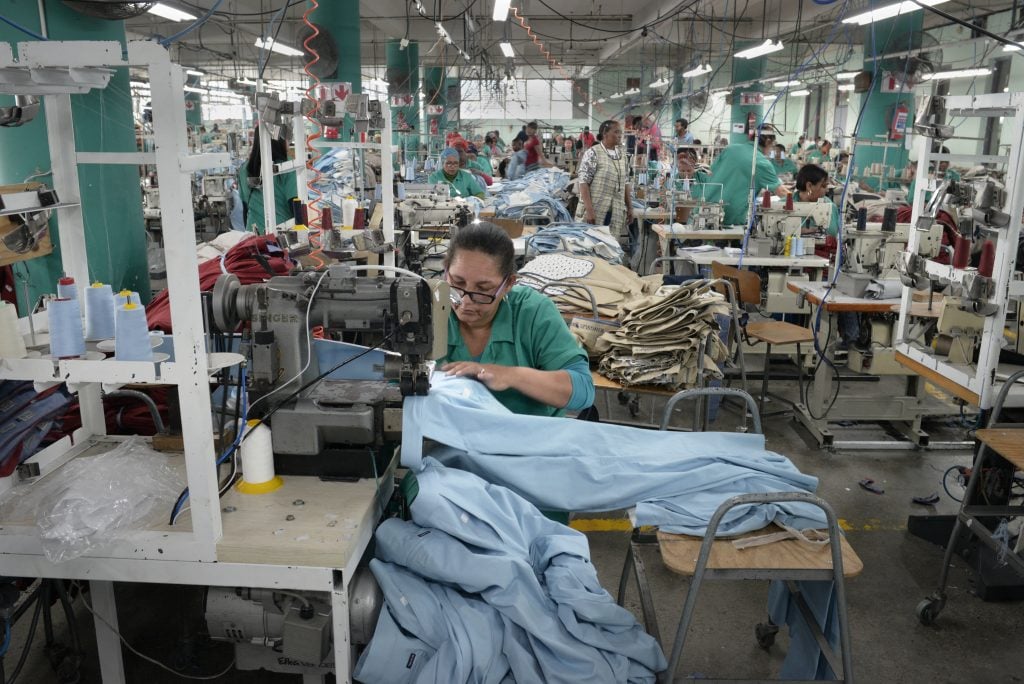
AGOA initially showed promising results within five years of its inception, with African garment exports to the US increasing by 150% and new factories opening in countries like Kenya, Lesotho, and Mauritius. However, the program’s impact began to dwindle as Chinese competition flooded the market following the expiration of global textile treaties in 2005. This led to a decline in garment exports, undoing the progress made in the early years of AGOA.
To address this decline and potentially revitalize AGOA, the authors propose the implementation of negative tariffs starting in 2025. This unconventional approach would provide targeted manufacturing subsidies to boost production in lagging regions and level the playing field against highly competitive Asian manufacturers. The authors estimate that a 10 percentage point negative tariff on apparel products would cost around $291 million, while a 20 percentage point negative tariff would be more costly at approximately $880 million. Despite the expense, they project that the benefits of these negative tariffs could result in billions of dollars in new trade.
The report emphasizes that now is an opportune time for the US to focus on promoting African industrialization, given China’s diminishing market share in apparel exports. However, the authors stress the need for additional support to develop manufacturing supply chains within Africa. They suggest allocating $2.5 billion for venture capital to build these supply chains and encourage private investment in African garment factories. This would involve a role for the US government’s Development Finance Corporation (DFC) in funding manufacturing projects on the continent, shifting its focus from financial services to job creation and industrialization.
In conclusion, the authors assert that simply renewing AGOA in its current state will not be sufficient to drive economic growth in African countries. They advocate for stronger policy tools that prioritize trade over aid and emphasize investment in African manufacturing to boost industrial output. The report calls for a reimagined version of AGOA that promotes sustainable industrialization and economic development in Africa.