Rédaction Africa Links 24 with Uganda Monitor
Published on 2024-03-03 06:30:00
On December 15, 2013, the situation in South Sudan escalated as Uganda People’s Defence Forces (UPDF) soldiers entered the capital city of Juba to confront putschists who had staged what was described as a “creeping coup” by President Salva Kiir. The South Sudan People’s Defence Forces (SSPDF) began to falter under the strain of a political crisis that spread into the barracks, sparking ethnic tensions between Dinka and Nuer soldiers.
The conflict began at Atla Bara barracks on the outskirts of Juba, where soldiers from the presidential guard Tiger Battalion, primarily composed of Dinka and Nuer ethnic groups, engaged in violent clashes. President Kiir ordered for the disarmament of the troops, leading to accusations from Riek Machar’s supporters that Dinka soldiers were being rearmed, particularly those from Aweil and Warrap states, Kiir’s birthplace.
As fighting engulfed Juba, President Kiir addressed the nation on television, declaring a dusk-to-dawn curfew and vowing to bring the attackers to justice. Meanwhile, Riek Machar, the ousted vice president, accused Kiir of orchestrating the conflict to mask his dictatorial tendencies.
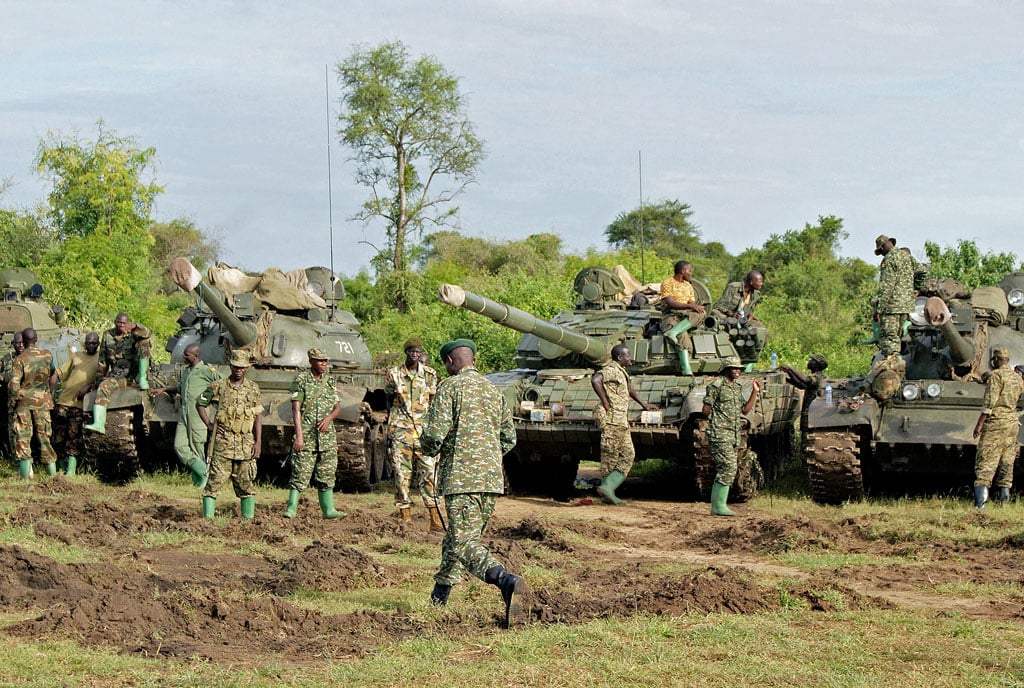
In response to the escalating violence, UPDF forces, including battle-hardened Special Forces commandos trained from Israel and Russia, were deployed to support the South Sudanese government. President Museveni oversaw the training and preparedness of the troops as they geared up for combat against rebels loyal to Riek Machar.
The conflict spread beyond Juba, with Nuer officers initially gaining ground in capturing strategic locations before UPDF forces intervened. Led by Lt Gen Kayanja Muhanga, the UPDF launched ‘Operation Kalongero’ to push back rebel forces and re-establish control in key areas like the airport and the town of Bor.
Despite facing ambushes and fierce fighting, the UPDF managed to regain control of Bor, where they encountered the devastation left behind by previous battles. Gen James Hoth Hai, a Nuer officer initially leading the army, was eventually replaced by a Dinka general, reflecting the ethnic complexities within the military and political hierarchy.
The conflict in South Sudan has been marked by power struggles and shifting allegiances among key figures like Riek Machar and Paul Malong, both of whom have faced accusations and exile at different points in the conflict. The history of the SPLM political bureau rift and the subsequent clashes in Juba underscore the deep-seated divisions within the country.
As South Sudan continues to grapple with internal strife, the legacy of the struggle for independence from Sudan and the ongoing challenges of governance and security highlight the urgent need for lasting peace and reconciliation in the region. The intervention of regional forces like the UPDF serves as a reminder of the complex dynamics at play in the quest for stability in South Sudan.
Read the original article on Uganda Monitor