Rédaction Africa Links 24 with SudanTribune
Published on 2024-03-18 00:46:47
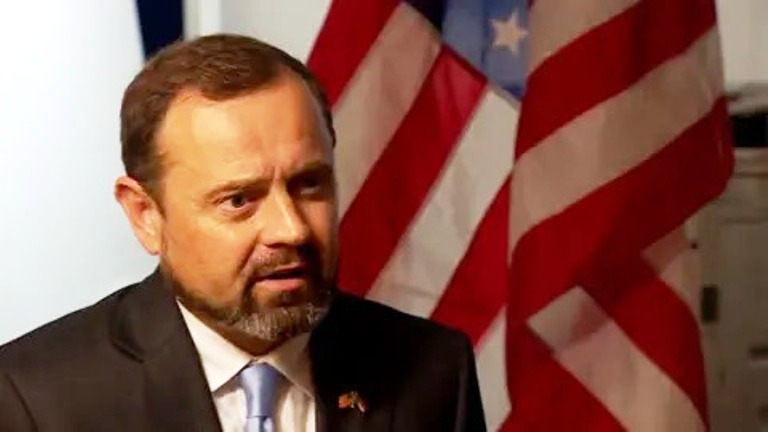
On March 17, 2024, in Khartoum, the U.S. Envoy for Sudan, Tom Perriello, shared his cautious optimism regarding the ongoing conflict in Sudan while urging all parties to act swiftly. In an interview with the BBC, Perriello emphasized that the war’s repercussions extended beyond Sudan, impacting the entire region.
Perriello, the newly appointed envoy, acknowledged the involvement of external actors in exacerbating the conflict and stated that the U.S. was exerting pressure on all parties to become “partners in peace.” He warned of the potential for a protracted conflict with dire consequences, including the resurgence of extremism.
“We are witnessing the reemergence of militants, extreme Islamists in the area, something that the Sudanese people have fought against for decades,” Perriello noted. “This is a problem that could persist for the next 10 to 20 years.”
The envoy highlighted the shared concerns among regional actors, including Gulf countries, about the risk of broader destabilization. He pointed to the increasing presence of extremist elements within the Sudanese Armed Forces (SAF) as a cause for alarm.
“It is evident to anyone paying attention to the situation here,” Perriello emphasized. “The lack of a clear victor from either side in the conflict sends a clear message that we need to bring an end to this.”
He stressed the urgency of finding a solution, emphasizing that the upcoming weeks could be pivotal in determining the trajectory of the conflict.
“These generals have the capability to resolve this issue swiftly,” he remarked. “The region has the capacity to address it. I believe there is a significant amount of political will at this moment to do so, more than I have witnessed in recent months.”
Sudanese military officials had accused the United Arab Emirates (UAE) of supporting paramilitary forces, but the Gulf nation denied these allegations despite multiple reports and statements from international officials.
Perriello acknowledged that some regional leaders might have made different choices if they could foresee the current situation. He expressed hope that the shared goal of avoiding a prolonged conflict could serve as a catalyst for peace.
“Many leaders, looking back, would have comprehended the cost that this conflict would incur,” Perriello stated. “There is a strong desire to end this because of the crisis’s severity and the regional ramifications of a failed state with extremist elements.”
The U.S. Envoy’s message emphasized the critical juncture in the Sudanese conflict. While recognizing the obstacles, Perriello saw an opportunity for peace if all stakeholders prioritized a swift resolution.
A prominent member of the Sudanese army delegation at the Jeddah peace talks disclosed to Sudan Tribune that the U.S. was pressuring his government to involve the UAE in the peace process. However, he firmly rejected this proposition, stating Sudan’s preference for ongoing Saudi-American mediation. The official indicated that the UAE could potentially play a role as a mediator if they ceased their support for the insurgency and took concrete steps to facilitate conflict resolution.
In conclusion, Perriello’s cautious optimism and diplomatic efforts underscore the pressing need for all parties involved to work towards a peaceful resolution in Sudan to prevent further escalation and instability in the region.
Read the original article on Sudan Tribune