Rédaction Africa Links 24 with Hichem ABOUD
Published on 2024-03-04 12:46:00
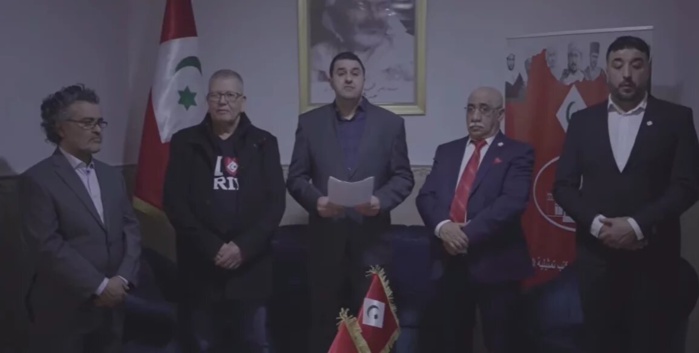
But, what has gotten into the Algerian leaders? Nobody expected to see Algiers hosting the representation of an unknown independence movement to Algerian and international public opinion. The announcement of the recognition of this movement has not yet been made through official channels or by the controlled press. Algerian media have remained silent on the subject. Only the website, which is banned, of Radio M, whose director, El-Kadi Ihsane, has been in prison for over a year, reported the events with a lot of sympathy for this separatist movement.
Could the silence of official and private media conceal differences between the various factions of a regime plagued by deep internal struggles among the different intelligence services who seem to be the real decision-makers behind the scenes?
A few months ago, the foreign security services, led by General Djebbar Mehenna, failed in an attempt to create a separatist movement in Rif by recruiting some young people from the Moroccan diaspora in Europe. The attempt was thought to have been abandoned. Yet here it is resurfacing, but this time with men who claim to be members of the Rif National Party, founded in 2021 in Europe and officially declared on September 16, 2023. A party that claims the independence of the territory located north of Morocco and which has not found, since its creation, any echo either in Rif which it claims to represent, or with the international institutions it had approached.
By hosting a pseudo Moroccan separatist party, the Algerian regime raises many questions. Is it the impending end of the Polisario that is prompting the hawks in Algiers to seek a substitute for this movement? Or is it a desire to push Moroccans to recognize the Kabyle Movement for Self-Determination and thus prepare the ground for an escalation of tension between the two countries to justify declaring a state of emergency and postponing the presidential elections scheduled for December? All hypotheses are worth considering.
It should be noted that alongside this recognition, which implies financial and political support for a Moroccan separatist movement, numerous sources indicate a movement of arms transfer to Niger, carried out by elements of the General Directorate of Documentation and Security without the knowledge of the head of the 6th military region. Also, the MAK had denounced, through its leader Ferhat Mehenni, a few days ago, the burial of weapons in certain regions of Kabylie. These weapons are said to be intended to provoke incidents in Kabylie that would be attributed to the MAK. This suggests preparations to provoke unrest in the country as the presidential elections approach.
If the Algerian regime believes it can replace the Polisario with this Moroccan separatist movement, which has so far shown no popular support for its ideas, it certainly needs to revise its plans. The conditions that allowed the creation of the Polisario in 1975, its arming, financing, and promotion on the international stage are no longer applicable in 2024. Algeria itself has lost the prestige it had in the 1970s, and the beacon that attracted revolutionary movements of the past has dimmed. Today, Algeria is playing a low profile on the international stage to the point where it can’t even respond to a summons of its ambassador in Kinshasa asked to explain the visit of the Chief of Staff of the Algerian Army to Rwanda. A first in international diplomatic history.
It is worth noting that as the Algerian regime takes the dangerous turn of recognizing and supporting an obscure separatist movement in Rif, Morocco was achieving a resounding success with the cooperation council of Gulf countries renewing its recognition of Morocco’s sovereignty over the Sahara and providing unwavering support in defending its territorial integrity.
This means that after this unusual move, Algiers risks angering the Arab countries of the Gulf and even European and African countries. And this is not good for a regime that has so far benefited from the complicit silence of the international community in its repression against the Algerian people. It would open the eyes of this community to help the Algerian people liberate themselves from the yoke of a caste that has led a country immensely rich in natural resources to bankruptcy and chaos.
Read the original article(French) on L’Opinion


