By Africa Links 24
Published on 2024-02-01 13:37:34
The year 2024 marks a significant juncture in Africa’s renewable energy expansion. The potential of solar and wind power to bridge the continent’s energy access gap is undeniable. However, there are multiple challenges that must be addressed to accelerate the speed and scale of renewable energy adoption across Africa.
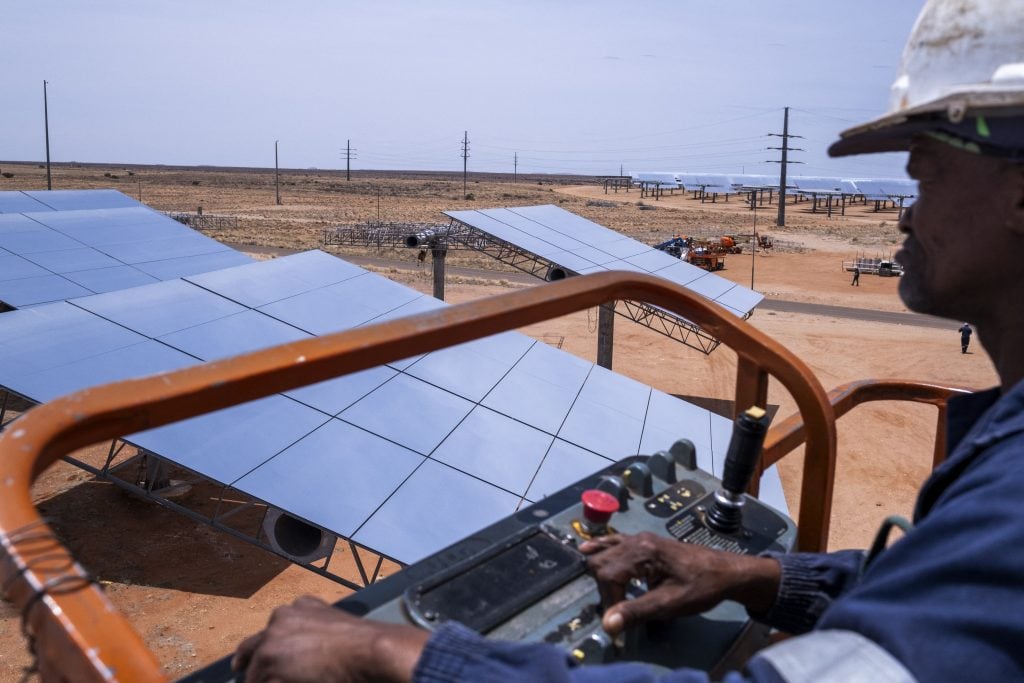
Currently, approximately half of Africa’s population, accounting for around 600 million people, lacks access to electricity, and many others have to endure unreliable or intermittent power supply. Solar energy holds significant promise in addressing these issues, especially given that most of Africa enjoys ideal conditions for solar energy generation. Solar power is well-suited for utility-scale projects as well as smaller schemes designed to serve communities and businesses in remote areas.
Recent international climate conferences have reaffirmed the importance of renewables in Africa. However, the crucial question remains whether donors and development finance institutions (DFIs) will turn their commitments into actionable steps. The International Energy Agency (IEA) estimates that $28 billion in concessional capital is required annually up to 2030 to mobilize $90 billion in private sector investments, representing a significant increase from current levels.
Hydropower has historically played a key role in the power sectors of many African countries. However, solar energy is increasingly emerging as the primary source of new capacity in the region. In 2023, the continent installed a record 3.7 GW of solar power, signaling a year-on-year growth of 19%. Notably, commercial and industrial solar projects accounted for 65% of the new capacity, with South Africa leading the way in adoption.
A lack of reliable utility companies and grids has led African businesses to turn to solar and storage as an alternative, thanks to declining prices of key components. Furthermore, under President Hakainde Hichilema’s reforms, Zambia is attracting private investments to extend electricity access to 60% of its population by 2030. However, certain challenges, such as electricity grid limitations, are hindering the full potential of renewables in many African countries. In Zambia, for instance, ZESCO has set a cap on independent power producer (IPP) projects.
Simultaneously, the importance of upgrading grid infrastructure at national and regional levels, as well as the increased prominence of energy storage projects, are becoming more evident. The potential of mini-grids is also being recognized in areas with historically low rates of access to electricity.
Nevertheless, despite the momentum in the renewable energy sector, there are considerable challenges. High inflation and currency depreciation in key markets contribute to increased costs of importing materials and components needed for renewable energy investment. Additionally, issues related to payment risk and economic challenges hinder the ability of projects to deliver attractive returns for investors.
Despite these obstacles, there is a growing commitment among private capital investors to engage in energy projects. Southern Africa, in particular, has received the largest share of private capital investment in renewables, largely due to significant commitments to projects in the region. As a result, it is expected that private capital investors will continue to show interest in the renewable energy sector.
Overall, the year 2024 holds significant promise for renewables in Africa. However, addressing the barriers to further expansion and effectively translating commitments into action is crucial for the continent to realize the full potential of solar and wind energy. Continued cooperation and investment from donors, development finance institutions, and private investors will be vital for achieving widespread adoption of renewable energy across Africa.