Rédaction Africa Links 24 with SudanTribune
Published on 2024-03-20 00:13:36
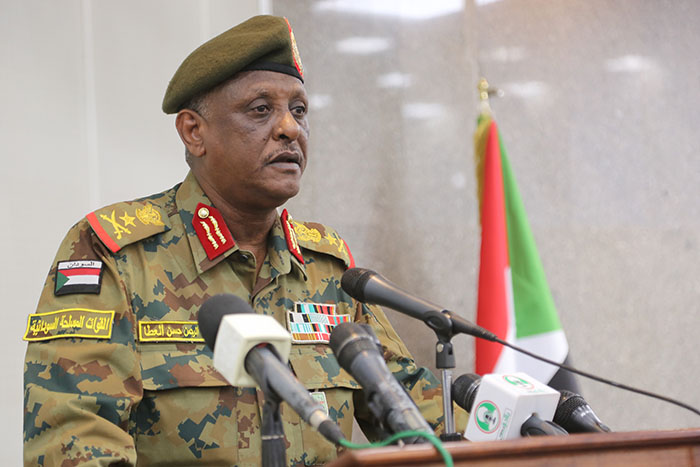
On March 19, 2024, Yasir al-Atta, a key member of Sudan’s ruling council and a high-ranking military official, made a bold move that challenges the current efforts to bring an end to the ongoing war in the region. Al-Atta directed the formation of an alternative governing body, signaling his opposition to compromise with the paramilitary group known as the Rapid Support Forces (RSF) that has been engaged in conflict with the army for almost a year.
As the Army’s Assistant Commander-in-Chief, al-Atta instructed the pro-military Popular Resistance Committees to establish parliaments at both state and national levels. These committees were then tasked with appointing a prime minister and state governors, bypassing any negotiated power-sharing agreements that may have been in place.
In a speech to troops in Sennar, al-Atta outlined his plan for the Popular Resistance Committees to elect representatives at the municipality and state levels, who would then choose the members of the national parliament, also referred to as the “Federal People’s Parliament.” This federal parliament would be responsible for selecting a prime minister and cabinet, who would then be presented to the president and vice president for approval.
Al-Atta further elaborated on his proposed power structure, stating that state parliaments would select governors who, in turn, would recommend their cabinet to the president. He framed this process as a democratic one, questioning whether it was not a system with elected civilians at its core.
However, the Forces of Freedom and Change (FFC) presented a contrasting proposal, advocating for a ceasefire followed by a comprehensive national conference involving all political parties except the former regime’s National Congress Party. This dialogue, according to the FFC, would pave the way for determining Sudan’s future and eventual elections.
The tensions between the military and the FFC have escalated due to accusations that the FFC supports the RSF paramilitary group, further fueling the conflict and prolonging the war. In response, government-controlled states have actively recruited and armed civilians through Popular Resistance Committees to strengthen their forces against the RSF.
Moreover, these states have disbanded existing local structures that were established after the December Revolution, including the Resistance Committees and FFC activities. The Popular Resistance Committees have now been assigned the responsibilities that were previously held by the now-banned committees.
Al-Atta also issued a warning to the FFC, stating that if they reject his proposed plan, international support may be withdrawn, potentially altering the course of events in Sudan. He asserted that the Sudanese people had already made their decision and entrusted the army with its implementation.
In conclusion, the actions and statements made by Yasir al-Atta and the unfolding dynamics between the military, the Popular Resistance Committees, and the FFC are shaping the political landscape in Sudan and influencing the trajectory of the ongoing conflict.
Read the original article on Sudan Tribune