Rédaction Africa Links 24 with SudanTribune
Published on 2024-03-27 00:49:20
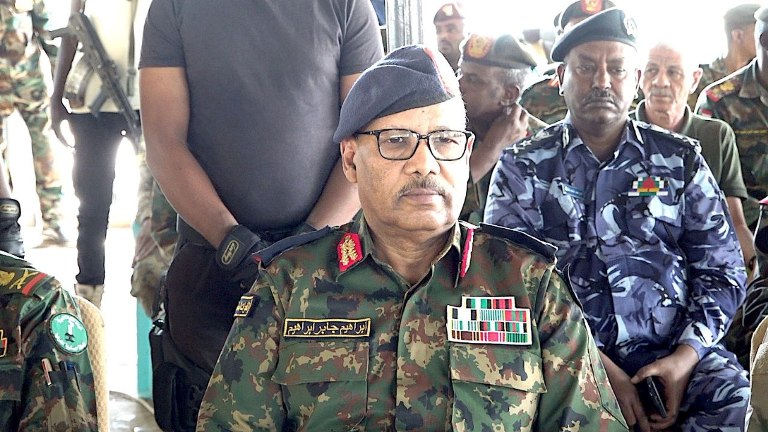
On March 25, 2024, Lieutenant General Ibrahim Jaber of Sudan’s Sovereign Council and the military’s second-in-command made a significant declaration. He stated that the armed forces would not participate in any power-sharing agreement with civilian political groups. This announcement came amidst efforts from both regional and international entities to resolve a year-long conflict and return to a civilian-led transition in Sudan.
Jaber outlined the military’s firm stance, emphasizing their refusal to share power with political parties that were accused of aligning themselves with rebellious paramilitary forces in the country. Speaking to soldiers and officers of the 2nd Infantry Division in Gedaref State, Jaber declared, “The armed forces are no longer party to any agreements with politicians, effective immediately. The armed forces stand as the sole national army of Sudan, and we will accept no alternatives.”
The message to politicians was clear – a non-political transitional period would be established with a government of technocrats. This government would manage the affairs of the Sudanese people and prepare for elections where the people would choose their leadership.
This announcement was consistent with statements made by other military leaders. Assistant Commander Yasir Al-Atta, on March 16th, expressed the military’s reluctance to cede power to civilians before elections. He suggested local and state elections for popular resistance committees to select the Prime Minister and state governors.
Vice President Malik Aqar presented a differing view on March 24th, asserting that a civilian government would be formed once the army defeated the Rapid Support Forces (RSF). Aqar dismissed the involvement of what he labeled as “teenage politicians and activists” who did not represent the people.
In the aftermath of the fall of the Bashir regime in April 2019, Sudanese Army Commander-in-Chief Abdel Fattah al-Burhan had expressed his desire to follow the example set by Field Marshal Abdel-Rahman Siwar al-Dahab. Siwar al-Dahab took power after the downfall of Numeiri in April 1985. He established a transitional military council and appointed a technocratic government to oversee national elections. Power was eventually handed over to an elected government in May 1986.
In conclusion, the political landscape in Sudan remains tumultuous as military leaders and civilian politicians hold differing views on the path forward for the country. The refusal of the armed forces to engage in power-sharing agreements with civilians adds another layer of complexity to the ongoing transition process.
Read the original article on Sudan Tribune