Rédaction Africa Links 24 with Africanews
Published on 2024-02-26 12:08:30
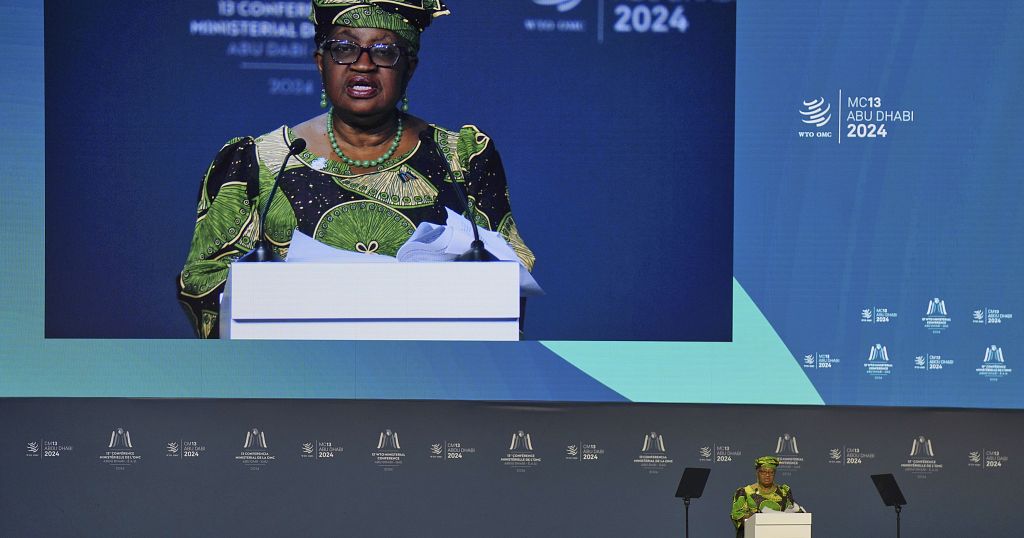
The World Trade Organization (WTO) ministerial conference commenced in Abu Dhabi on February 26, bringing together member nations to address key issues such as the banning of subsidies contributing to overfishing and digital taxation. Against the backdrop of global instability and the uneven recovery from the pandemic, the outcomes of the deliberations by the WTO’s highest decision-making body will be closely monitored.
Director Ngozi Okonjo-Iweala highlighted the challenging task ahead, acknowledging the increased complexity of the current global landscape compared to May 2022. She pointed out the prevalence of uncertainty, instability, and geopolitical tensions, citing conflicts in regions such as the Middle East, Africa, and the Arab world. Noteworthy examples include the displacement of millions of people in Sudan and the ongoing conflict in the Democratic Republic of Congo.
The urgency of the ministerial conference was underscored by WTO’s General Council Chairperson, Athaliah Lesiba, who emphasized the need for collective action amid economic uncertainties and geopolitical tensions. Lesiba stressed the importance of steering the WTO towards effectively addressing contemporary challenges to ensure a sustainable global trading environment.
The impact of war was also highlighted, with higher prices for essential goods and shipping disruptions in vital waterways posing challenges to global trade and economic stability. Elections scheduled in over 50 countries this year are expected to significantly influence the trajectory of the WTO and the global economy, emphasizing the need for proactive and collaborative efforts to navigate the challenges ahead.
The biennial meeting, scheduled to conclude on February 29 in the United Arab Emirates, serves as a critical platform for member nations to engage in dialogue, negotiate agreements, and shape the future of international trade. The outcomes of the conference will have far-reaching implications for global trade policies, economic growth, and cooperation among nations.
In light of the evolving geopolitical landscape and economic uncertainties, the successful outcomes of the WTO ministerial conference will depend on the commitment of member nations to work together towards sustainable solutions. By addressing pressing issues such as overfishing, digital taxation, and conflict resolution, the WTO can play a pivotal role in promoting fair and equitable trade practices that benefit all member nations. As the conference progresses, stakeholders will closely monitor the developments and decisions made by the participating countries, with the hope of fostering a more inclusive and resilient global trading system.
Read Original article on Africa News