Rédaction Africa Links 24 with Peter Fabricius
Published on 2024-03-28 10:43:34
South Africa finds itself walking a tightrope in its relationship with the United States (US), balancing ties with Washington’s adversaries like Russia, Iran, and China while cautiously maintaining economic relations with the US.
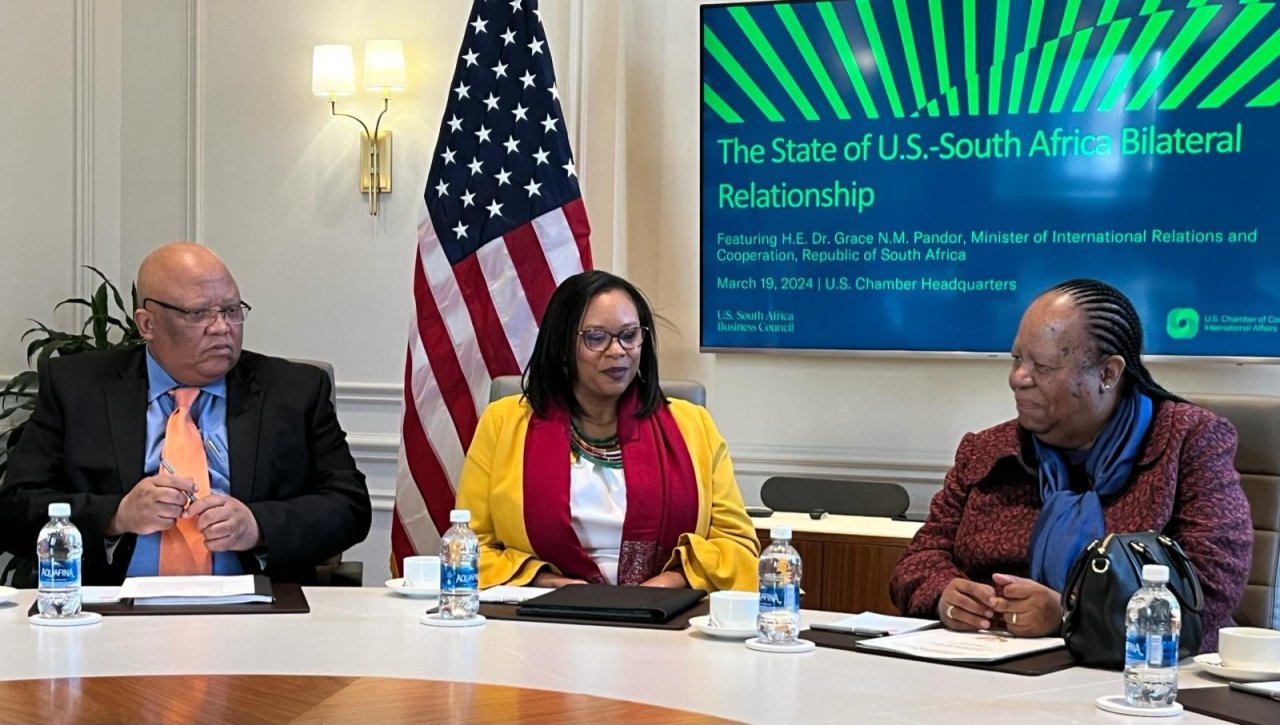
The tensions escalated recently when the US House of Representatives’ Committee on Foreign Affairs passed the US-South Africa Bilateral Relations Review Bill (US-SA Bill). This bill would mandate a comprehensive review of South Africa’s relations with the US. During the committee’s debate on the bill, South Africa’s Minister of International Relations and Cooperation, Naledi Pandor, was in the US urging officials and legislators to reconsider any punitive measures against the country.
This latest bill adds to previous congressional initiatives, such as House Resolution 145 and the African Growth and Opportunity Act (Agoa) Renewal Bill, both of which called for reviews of US-South Africa relations and South Africa’s participation in Agoa, respectively.
The animosity towards South Africa in Congress stems from concerns that the African National Congress’s (ANC) foreign policy actions now favor China, Russia, and Hamas, undermining US national security interests. If passed, the US-SA Bill would require the administration to report on South Africa’s activities that may conflict with US interests, potentially jeopardizing South Africa’s Agoa participation.
South Africa’s alignment with Russia and China has raised red flags in Washington. Issues with Russia include allowing a US-sanctioned Russian cargo ship to dock in South Africa and conducting joint exercises with Russia and China. Concerns with China relate to the establishment of a private flying academy that recruits ex-American and NATO pilots to train Chinese pilots.
Last year, tensions eased after South African President Cyril Ramaphosa led a peace mission to Ukraine and Russia, but they reignited with South Africa’s accusations of genocide against Israel after Hamas attacks in Gaza. This led to the introduction of the US-SA Bill by Republican Congressman John James and Democratic Congressman Jared Moskowitz.
Despite South Africa’s efforts to salvage relations with the US, including Minister Pandor’s visit to the US, perceptions of Iran and actions related to Israel have strained ties. The passage of the US-SA Bill was seen as inevitable, with sponsors unwilling to be swayed by last-minute appeals.
However, the Biden administration still values the relationship with South Africa, recognizing its importance in driving innovation, investment, and trade in Africa. While the US-SA Bill may face challenges in becoming law, the prospect of a Trump administration could bring further uncertainty to US-South Africa relations.
In conclusion, South Africa’s delicate balancing act between maintaining relationships with the US and other global powers while pursuing its foreign policy agenda poses challenges. The outcome of the US-SA Bill and the US presidential election will shape the future dynamics of South Africa’s diplomatic engagements.
Read the original article on Daily Maverick