Rédaction Africa Links 24 with Des Erasmus
Published on 2024-04-12 12:21:04
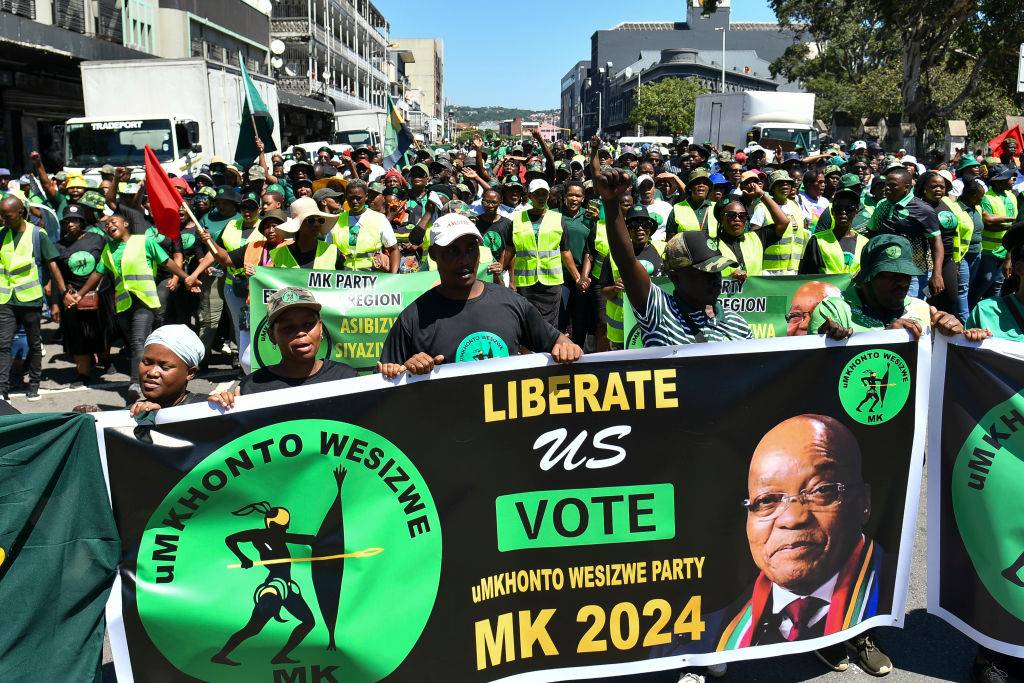
The Electoral Commission of South Africa (IEC) recently made headlines after lodging an urgent application with the constitutional court to appeal the electoral court ruling that former president Jacob Zuma is eligible to stand for parliament under the uMkhonto weSizwe (MK) party banner in the upcoming May general elections, despite his criminal record. This decision was met with mixed reactions from the public and political figures alike.
The electoral court’s ruling came as a surprise to many, as it overruled the IEC’s initial decision to uphold an objection to Zuma’s candidacy due to his 2021 conviction and subsequent 15-month jail term for contempt of court. However, the reasons behind the electoral court’s decision were not immediately provided, leaving many questioning the motives behind the ruling.
In response to the ruling, the IEC stated that their appeal was not meant to interfere with the political landscape but rather to ensure free and fair elections by upholding constitutional provisions relating to elections. They emphasized the importance of clarity and consistency in applying these provisions to all role-players involved in the electoral process.
Former president Zuma, addressing MK party supporters, criticized the IEC’s decision to bar him from contesting in the elections. He raised concerns about bias within the organization, citing the lack of action taken against President Cyril Ramaphosa over allegations regarding the theft of foreign currency at his Phala Phala game farm in Limpopo. This incident had sparked controversy and raised questions about the president’s financial dealings.
Zuma’s legal team argued that the remission of his jail sentence in August 2023 should allow him to run for parliament, as it effectively erased the criminal record that had previously disqualified him. They highlighted the importance of upholding Zuma’s rights and ensuring that MK party supporters have the opportunity to vote for their preferred candidate.
On the other hand, the IEC’s lawyer maintained that Zuma’s conviction and sentence remained intact despite the remission, disqualifying him from running for parliament. They emphasized the need to adhere to the rule of law and uphold the integrity of the electoral process by ensuring that only eligible candidates are allowed to participate.
The controversy surrounding Zuma’s eligibility to stand for parliament has sparked a heated debate in South Africa, with opposing sides presenting compelling arguments in support of their respective positions. As the constitutional court deliberates on the matter, the outcome of this case could have significant implications for the upcoming general elections and the country’s political landscape as a whole.
Read the original article on Mail & Guardian