Rédaction Africa Links 24 with Africanews
Published on 2024-02-03 16:04:48
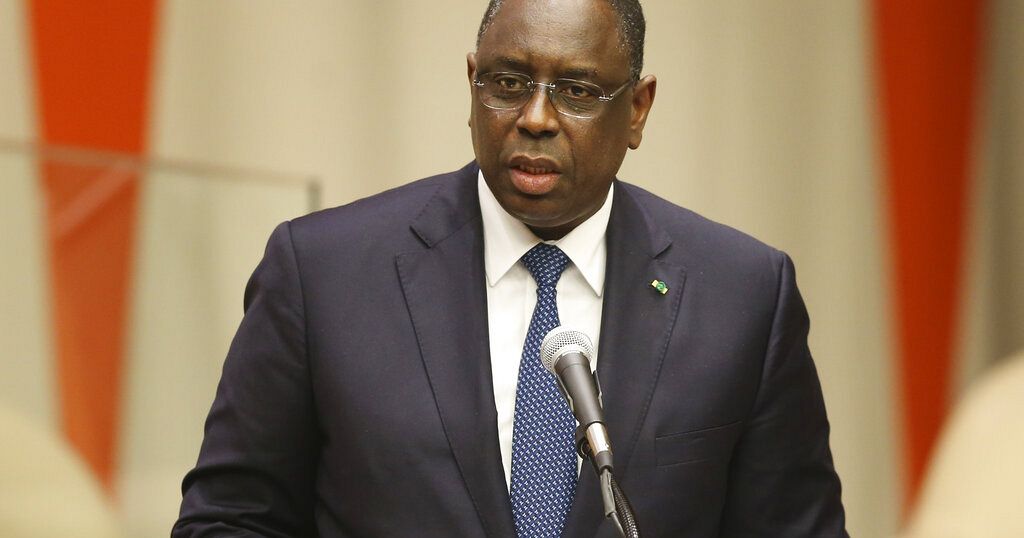
In an unexpected turn of events, President Macky Sall of Senegal announced the indefinite postponement of the presidential election, which was originally scheduled for February 25, in a national address. This decision was made shortly before the start of the election campaign and came after the establishment of a parliamentary commission to investigate the integrity of two judges from the Constitutional Council.
President Sall revealed that he had rescinded his previous decree, which had set the election for February 25, due to concerns about the integrity of the electoral process. This move is unprecedented in Senegal and marks the first direct universal suffrage presidential election delay since 1963.
During his address, President Sall expressed his commitment to initiating an open national dialogue in order to ensure conditions for a free, transparent, and inclusive election, although he did not specify a new date for the election to take place.
Having been initially elected in 2012 for a seven-year term and re-elected in 2019 for five years, President Sall had earlier stated that he would not seek another term, and had designated Prime Minister Amadou Ba as his successor. However, the exclusion of several candidates from the election, including opposition figures Ousmane Sonko and Karim Wade by the Constitutional Council, has sparked controversy.
As a result of the postponement, the political landscape in Senegal is now uncertain, and questions have been raised regarding the country’s electoral process and the challenges faced by the opposition candidates who were disqualified from running in the election.
The postponement of the presidential election in Senegal has significant implications for the country’s political future. The decision by President Sall to indefinitely delay the election has been met with both support and criticism, with some viewing it as a necessary step to address concerns about the electoral process, while others see it as a way to maintain the current administration’s hold on power.
The establishment of a parliamentary commission to investigate the integrity of the judges from the Constitutional Council reflects a commitment to upholding the principles of democracy and ensuring a fair and transparent electoral process. However, the exclusion of opposition candidates from the election has raised questions about the fairness and inclusivity of the electoral system.
The postponement also raises questions about the role of the opposition in Senegalese politics and their ability to participate in the democratic process. With key opposition figures being excluded from the election, there are concerns about the impact on political pluralism and the ability of diverse voices to contribute to the country’s governance.
Overall, the indefinite postponement of the presidential election in Senegal has brought to light important issues regarding the integrity of the electoral process and the challenges faced by opposition candidates. It also underscores the critical role of the government, electoral institutions, and civil society in ensuring free, fair, and inclusive elections for the benefit of all Senegalese citizens.
Read Original article on Africa News