Rédaction Africa Links 24 with pierre Dieme
Published on 2024-03-01 10:19:42
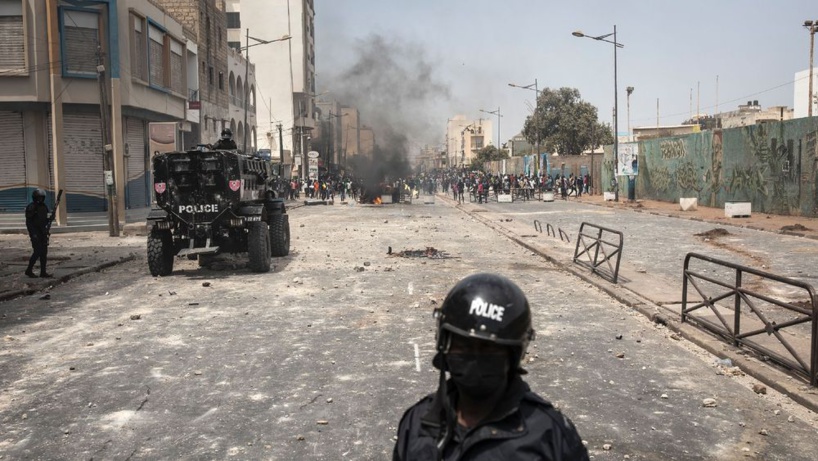
The political use of amnesty clouds any prospect of achieving a collective future marked by serenity and appeasement. Such a republican pact seems odious and unspeakable to us. Bringing together professors and researchers from all disciplines, the Collective of Academics for Democracy (CUD) warns of the dangers of the general amnesty law announced by the President, Macky Sall. For these intellectuals, erasing crimes of the past would amount to disrespecting the memory of the victims and weakening the foundations of the rule of law. Refusing forced oblivion is the only way to respect republican principles, they state in the manifesto below. The possible validation by parliamentarians of a bill aimed at granting amnesty for offenses related to political demonstrations questions our relationship with history. Such an amnesty would make it impossible to access our Memory, which is an essential intangible heritage for the emergence of a national community.
The political use of amnesty constitutes a defiance of Time in that it burns a people’s archives and, consequently, clouds any prospect of achieving a collective future marked by serenity and appeasement. A human community knowingly assimilating its gruesome past to an inaccessible black hole to its contemporaries, represents its social order as a field of particles where the different elements are connected to each other only by relations of calculations, opportunities, strategies… Such a republican pact seems odious and unspeakable to us.
From an anthropological point of view, the programmed existence of this amnesty law questions our relationship with Reality. Since March 2021, our Senegalese society has been in a bestial, animalistic temporality; our most monstrous part has taken over our sometimes exaggerated benevolence and empathy. The political manipulation of amnesty constitutes a bad taboo in that it prohibits a society from dialoguing with its own demons. Every human community generates monsters, but ignoring them contributes to making lies an essential element of our symbolic order. The amnesty law related to offenses committed since 2021 prohibits access to the past and, in doing so, obstructs access to the truth by questioning its founding functions. This misuse of the institution of forgetfulness to ensure the impunity of high state officials is a threat to the republican narrative based on an idea of virtue and justice.
Analyzing from a legal philosophy perspective, the amnesty bill weakens the vision of admitting the nation as a community bound by a legal order. If all vices and intricacies could be erased by laws, they would lose their sanctity as well as their rationality. Focusing on criminal matters, amnesty concerns public morality and particularly the essential values of our democratic society. The respect that should inspire the preservation of human dignity is at odds with a possible legitimization of arbitrary arrests, acts of torture, and barbarism towards citizens. What forms of legal solidarity do we maintain with our fellow citizens who are victims of murders, physical and psychological injuries, unjustified imprisonments, destruction of their property…?
One of the functions of criminal law being the rational delimitation of the sphere of freedom by identifying taboos, such a discipline repairs vulnerabilities by punishing deviants and transgressors. This promise of justice assigned to criminal matters is one of the guarantors of the social contract. An amnesty law with inherently political overtones makes public morality permeable and, consequently, makes vice and virtue fungible. It is because President Macky Sall’s amnesty is an invitation to amnesia that its true nature is nothing but a license to kill. Such a purpose should not prosper. The adoption of the bill on amnesty should necessarily lead to a referral to the Constitutional Council, which could invalidate the text based on fundamental principles of criminal law such as the principle of necessity. Moreover, it should be recalled that the fight against impunity has led to limitations ratione materiae of amnesty regarding supranational crimes. The Committee against Torture recommended excluding torture from the scope of amnesty laws (report on Azerbaijan, A/55/44, §.15). Case law increasingly points to a decrease in amnesties for international crimes. This can be seen in the Ely Ould DHA case, which led to the questioning of an amnesty law. Furthermore, even in the event of constitutional validation, no provision or principle would oppose an abrogation of the amnesty after the election of a new president keen on restoring orthodoxy in the implementation of the principles guiding criminal responsibility.
The proponents of this law should not ignore that “Nothing can make what has been not have been.” In short, if this bill were to come into effect, the deputies are urged to recall the famous verse from the poem entitled “Breaths” by Birago Diop, “the dead are not dead.”
Read the original article(French) on Dakar Matin