Rédaction Africa Links 24 with pierre Dieme
Published on 2024-03-05 21:22:58
A bill of amnesty submitted by Senegalese President Macky Sall to the members of the National Assembly on March 4, 2024, opens the door to impunity for serious crimes, Human Rights Watch said in a statement on Tuesday.
“The bill, if adopted, could effectively grant immunity to those responsible for serious human rights violations,” said Ilaria Allegrozzi, Senior Researcher on the Sahel at Human Rights Watch. “Any amnesty that strengthens impunity by exempting government officials and security forces responsible for serious human rights violations is incompatible with Senegal’s national and international obligations.”
The draft text specifies that the amnesty covers “all acts that could be considered criminal offenses committed between February 1, 2021, and February 25, 2024, both in Senegal and abroad, related to protests or with political motivations, including those done by any communication media, whether the perpetrators have been tried or not.”
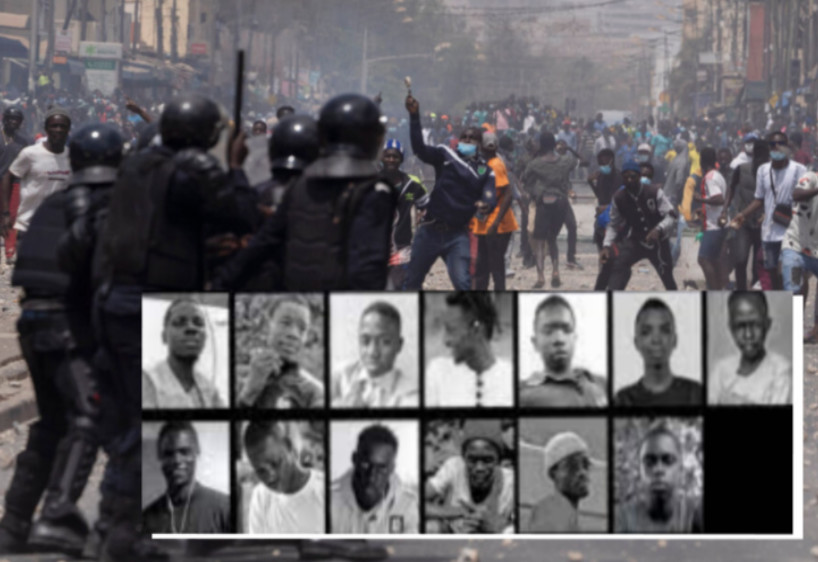
Human Rights Watch has already documented the excessive use of force by Senegalese security forces, including live ammunition and the inappropriate use of tear gas, to disperse protesters in March 2021, June 2023, and February 2024. At least 40 people have been killed in violent clashes since March 2021, with no one being held accountable. According to the opposition and civil society, up to 1,000 opposition members, including party leaders, presidential candidates, journalists, and activists, were arrested nationwide between March 2021 and January 2023. Since the announcement of the election postponement, at least 344 of them have been released, according to Aïssata Tall Sall, Senegal’s Justice Minister.
Human Rights Watch has also documented the lack of respect for the right to a fair trial of those arrested in opposition-led protests since 2021, including fabricated charges, lack of evidence to support the accusations, prolonged pretrial detention, and mistreatment and torture in detention or during arrest.
“There is strong evidence that the vast majority of those arrested in opposition-led protests were arbitrarily arrested and the charges against them were politically motivated. Ending legal proceedings against these individuals is a positive step,” said a Senegalese human rights defender, a lawyer specializing in human rights. “However, granting a general amnesty, including to some members of the defense and security forces credibly accused of deadly violence during protests, is a betrayal of the victims and compromises their access to justice.”
The amnesty bill has been criticized by both the opposition and civil society groups. Several victims of violence since 2021 have also expressed serious concerns to Human Rights Watch that the law could hinder their chances of establishing accountability for the violence they have endured. “I am deeply disappointed by this bill,” said a 28-year-old opponent arrested on June 1, 2023, in Mbour, Thiès region. “It is an attempt to whitewash crimes committed by security forces, including the torture I unfortunately suffered.”
The amnesty bill comes as Senegal faces a major political crisis following President Sall’s announcement of the postponement of the presidential election scheduled for February 25. A decision that has been denounced as a “constitutional coup” by opposition and civil society groups, sparking deadly violence across the country.
On February 6, the Senegalese Parliament voted to postpone the presidential elections to December 15 after a chaotic session of the National Assembly during which security forces removed opposition legislators. On February 15, the Senegal Constitutional Council overturned this delay and called for the vote to be held “as soon as possible.” Sall then announced a “national dialogue,” which the opposition rejected and demanded that the elections take place before June 2. Senegalese have been waiting for a new election date ever since. Sall’s term officially ends on April 2.
Senegal is a party to major international treaties, including the Convention against Torture and the Rome Statute of the International Criminal Court, which require fair prosecution of those suspected of serious crimes. Amnesty for serious crimes would also go against the founding principles of the African Union and the African Charter on Human and Peoples’ Rights.
“President Sall has stated that amnesty will be granted in the spirit of national reconciliation,” Allegrozzi said. “But general reconciliation efforts should not be a means to evade responsibility.”
-Fana CiSSE
Read the original article(French) on Dakar Matin