By Rédaction Africa Links 24 with Timothy Obiezu
Published on 2024-01-17 19:21:55
Human rights organizations, along with religious groups, are urging the U.S. government to designate Nigeria as a country of concern for religious freedom. This call comes in the aftermath of a series of attacks on Christmas Eve in central Nigeria that resulted in the deaths of nearly 200 people. However, there are critics who argue that previous designations by the U.S. have not effectively addressed tensions between Nigeria’s Muslim and Christian communities.
The recent push to designate Nigeria as a country violating religious freedom comes following U.S. Secretary of State Antony Blinken’s announcement of a plan to designate other countries, such as Iran and Russia, for alleged violations.
A coalition of about 20 organizations, including Advancing American Freedom, Alliance Defending Freedom, and the Hudson Institute, have signed a notice urging U.S authorities to include Nigeria on the list of countries of concern for religious freedom violations.
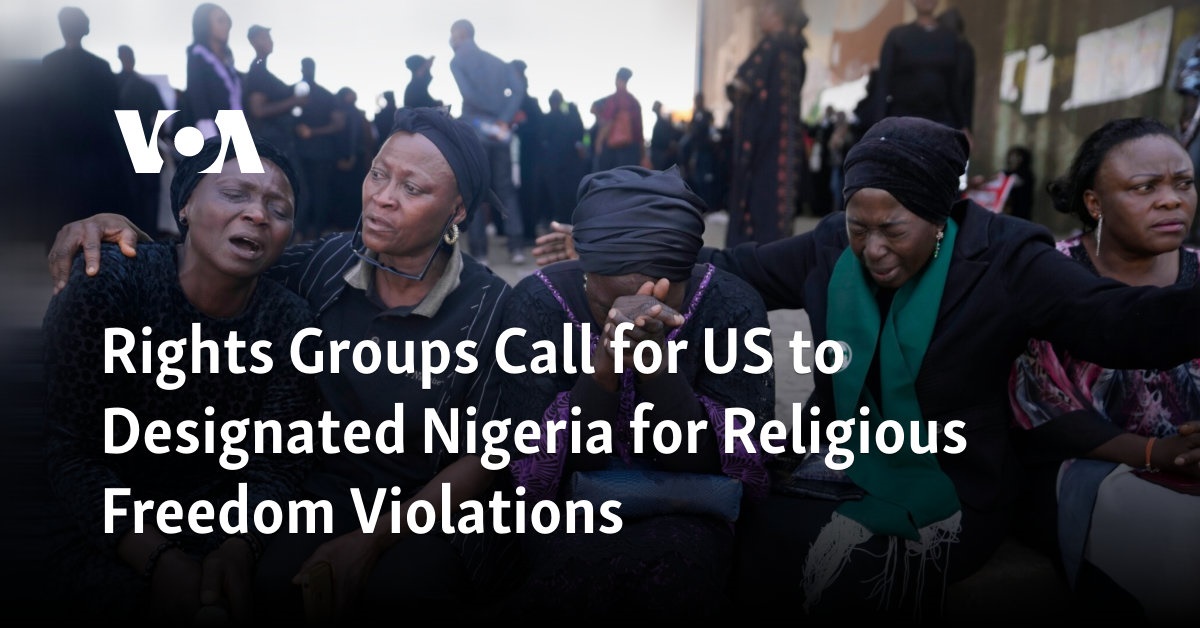
The call for designation comes in response to the brutal Christmas Eve attacks in predominantly Christian communities in central Nigeria. Armed groups attacked residents in Barkin Ladi and Bokkos districts in Plateau state, resulting in the deaths of 195 people and leaving hundreds more injured. Thousands of people were also displaced as a result of the attacks. The petitioners also referenced a report by the International Society for Civil Liberties and Rule of Law, which documented over 52,000 Christians killed in Nigeria’s north over the past 14 years.
However, critics have expressed skepticism about the effectiveness of previous U.S. designations, with Lakin Akintola, the director at Muslim Rights Concern, stating that the actions of the United States are no longer considered important and that the U.S. has disappointed the world.
In response to the Plateau attacks, Luminous Jannamike, a spokesperson for the Christian Association of Nigeria (CAN), emphasized that the crisis in Plateau is a mix of ethnic, religious, and socioeconomic factors. Jannamike stressed the importance of prioritizing the security of all citizens, regardless of their religious or ethnic backgrounds.
Despite the potential economic implications of a U.S. designation for Nigeria, including loan denials and barriers to exports and trade, Jannamike underscored the need for improved security and governance in the country.
Nigeria has the largest Christian population of any country in Africa, with more than 80 million adherents, according to Pew Research. Human rights groups will be closely monitoring how the situation unfolds in the future.
Read the original article on VOA