By Rédaction Africa Links 24 with Africanews
Published on 2024-01-18 16:54:08
The displacement crisis in Africa has experienced a significant increase, with the number of forcibly displaced persons (FDPs) rising from 36 million in 2021 to 45 million in 2023. This crisis not only presents immediate humanitarian concerns but also exerts a profound economic impact on regions already dealing with instability.
The conflict in Sudan serves as a clear example, with predictions of a 12% economic decline. This not only affects Sudan but also has far-reaching consequences on neighboring nations and disrupts global commodity markets. The interruption of trade between Sudan and Egypt, reduced Ugandan coffee imports, and the disruption of air routes for Nigerian carriers highlight the widespread economic repercussions.
Amidst this crisis, there is a growing recognition of the crucial role the private sector can play in offering sustainable solutions. The private sector’s involvement in areas hosting refugees or Internally Displaced Persons (IDPs) is crucial.
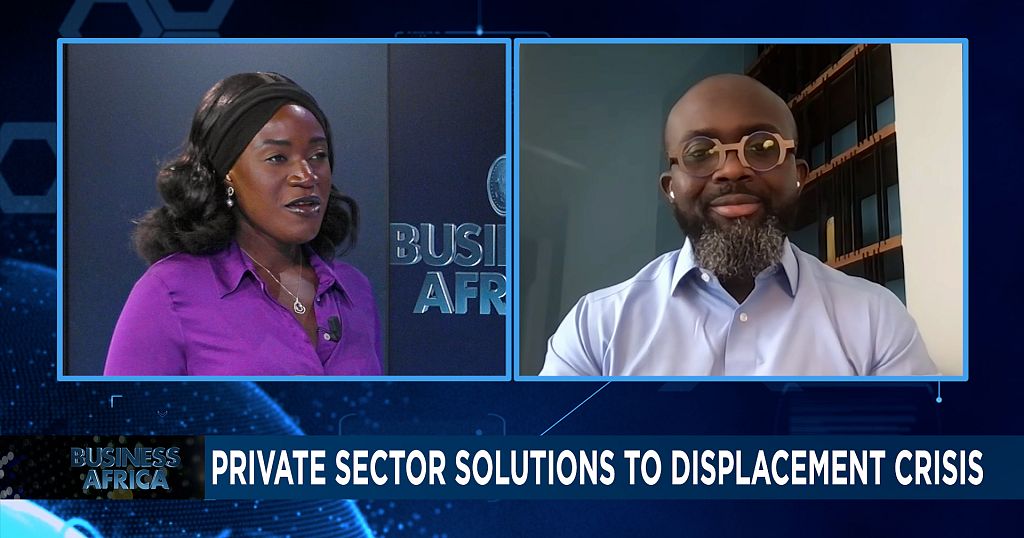
Isaac Kwaku Fokuo, the co-founder of the Amahoro coalition, emphasized the economic impact of the displacement crisis in Africa and the role the private sector can play in mitigating these challenges. He pointed out the substantial economic losses on the continent, often overlooked in discussions that tend to focus on the humanitarian aspect rather than the economic impact. He highlighted the substantial 12% decrease in the economy of Sudan in 2023 and the ripple effect on its neighboring nations.
Fokuo also emphasized the vital role of the private sector in addressing the crisis, citing its investment in economic activity rather than charity, contribution to the infrastructure of conflict-affected countries, and its moral imperative in ensuring collective progress for the continent.
Collaborations with the private sector have been seen in addressing the displacement crisis, but sustainability remains a challenge. More needs to be done differently to ensure long-term solutions.
In other African news, the Africa Cup of Nations (AFCON) 2024 is shaping up to be a significant economic catalyst for the Ivory Coast, and Angola has decided to exit OPEC due to disagreements over oil production quotas, leading to geopolitical ripples and concerns about its impact on the international oil landscape.