Rédaction Africa Links 24 with De Wet Swanepoel, Professor in Audiology in the Department of Speech-Language Pathology and Audiology, University of Pretoria
Published on 2024-04-17 13:22:48
In rural Kenya, 64-year-old John Kamau, who has been isolated from the community due to hearing loss, is about to experience a transformation. A community health worker visits him with a smartphone, opening the door to reconnecting with the world through digital health tools.
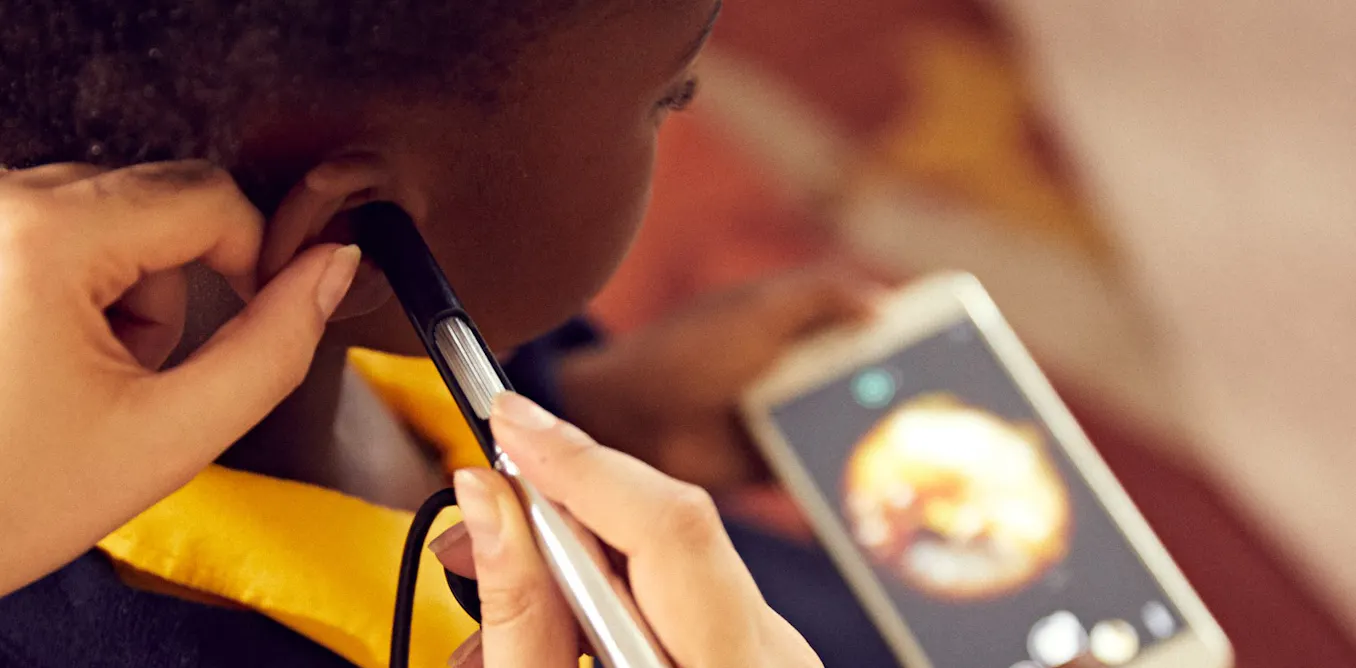
The smartphone carries a revolutionary hearing test app that conducts precise assessments, followed by the immediate provision of affordable, high-quality hearing aids tailored to Kamau’s specific needs and programmed using Bluetooth. With these aids, Kamau can now participate in everyday conversations and listen to his grandchildren’s laughter.
Kamau is just one example of many whose lives are being changed by a combination of high-tech solutions and community-based care. In Africa, an estimated 136 million people are currently living with hearing loss, a number projected to increase to 337 million by 2050. This silent epidemic not only has social ramifications but also contributes to a global cost of untreated hearing loss amounting to US$980 billion annually.
The situation in Africa is exacerbated by a severe shortage of audiologists, with fewer than one audiologist available for every million people. This, coupled with the high costs of hearing aids in low- to middle-income countries, means that only 2% of those in need of hearing aids in Africa actually use them.
To address this issue, innovative approaches are being developed, such as digital devices for testing hearing loss across Africa. Community-based initiatives in Kenya and South Africa involve training local community members to conduct screenings, especially in early childhood development centers where hearing loss can significantly impact a child’s learning abilities.
Additionally, mobile health training programs are being implemented to educate teachers and community workers on identifying hearing problems early on and providing the necessary interventions. Apps like hearWHO have been created to enable easy screening for hearing loss among adults, reaching millions of people worldwide.
Collaborations with organizations like the Clinton Health Access Initiative are also expanding access to screening technology and hearing aids in low-income communities across multiple countries in Africa and Asia. As the fight against hearing loss continues, integrating these innovative approaches into existing healthcare systems is crucial for widespread impact and improved outcomes.


