Rédaction Africa Links 24 with BBC
Published on 2024-02-20 16:00:33
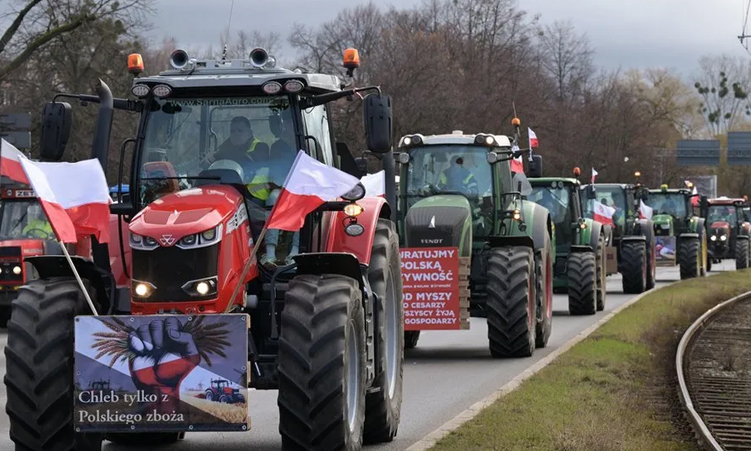
The ongoing dispute between Polish farmers and the influx of cheap Ukrainian grain flooding the market and EU regulations on pesticide and fertilizer usage has led to widespread protests and blockades in Poland. Tractors adorned with Polish flags blocked motorways and major junctions in nearly 200 locations, while border crossings with Ukraine have also been targeted by the protesters. The demonstrations have elicited a response from Ukrainian President Volodymyr Zelensky, who criticized the protests as a display of political animosity towards Ukraine rather than a genuine concern over grain imports.
Notably, video footage shared on social media depicted grain being intentionally spilled from a goods wagon onto a train track at the Medyka crossing, prompting condemnation from Ukraine’s ambassador to Poland, Vasyl Zvarych. Speaking out against the action, he emphasized the need for decisive police action and denounced it as a disrespectful act toward Ukrainian farmers, particularly in the context of Russian aggression.
The aftermath of the spilled grain incident saw Ukrainian lorry drivers threatening to retaliate by blockading Polish drivers at three crossings on their side of the border, resulting in massive queues of lorries at various border crossings. These queues have been a recurring issue, with customs clearance times at one crossing now taking over two weeks. As such, the Polish protest organizers are seeking an import ban on Ukrainian agricultural products and the removal of restrictions on the use of fertilizers and pesticides under the EU Green Deal.
The EU’s decision to grant Ukraine tariff-free access to its markets following Russia’s invasion led to Polish dealers purchasing the influx of cheap Ukrainian grain. However, constraints within Poland’s port infrastructure meant that a significant portion of the grain remained in the country rather than being exported to other nations, resulting in record-high levels of grain stockpiles in Poland. As a response, the European Commission imposed an import ban on Ukrainian grain to five neighboring countries in May, with Poland unilaterally introducing its ban on certain grains, flour, and animal feed in September.
The new pro-EU government in Poland has expressed support for the farmers’ demands and is advocating for Brussels to negotiate a compromise over imports with Ukraine. Additionally, the EU announced plans to introduce a “safeguard mechanism” in January that would enable the reimposition of emergency tariffs on Ukraine if an influx of imports posed a threat to market stability.
The implications of these protests and blockades extend beyond the local dispute, underscoring the complex dynamics between the EU, Poland, and Ukraine. As the situation continues to unfold, it remains to be seen how the involved parties will address the multifaceted challenges at hand.
Read the original article on The Namibian