Rédaction Africa Links 24 with Donald Matthys
Published on 2024-04-10 18:33:59
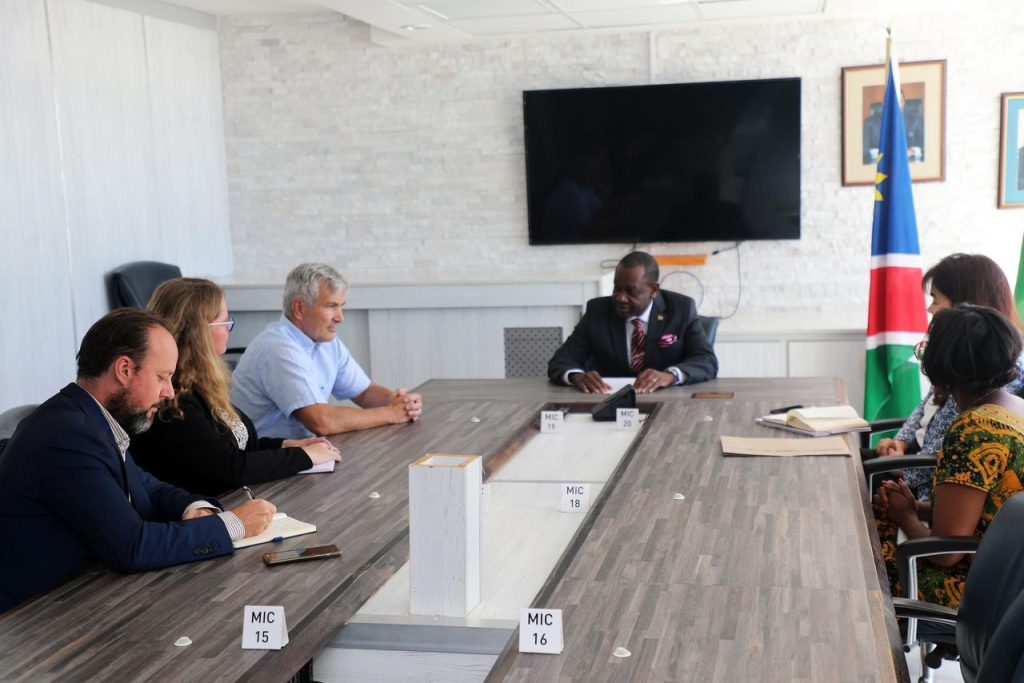
International relations minister Peya Mushelenga made a decision to summon envoys from the European Union, Germany, France, Spain, and Portugal after learning about their meeting with the opposition party Independent Patriots for Change (IPC). The meeting, which took place on Tuesday, involved discussions on various matters, including the upcoming elections. Mushelenga emphasized that while the government is not opposed to diplomatic missions engaging with different political parties, discussions on matters solely within the purview of the sending and host governments, especially with individuals not representing the Namibian government, are seen as inconsistent with diplomatic norms and tantamount to interference in domestic affairs.
In a statement issued on Wednesday morning, the IPC announced that their leader, Panduleni Itula, and senior party members were invited to a lunch at the residence of the German ambassador to Namibia, Thorsten Hutter, along with ambassadors from Portugal, Spain, France, and the European Union. The discussions held during the meeting revolved around the upcoming elections and IPC’s strategies for addressing grievances among liberation struggle fighters.
IPC spokesperson, Immanuel Nashinge, highlighted in the statement that Swapo’s dominance had suffered a significant setback. He mentioned that in their opinion, Swapo’s hegemony had received a massive blow and that change was the cry of all Namibians. Nashinge speculated that the diplomatic corps were ensuring they obtained a broad view of the political arena by carefully assessing the situation.
The government’s response to the meeting was captured in a statement, where it was mentioned that Namibia, despite being a small state, had the equality of sovereignty like larger states. The statement emphasized that discussions on matters solely within the purview of the sending and host governments, especially with individuals not representing the Namibian government, were viewed as interference in domestic affairs and inconsistent with diplomatic norms.
It is evident that there is tension between the government and the diplomatic missions involved in the meeting with the IPC. The government’s stance on the matter reflects its concern over foreign interference in domestic affairs. This incident brings to light the complexities of international relations and the delicate balance that needs to be maintained between engaging with various political parties and respecting the sovereignty of individual states.
In conclusion, the meeting between the envoys from the European Union, Germany, France, Spain, Portugal, and the IPC has sparked controversy and raised questions about the boundaries of diplomatic engagement. As the situation unfolds, it will be interesting to see how the different parties involved navigate this delicate diplomatic situation.
Read the original article on The Namibian