Rédaction Africa Links 24 with Ester Mbathera
Published on 2024-02-19 17:00:00
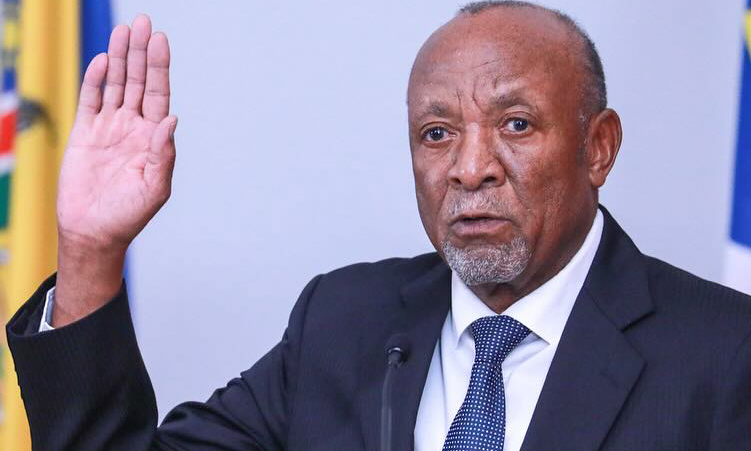
Following the death of President Hage Geingob on 4 February, Nangolo Mbumba was sworn in as president, sparking a debate over whether he is the acting president or the fourth president of Namibia. The issue has ignited discussions on social media, raising questions about the legality of Mbumba’s presidency. The controversy stems from a constitutional amendment that created the position of vice president ten years ago. The relevant laws in this regard are found in articles 28, 29, 30, 31, 32, and 34 of the Namibian Constitution. Lawyer Kadhila Amoomo contends that Mbumba was lawfully sworn in as the fourth president of the country.
Amoomo made a comparative analysis of the treatment of acting presidents in the South African and Zambian constitutions. According to him, an ‘acting’ president is a substantive president, as evidenced by the similar events in South Africa and Zambia. Similarly, Lawer Benhard Tjatjara posited that despite the interpretations surrounding the Constitution, the fact that Mbumba took the oath will prevail.
Lawyer Mbanga Siyomunji asserts that Mbumba is the president, not acting, as he was sworn in as the president and is the commander in chief of the armed forces. Similarly, Former Walvis Bay constituency councillor Knowledge Ipinge argues that Mbumba assumed powers similar to those of the president-elect and effectively became the fourth president by default.
Political commentator Stephanus Pombili added that Mbumba’s assumption of the presidency is in adherence to the constitutional provisions. On the other hand, United Democratic Front (UDF) spokesperson Mabasen //Narib expressed skepticism about the determination of the unexpired period of the preceding president’s term as under one year.
The debate surrounding Mbumba’s presidency has raised complex legal and constitutional questions, with each legal expert offering their interpretation of the constitutional provisions. The debates on social media have only served to amplify the complexity of the issue. While opinions are divided on the matter, the implications are far-reaching and could potentially impact the governance of Namibia in the coming years.
In conclusion, the comments from legal experts and political voices suggest that the issue is subject to interpretation, and the controversy is likely to persist in the near future. The differing opinions have further complicated the matter, and the interpretation of constitutional provisions will likely play a significant role in shaping the discourse around Mbumba’s presidency.
Read the original article on The Namibian