Rédaction Africa Links 24 with Eliaser Ndeyanale
Published on 2024-03-17 06:00:00
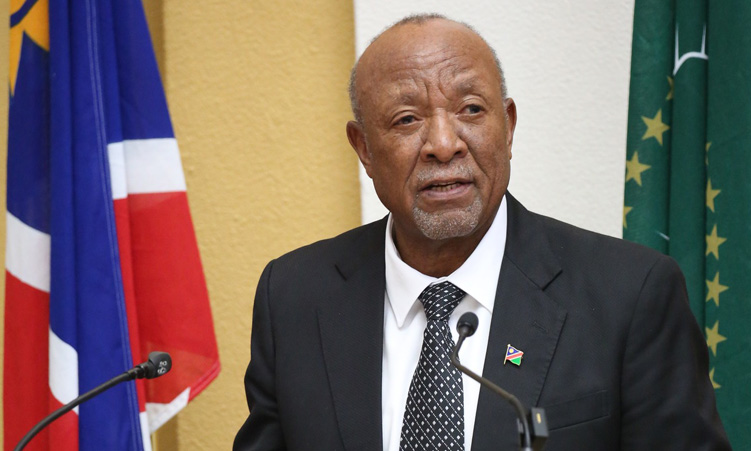
President Nangolo Mbumba stated yesterday that he would be willing to testify in the Fishrot fraud and corruption trial if requested by the court. This announcement came in response to Popular Democratic Movement (PDM) leader McHenry Venaani’s question in parliament about Mbumba’s willingness to testify as the former Swapo secretary general. Mbumba and his successor, Sophia Shaningwa, are among the state witnesses listed in the Fishrot case.
During the parliamentary session, Mbumba made it clear that anyone with evidence of his involvement in questionable dealings could take legal action against him. He emphasized that as secretary general, his financial records within the party are open for inspection, and individuals are free to pursue legal action if they believe they have evidence against him.
Furthermore, Mbumba addressed the issue of Xaris Energy, a company in which he previously failed to declare his interest. He explained that since the company no longer exists, discussing it serves no purpose. Emphasizing his accountability to the Namibian people, Mbumba asserted that he is not above parliamentary scrutiny or legal proceedings.
PDM chief whip Elma Dienda called on Mbumba to declare his assets, including those of his wife, Sustjie, drawing comparisons to former President Hage Geingob and his wife, Monica Geingos, who publicly disclosed their assets before Geingob assumed office in 2015.
In contrast, political scientist Rui Tyitende criticized Mbumba’s state of the nation address (Sona), stating that it failed to address critical issues such as high unemployment, poverty, inequality, inadequate housing, and the rising suicide rate in Namibia. Tyitende dismissed the Sona as a collection of slogans and rhetoric, suggesting that Mbumba’s leadership may be overshadowed by his predecessor even after Geingob’s term ends in 2025.
Similarly, political analyst Ndumba Kamwanyah expressed concerns about Mbumba’s reliance on past information in his Sona and the lack of a clear roadmap for future initiatives. Kamwanyah highlighted the need for discussions on land and water resource allocation for green hydrogen production, cautioning against potential neo-colonial exploitation.
Despite these criticisms, Mbumba highlighted achievements in the Sona, including the transparency of the Welwitschia Sovereign Wealth Fund, economic growth forecasts, government support for households in need, agricultural development programs, and the empowerment of Namibian citizens in the fishing sector through the employment redressing program.
In conclusion, Mbumba outlined initiatives aimed at job creation, veterans’ support, education, and water supply improvements. While the government’s efforts to address various challenges were commended, concerns were raised about ongoing issues such as borehole theft in water-scarce communities. As discussions continue on the government’s policies and programs, the call for transparency, accountability, and effective governance remains a pressing concern for the Namibian people.
Read the original article on The Namibian