Rédaction Africa Links 24 with Werner Menges
Published on 2024-03-20 09:59:26
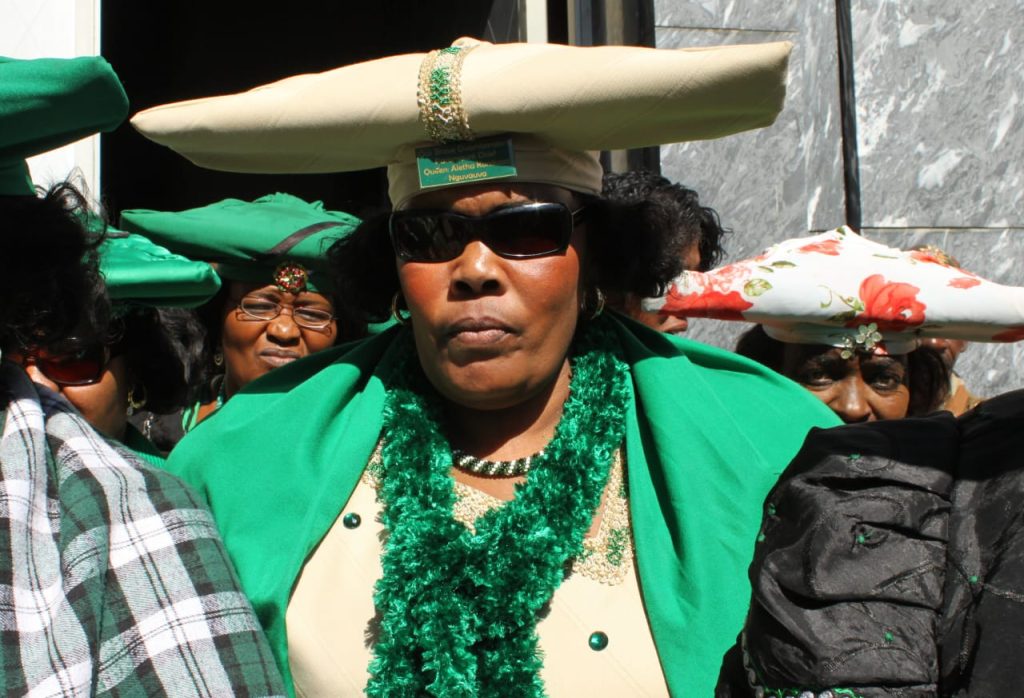
The Windhoek High Court has ordered the Minister of Urban and Rural Development, Erastus Uutoni, to reconsider an application for the designation of Aletha Nguvauva as the traditional leader of a part of the Ovambanderu community. This decision comes after a judgement delivered by judge Hannelie Prinsloo, who reviewed and set aside Uutoni’s previous decision to refer the application to the president in October 2021. The judge emphasized that Uutoni did not provide the Ovambanderu Traditional Council and Aletha Nguvauva with a fair hearing before making his decision.
The Ovambanderu community has been embroiled in leadership disputes since the passing of chief Munjuku II Nguvauva in 2008. Following his death, his sons Kilus Nguvauva and Keharanjo Nguvauva vied for the position of traditional leader, with Kilus ultimately being designated as chief in 2014 by a High Court judge. However, Kilus Nguvauva passed away in July 2021, leaving a void in leadership once again.
Aletha Nguvauva, the widow of late chief Munjuku II Nguvauva, stepped in as a contender for the traditional leadership of the Ovambanderu community after the untimely death of her son Keharanjo in 2011. The Ovambanderu Traditional Council, which emerged from a faction that distanced itself from the traditional authority following Kilus Nguvauva’s appointment, submitted an application in December 2016 to have Aletha Nguvauva recognized as the traditional leader of a faction of the Ovambanderu community located in the Otjimbinde constituency in the Omaheke region, with headquarters at Talismanus.
Despite the ongoing court battles and leadership disputes within the Ovambanderu community, the Windhoek High Court’s recent ruling underscores the importance of due process and fair consideration in matters of traditional leadership. Judge Hannelie Prinsloo’s decision to order Minister Uutoni to reassess Aletha Nguvauva’s application highlights the need for transparency and inclusivity in the designation of traditional leaders.
As the Ovambanderu community continues to navigate these complex leadership dynamics, it is crucial for all stakeholders to engage in constructive dialogue and uphold the principles of justice and equality. The court’s intervention in this matter serves as a reminder of the importance of upholding the rule of law and respecting the rights of all individuals involved in traditional leadership disputes.
In conclusion, the Windhoek High Court’s ruling in the case of Aletha Nguvauva and the Ovambanderu community underscores the significance of fair and transparent processes in matters of traditional leadership. By ordering Minister Uutoni to reconsider the application for Aletha Nguvauva’s designation as a traditional leader, the court has reaffirmed the principles of justice and equity in resolving disputes within the Ovambanderu community.
Read the original article on The Namibian


