Rédaction Africa Links 24 with IOL
Published on 2024-03-26 09:38:01
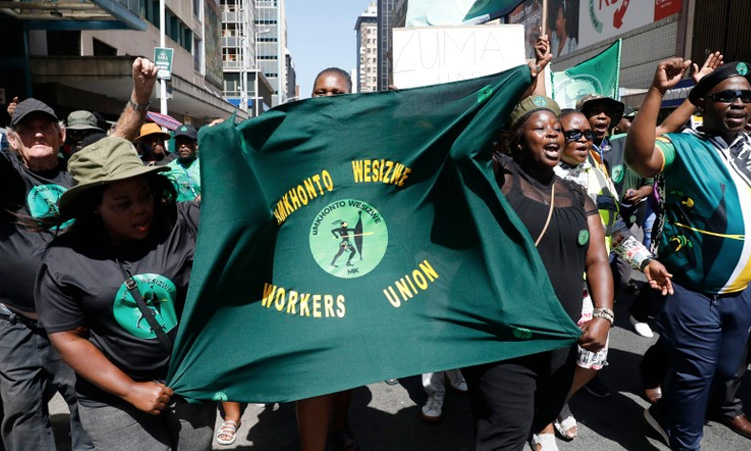
The African National Congress (ANC) recently made an unsuccessful court application to deregister the uMkhonto weSizwe (MK) party, as it was dismissed by the Electoral Court. Judge Lebogang Modiba stated that the ANC had no legal basis for their application, and it was subsequently rejected by the court.
The court emphasized that there was nothing unlawful about the registration of the MK party by the deputy chief electoral officer. Additionally, it was noted that the ANC had previously failed to challenge the registration of the MK party on two separate occasions last year. This put the future of the MK party in a state of uncertainty.
Judge Modiba highlighted that the court’s decision was unanimous, and if the ANC’s relief had been granted, it would have been too late to deregister the MK party. The ANC was criticized for not opposing the registration of the MK party in a timely manner and for bringing the application beyond the prescribed period.
The ANC admitted that it had filed the application after the deadline and did not show good cause for the delay. Despite becoming aware of the issue in January 2024, the ANC did not take action until several months later. This lack of timely response was deemed irrational by Judge Modiba.
The core of the ANC’s case was that the Deputy Chief Electoral Officer had acted unlawfully in registering the MK party. The matter was heard in court in Bloemfontein, and while judgment was pending in the Johannesburg High Court, the ANC’s arguments centered around the flawed application process of the MK party.
Both the Independent Electoral Commission of South Africa (IEC) and the MK party asserted that all procedures had been followed correctly and transparently. They contended that the ANC had only opposed the registration of the MK party after former president Jacob Zuma announced his support for the party.
Jabulani Khumalo had registered the MK party in September of the previous year, and this move sparked tensions between the ANC and Zuma, with accusations of property theft and suspension from the ANC leveled against Zuma. Despite these controversies, Zuma continued to campaign for the MK party throughout the year.
In conclusion, the court’s decision upheld the registration of the MK party, citing the ANC’s failure to act promptly and provide sufficient justification for their actions. The legal battle between the ANC and the MK party shed light on internal disputes within the ANC and the complex relationships between political figures in South Africa.
Read the original article on The Namibian


