By Africa Links 24
Published on 2024-01-26 04:00:00
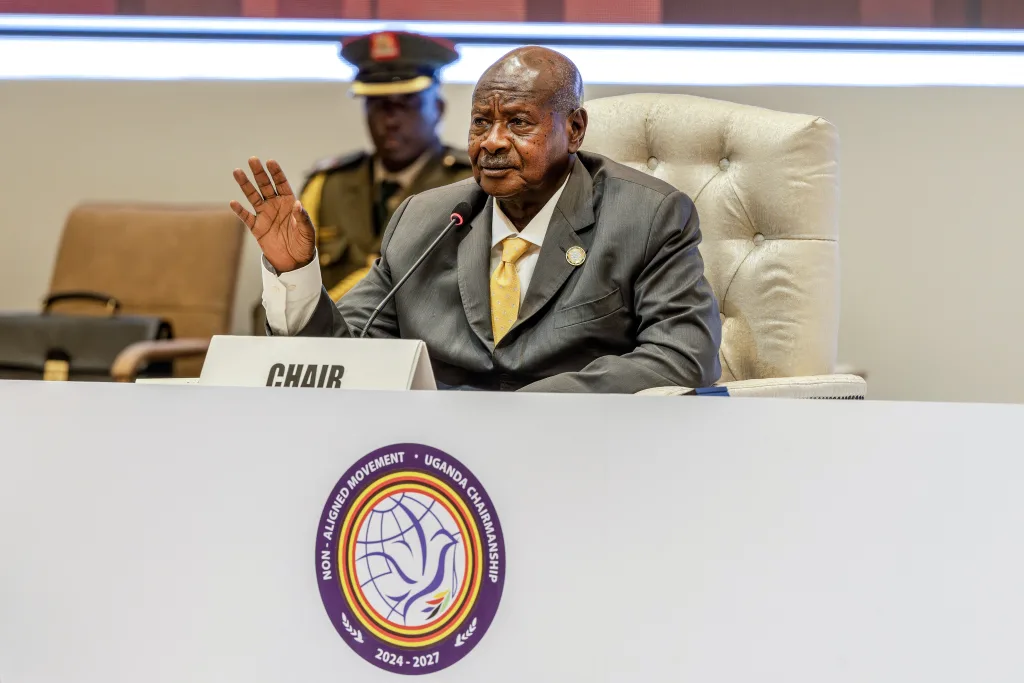
At a meeting of the Non-Aligned Movement (NAM) in Kampala, Ugandan President Yoweri Museveni issued a rare apology for the forced exodus of more than 50,000 Indians under former leader Idi Amin. The expulsion, ordered in early August 1972, required the Indian minority to leave the country within 90 days. Museveni acknowledged that this dark chapter in Uganda’s history was a mistake and expressed contrition for the treatment of the Indian diaspora.
Museveni also praised the economic contribution of the approximately 35,000 Indians who have since returned to Uganda, noting the construction of 900 factories by Indian returnees. The director of the Strategic Studies Programme at the Observer Research Foundation in New Delhi, Harsh Pant, believes the apology reflects a recognition of the reality on the ground for domestic economic reasons. He emphasized that the small population of Indians in Uganda makes up a significant portion of the Ugandan economy, with India now the second largest source of foreign direct investment in the country.
Pant predicted that the closer political and economic ties between Kampala and New Delhi could encourage Indian businesses to increase their investment in Uganda and Africa as a whole. He noted that India is increasingly looking at Africa as a continent of opportunities and that there has been a shift in the Indian private sector’s attitude towards long-term investments in Africa.
Professor Shobhana Shankar of Stony Brook University in New York State commented that Museveni’s apology is connected not only to the past but also to the global politics of the present. She observed that the apology for Uganda’s treatment of the Indian diaspora, as well as Museveni’s condemnation of Western powers for imposing their values on the Global South, is a strategic move that positions Uganda to strengthen its economic relationships with India and other countries outside the West.
In conclusion, Museveni’s apology for the expulsion of Indians under Idi Amin is a significant gesture that reflects an intention to boost economic and diplomatic ties with India. The development has the potential to enhance India’s economic footprint in Uganda and Africa more widely, signaling a shift in attitudes towards long-term investment in the continent.