Rédaction Africa Links 24 with ALM
Published on 2024-04-16 09:54:29
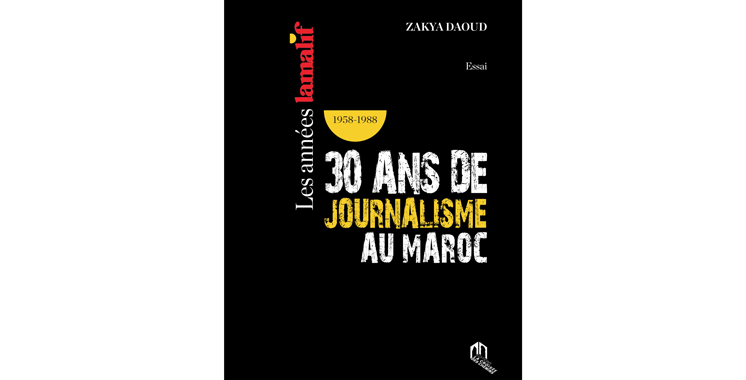
La Croisée des Chemins is reissuing the book titled “Les années Lamalif 1958-1988. 30 ans de journalisme au Maroc” by Zakya Daoud. An opportunity to delve back into the history of this committed magazine that has left its mark on more than one generation of readers.
Seventeen years after its first publication, the publishing house La Croisée des Chemins is reissuing the book “Les années Lamalif 1958-1988. 30 ans de journalisme au Maroc” by Zakya Daoud. It must be said that this book tells the story of a magazine called “engaged”, “Lamalif”, which, for 22 years, devoted its energy month after month to scrutinizing the politics, economy, society, and culture of Morocco during those years. “This magazine is also the story of the journey of men and women who carried the ideas of the post-independence era, their questions, many of which are still relevant: how to transform formal independence into economic development and social well-being? How to change political relationships? How to resist pressures? It is therefore an approach, closely examining the tumultuous relationship between the media and power, which does not shy away from the media’s soul-searching: how to envision a society? How to bend without breaking?” it says in the presentation of the book.
During those years, also known as “the lead years”, notes the same source, that “two visions of the future fiercely clashed: from political crises to popular riots and military coups, one of these visions, supported by order, conservatism, tradition, prevailed over the other which, nonetheless, resisted and left some traces”. The magazine strives to accompany, understand this evolution, trying to overcome despair and engage the future. But paradoxically, when some of the ideas it defends end up prevailing, it is forced to disappear. Perhaps those who carried the new ideas should not be able to benefit from them? It is a chronicle of a human experience, the life of a group of individuals linked by a common ideal; this history is also a study of a political case and a witness of intellectual resistance.
For the author, the possibility of telling this story became a necessity for her. She sought witnesses who could provide indispensable perspective. “I did not find them. Everyone went their separate ways, everyone has their own occupations. Many try to look towards the future and not towards a past that, until recently, was still uncomfortable. Lamalif remains a sign of regret that seems difficult to express, although its existence is now returning to minds as a lingering nostalgia,” reads an excerpt from the book. So she had to do this work herself. “As someone who finds the ‘I’ despicable and strives never to use it, I had no choice but to take the perspective of experience, intertwining it with the day-to-day history of Morocco followed over thirty years, from 1958 to 1988, passing through the famous lead years, and with the evolution of Lamalif, to trace the path of the vanished magazine, at the same time as it remains so present.”
According to her, the idea was therefore to cross-reference three sources: the everyday history, which may show how ordinary people lived, day by day, through those famous lead years, the monthly reports of this history in a magazine that experienced the vicissitudes of censorship and self-censorship, and some personal memories to give substance to this whole.
About the author
Biography
Zakya Daoud is a journalist, notably for Jeune Afrique and Le Monde Diplomatique, and an author. She has written numerous essays on history, including La diaspora marocaine en Europe (La Croisée des Chemins, Grand Atlas Prize 2011) as well as on women’s issues and emigration, and several biographies. She has also published three novels, including Les Aït Chéris (Éditions du Sirocco) in 2018. Du sang et de la mémoire. Vie et mort des Musulmans d’Espagne is her latest work (La Croisée des Chemins, 2022).
Read the original article(French) on Aujourdhui.ma