Rédaction Africa Links 24 with L’Opinion avec MAP
Published on 2024-03-16 15:07:00
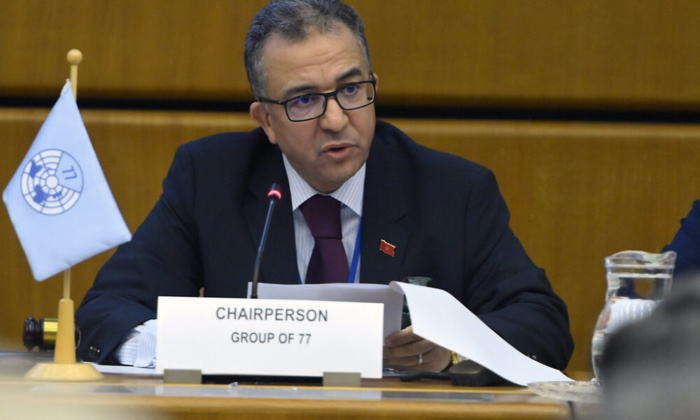
This action must be guided by science-based and evidence-based approaches, built on the need to renew the international consensus on the global drug problem, said Ambassador Azzeddine Farhane, Permanent Representative of Morocco in Vienna, in a speech.
It must also address the issue of drugs as a social and technical problem, far from narrow political considerations and calculations, and strengthen technical cooperation and national capacities, especially for developing countries, particularly African countries, in a bilateral or triangular framework, he added.
“In this sense, and with the aim of contributing to the effective implementation of international commitments on prevention and combating this scourge, and within the framework of strengthening subregional, regional, and international cooperation to address the various challenges posed by the global drug problem, the Kingdom is committed to enhancing cooperation with African countries in drug prevention and control, through sharing the experience gained by Morocco within the framework of its National Anti-Drug Strategy,” Mr. Farhane assured.
The drug situation in the world has undergone profound changes and developments, with new challenges emerging as drug consumption spreads alarmingly, according to reports from UN agencies, he noted.
“This situation should call us, more than ever, to redouble our efforts to collectively address common challenges, engaging in innovative thinking and implementing the most appropriate strategies to counter common challenges,” argued the diplomat.
In this approach, Morocco has adopted a comprehensive and integrated strategy to combat drug trafficking and psychotropic substances, which is perfectly in line with its international commitments, he continued, noting that this strategy aims to prevent addictive behaviors as early as possible, targeting both the supply and demand for drugs and psychotropic substances.
“It is based on a clear vision that addresses the Sustainable Development Goals, the Human Rights dimension, while involving civil society and other stakeholders in its implementation,” Mr. Farhane detailed.
Furthermore, the diplomat noted that following the adoption by the Commission of the WHO recommendation to reclassify cannabis to allow for its medical and scientific use, Morocco enacted in 2021 Law 13-21 on the legal uses of cannabis, which established a national agency responsible for overseeing and piloting all legal cannabis activities.
This agency ensures, based on a rigorous control and traceability system, the achievement of the objectives of the law on the regulation of activities related to legal uses of cannabis, including reducing the illicit supply of cannabis by converting illegal crops into legal ones, encouraging the pharmaceutical industry to develop cannabis-based products and medications, and integrating the population into the development process.
Regarding Morocco’s contribution to international efforts in combating criminal networks involved in drug trafficking of psychotropic substances, Mr. Farhane emphasized that the efforts undertaken by Moroccan authorities led to the seizure of 1,753.26 tons of cannabis resin, 1,406.02 tons of cannabis herb, 5,439.09 kg of cocaine, 28.78 kg of heroin, and over 8 million psychotropic tablets during the period 2019-2023.
Read the original article(French) on L’Opinion