Rédaction Africa Links 24 with Expresso das Ilhas
Published on 2024-03-07 15:21:16
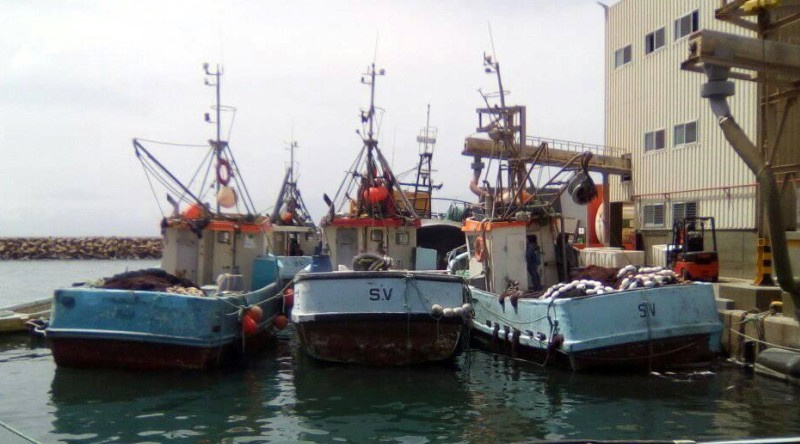
Large-scale vessels authorized to fish in Cabo Verde’s waters increased to 207 in 2022, but the country received less for the licenses paid by foreign ships, according to a report consulted by Lusa today.
The first report from the Fisheries Transparency Initiative (FiTI), which Cabo Verde joined in 2023, concluded that the country had 207 large-scale vessels authorized to fish in its waters, six more than the previous year.
Of the total number of vessels two years ago, 127 had Cape Verdean flags, while 28 were from Japan (down 10) and 22 from Spain (down four), 11 from Senegal (down one) and France, and seven with contracts with companies (down three).
From that year onwards, Portugal has had the first large vessel (industrial and semi-industrial) authorized to fish in Cabo Verde.
However, the global initiative drew attention to the fact that the records did not include the main characteristics of the ships, such as the legal owner or characteristics.
Conversely, Cabo Verde did not have any large vessels with its flag authorized to fish outside its waters.
Despite the increase in large vessels, the same document indicates a reduction in the value of licenses paid by foreign ships to fish in Cabo Verde’s waters.
If in 2021, the value was 21.4 million escudos, in the following year it dropped to 20 million escudos, with data that, however, does not include the amounts paid by Japan.
In addition to these values, 350,000 euros were paid under the agreement with the European Union, to “promote sustainable fisheries management in Cabo Verde.”
Cabo Verde was approved in February of last year as a candidate for the Fisheries Transparency Initiative (FiTI), becoming the fifth country to receive this status, alongside Ecuador, Madagascar, Seychelles, and Mauritania.
One of the recommendations of the initiative to Cabo Verde was the creation of a national multi-sectoral group responsible for preparing this, which is the first report on the sector in the country.
The document was produced by the National Multi-Sectoral Group (GMN) FiTI of Cabo Verde, composed of 15 members representing the government, businesses, and civil society.
At the end of 2021, Cabo Verde had 1,626 fishing vessels, 4,062 fishermen and artisanal fishermen owners.
Cabo Verde’s annual potential catch of fishery resources is estimated between 33,473 and 46,585 tons, in an activity historically divided into three models: artisanal fishing, semi-industrial fishing, and industrial fishing.
The country has a surface area of 4,033 square kilometers (km2) spread over an area of approximately 87 miles (140 km) radius, with about 1,000 km of coastline and a national responsibility maritime area of 734,265 km2, which includes archipelagic waters, territorial sea, contiguous zone, and Exclusive Economic Zone.
Read the original article(Portuguese) on Expresso das Ilhas