Rédaction Africa Links 24 with Sarah Jane Lebrasse
Published on 2024-03-21 14:00:17
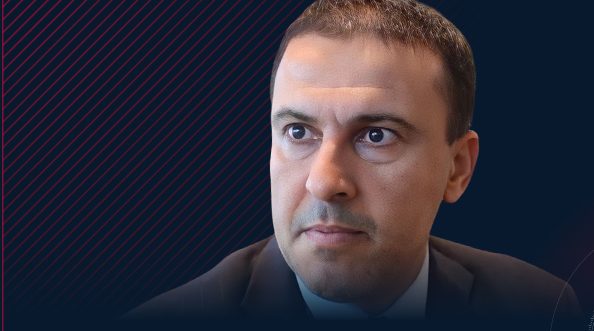
The Director of Public Prosecutions, Mr. Rashid Ahmine, filed a constitutional complaint in the Supreme Court yesterday against the Financial Crimes Commission Act of 2023. He is asking the court to declare this law unconstitutional, as it simply creates a commission of political appointees, thereby usurping his powers in criminal prosecutions. The complaint is directed against the State and the Attorney-General.
Mr. Ahmine emphasizes that under section 72 of the Constitution, he has all the independence necessary to initiate criminal prosecutions before any court, take over any criminal prosecution initiated by another person or entity, or terminate such prosecutions. He points out that he is appointed by the Judicial and Legal Services Commission (JLSC) and enjoys the same Security of Tenure as a judge of the Supreme Court. On December 19, 2023, Parliament passed the Financial Crimes Commission Act. However, to date, no date has been set for the implementation of the provisions of this law.
Section 4(3) of the FCC Act states: “subject to this Act, the Commission shall, in the discharge of its functions and exercise of its powers, not be under the direction or control of any person or authority.” Section 11(3) establishes the position of Director-General of the FCC and states that he “shall, in the discharge of his functions and exercise of his powers, not be subject to the direction or control of any person or authority.” However, section 72(6) of the Constitution states: “in the exercise of the powers conferred upon him by this section, the Director of Public Prosecutions shall not be subject to the direction or control of any other person or authority.”
For the DPP, it is clear that this law supersedes his prerogatives concerning financial crimes in favor of the FCC, which violates section 1 of the Constitution, stating that Mauritius will be a sovereign democratic state, and that in this context, the DPP must be independent.
The DPP also questions the independence and Security of Tenure of the Director-General and members of the Financial Crimes Commission. The President, acting on the advice of the Prime Minister, may terminate the appointment of the Director-General or a member of the Commission for “misconduct, default or breach of trust in the discharge of his functions” or if they have committed a serious offense or if they are physically or mentally unfit to perform their duties. For the DPP, it is clear that due to the role of the Prime Minister in the appointment of the Director-General and members of the Commission and the fact that he can determine the Terms and Conditions of their appointment, the Commission itself and its process of initiating criminal prosecutions will be subject to political influences or considerations. The DPP emphasizes in his complaint that he and the powers he possesses are isolated from any political influence.
The DPP recognizes that there are other entities besides him that have the power to initiate criminal prosecutions. But he points out that he should have no impediment to take over, continue, or discontinue such criminal prosecutions. However, the FCC Act does not contain any obligation for the Commission to provide the DPP with the complete file, rendering his powers to take over such criminal proceedings obsolete. Sections 57 and 58 state that the Commission can abandon an investigation. If the FCC discontinues an investigation, the DPP may not be informed of this decision because the Commission is not obliged to provide him with the file. This means that he will be deprived of the opportunity to exercise his prerogatives to initiate a criminal prosecution under section 72 of the Constitution.
Another contentious issue concerns the Compounding of Offences. Under this process, an authority established under a law and someone who violates that law can agree on an amount to be paid by the offender, which avoids court proceedings in the future. However, under several laws that contain the Compounding process, the consent of the DPP is required before Compounding takes place. Among these laws are the Customs Act 1988, the Income Tax Act 1996, the Value-Added Tax Act 1998, and the Companies Act 2001, among others. Under section 150 of the FCC Act, which provides for the Compounding process for all offenses under this law or under the Declaration of Assets Act, the consent of the DPP will not be required. Once Compounding is completed, with the FCC and the offender reaching an agreement on the amount to be paid, there can be no prosecution by the DPP.
The DPP argues that the FCC Act violates his prerogatives under section 72 of the Constitution through Colorable Devices. It creates a Distortion of the Criminal Process. This law violates the spirit of the Constitution, as the founding fathers never envisaged that the DPP, holding a constitutional position, would be ousted from his role regarding the overall constitutional control of the criminal process by a commission established through an ordinary Act of Parliament, passed by a simple majority.
The DPP concludes that “the institution of a process under the control of a politically appointed Commission and its Director-General which is capable of ousting the Plaintiff’s right to prosecute or discontinue cases of corruption (including by politicians) where ‘he considers it desirable to do so’ is undemocratic and inconsistent with the scheme of the Constitution as a whole.”
He therefore asks the Supreme Court to issue a declaratory judgment that the FCC Act contravenes sections 1 and 72 of the Constitution. He maintains that the law in its entirety is null and void. Alternatively, he requests that sections 57(3)(b) and 58(8)(b), giving the FCC the power to discontinue an investigation, section 142(1)(a), conferring the power on the FCC to initiate criminal proceedings, and section 150 (which deals with the powers of the FCC over the compounding of offenses) be declared null and void. Last Saturday, during a press conference, the leader of the opposition, Xavier-Luc Duval, confirmed that he had been “consulted” by a letter dated March 5, 2024 from the Prime Minister under sections 7 and 10 of the FCC Act concerning the appointment of Navin Beekarry as Director-General of the Commission and the appointment of Narainkrishna Peerun, Abdool Carrim Namdarkhan, Jugdish Dev Phokeer, and Marie Claudine Josiane Lilette Paya as members of the Commission.
Read the original article(French) on Le Mauricien