Rédaction Africa Links 24 with Johanne Prosper
Published on 2024-04-07 15:00:59
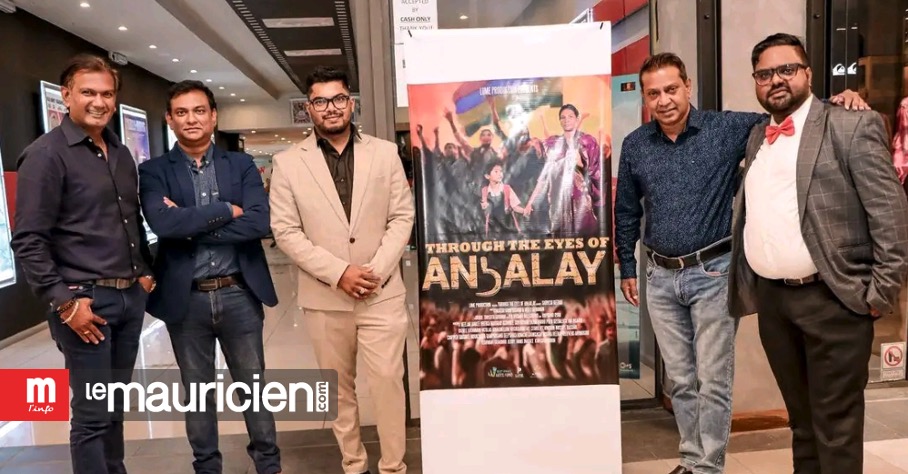
Directors Rasesh Ramprosand and Vicky Ramdhun have traced back the history to present to us last Friday at MCiné, Trianon, a painful past of our island through the eyes of an eight-year-old child. Through the Eyes of Anjalay, supported by the Mauritius Film Development Corporation and funded with Rs 800,000 from the National Resilience Fund, tells the story of Anjalay Coopen, who was killed in a shooting on Wednesday, September 27, 1943, in Belle Vue Harel, at the age of 32 and pregnant with her first child.
The new MCiné cinema hall, packed to the brim with standing spectators in the corridors, deeply shook those who, for the first time, experienced a painful part of our history on the big screen. After deeply explaining the struggle of a slave in Bellaca and being awarded for depicting the displacement of the Chagossians in Chagos Nu Leritaz, the two directors now take a trip back in time, a perfect vehicle to contribute to collective memory.
Through an atypical narrative construction and the desire to highlight the humanity and resistance of workers for the restoration of their rights, the film tells the tragic story of a simple woman, sometimes working in the sugarcane fields, sometimes doing laundry by the river, and preparing dinner over a fire. Her two friends see her as a strong-willed person, but Anjalay decides to go all the way in her fight.
Neelam Jankee brilliantly portrays the role of Anjalay, and her exchanges with her two friends in Mauritian Creole evoke emotions. However, it is regrettable that Bhojpuri was not used in the film, as, like Creole, Bhojpuri was a widely used language by workers to demand their rights. A right that was defended by unionists Hurryparsad Ramnarain and Sharma Jugdambi, even though in the end, they had to admit defeat against an English leader ready to massacre the workers.
Vritika Maduray, aged 8, shines on screen as a schoolgirl who, on Labor Day, must tell the story of a key figure in Mauritius’ history. Her grandfather helps her trace back the history. Vritika is then faced with a dilemma: to enjoy a holiday for fun or to ensure she can submit her composition to her teacher the next day. The grandfather begins his story at Vallée des Couleurs. Shots also show the Human Service Trust ashram in Calebasses and Brisée-Verdière.
Rasesh Ramprosand and Vicky Ramdhun explained that they faced difficulties in shooting the film in certain locations. Another problem encountered was the lack of sponsors for the film’s financing. Nevertheless, thanks to the intervention of Vikram Jootun, director of the MFDC, their work finally made it to the screens and will even be screened internationally. Mauritian filmmakers also benefited from the expertise of a foreign filmmaker.
According to Vikram Jootun, significant work has been done since 2015 to give new life to local cinema. It all started with the 7 Day Challenge and the National Resilience Fund, which allows funding for a film up to Rs 2 million.
“A long-time dream of the late Sir Anerood Jugnauth has thus been realized. Before 2015 and in the nine years that followed, only 16 local productions were made. And in eight years, the MFDC, under my direction, has produced 800 short films and 20 feature films,” explains Vikram Jootun. He mentions NJ The Legend, based on the life of jockey Nooresh Juglall, who tragically died after falling during a race on May 15, 2021, at the Champ de Mars, and Anoxia, directed by Mohun Kumar and awarded at Cannes.
Read the original article(French) on Le Mauricien