Rédaction Africa Links 24 with Moussa Diarra
Published on 2024-03-25 13:40:42
By Fatoumata NAPHO
Some fasters do not hesitate to wet their bodies during ablutions
Bamako, March 25 (AMAP) Only faith can help fasters endure during this intense heat wave. For those who do not take it easy under the sun, there is a significant risk of dehydration that can have serious consequences.
According to scholars, Muslims are endowed with numerous virtues including patience and endurance that can help them face hardships and difficulties, as well as make sacrifices to draw closer to Allah, the Compassionate and Merciful. Therefore, fasting in scorching conditions is a difficult trial for Muslims.
“Definitely not easy this month of Ramadan,” says cobbler Sékou Sylla while shaking his head. He confesses to being solely aided by faith to continue fasting, otherwise he would have given up. Like him, many believers confirm the difficulties of fasting during this heat wave. The sun does not make the task any easier. And the chronic power outages do not help the situation of the fasters either.
Combining fasting and work is part of normal life. But some seem to have difficulty reconciling the two, especially working under intense heat, particularly with frequent power cuts all over Mali. Adama Coulibaly, a mechanic by profession and garage manager, supports this thesis. He openly admits having difficulty working during the heat, especially in the current conditions. “Fasting in the last two years has been under difficult conditions,” explains the mechanic. To shield himself from the sun’s rays, he wears a black cap that he dips in water from time to time before putting it back on. He repeats this routine throughout the day or tries to find comfort in ablutions done with cool water. “I do all this to endure because a hot and dry wind blows,” he emphasizes. He explains that he drinks enough water at sunset to quench his thirst and prevent dehydration.
Not far from the mechanic’s automotive garage are money changers recognizable by the bundles of banknotes they wave in front of passersby. They also confirm having difficulty balancing Ramadan fasting and the heat. They do everything possible to avoid heat stroke. Oumar Samaké, with a cap on his head, pours water over himself at regular intervals. He is followed by a colleague, Bourama Camara, who performs the same ritual. Oumar admits having difficulty separating from his water bottle at sunset.
At this point, Oumar Ouattara arrives on his motorcycle. He wraps a wet towel around his neck to cool off. “The sun is really scorching. This is my way of coping with it,” he jokes. He explains that he has been using this small towel since the second day of Ramadan.
Seydou Guindo is a security guard who works 12 hours out of 24 (from 6 a.m. to 6 p.m.) at his workplace. “During this period of intense heat, it’s not easy to work while fasting,” he says. To catch a break, he often sits in the shade of a wall.
As for Kadiatou Diallo, a seller of water sachets, she acknowledges making good sales with ice creams during Ramadan. She explains that she often sells 15 packs of water sachets and makes a profit of 250 CFA francs on each pack.
Next to her is a date seller, Issouf Dicko. For him, Ramadan is profitable financially. He sells his foodstuff under a tree to avoid the sun, because it is never easy to combine work with fasting. He only comes out from under the tree to perform ablutions.
Next to him, Fatoumata Traoré offers fish to customers. She notes the slow market during Ramadan this year compared to the same period last year. The heat wave may be a factor. “I can spend over 5,000 CFA francs on ice per day” to preserve the fish. At least she is under a shelter to protect herself from the sun.
 Boukary Karambé, who also maintains vehicles, claims to be able to work even in intense heat. “I don’t pour water on myself, let alone put a little wet towel on my head,” he insists.
Mohamed Guindo, a recharge card seller, had a completely wet towel around his neck when we met him. He admits performing ablutions with cool water.
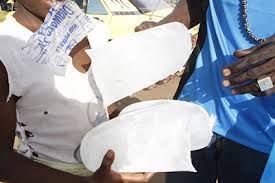
From the surroundings of the Ministry of National Education to the “Rail da,” almost all street vendors carried a water sachet. Some only wet their heads while others pour water on their entire bodies. Women are also doing the same. Most of those we encountered had large ice cubes placed on their heads or bodies.
Housewives also have difficulty cooking in the evening because they struggle with the heat. This was the case for Mrs. Diallo Néné who admits having trouble cooking in the first two days of Ramadan. Ultimately, she gave up fasting.
During Ramadan, fasters flock to well-air-conditioned mosques. They stay there before and after prayer times. The same can be observed in bank premises. Some clients enjoy the air conditioning there.
At home, everyone gathers, especially on weekends, under trees. And those with air conditioners do not leave their rooms. This is the case for elderly Mariam Dembélé who even warned her son to expect a high electricity bill at the end of the month.
To better manage this month, health specialists recommend drinking plenty of water and protecting oneself from the sun. Dr. Ousmane Touré, a general practitioner at Gabriel Touré Hospital, advises the population in general to drink plenty of water and opt for light foods during meals.
It is very important to protect oneself as much as possible from the heat, spending several hours a day in a cool or air-conditioned place and regularly wetting the body to lower body temperature.
The doctor recommends wearing hats or caps that help reduce heat on the head. He mentions that intense heat can cause dehydration, fever, headaches, and complications of certain chronic diseases.
Regarding the practice of fasters wetting themselves or dipping their feet in cool water, preacher Ahmadou Diallo states that this does not invalidate their fast. He emphasized that fasters do this because it is very hot and they need relief.
However, he cautions that if water enters the mouth, nose, or ears while seeking relief, the fast is broken at that moment. He also added that there are 7 categories of people who are allowed to break their fast. This means that fasting is not a requirement for these individuals, especially those who are traveling, pregnant women, the sick, and breastfeeding mothers.
Finally, there are the elderly and those who cannot tolerate hunger or thirst.
FN/MD (AMAP)
Read the original article(French) on AMAP