Rédaction Africa Links 24 with Malawi Voice
Published on 2024-03-12 19:13:03
The recent developments within the Malawian political landscape have created a rift between the Malawi Congress Party (MCP) and the United Transformation Movement (UTM) regarding the upcoming tripartite elections. The MCP’s National Executive Committee (NEC) recently announced that President Dr. Lazarus Chakwera will be their candidate for the presidency in the upcoming polls. However, the UTM has contested this decision, citing a supposed agreement outlined in a memorandum of understanding (MOU) between the two parties. According to the UTM, the MOU stipulates that Chakwera will serve from 2020 to 2025, with Vice President Saulos Chilima slated to stand in the 2025-2030 period.
Despite the MOU’s clarity on the presidential candidates, it fails to address the issue of running mates, a point which has sparked debate and confusion within the political sphere. Former Minister of Information, Patricia Kaliati, has expressed her dismay at the attempts to manipulate the agreement, highlighting the widespread support it garnered from various social, religious, and political stakeholders at the time of its drafting.
Political analyst George Phiri has commended the MCP’s endorsement of Chakwera, suggesting that this move could potentially pave the way for Chakwera to assume the Vice Presidency if the pact indeed stipulates as such. However, the Malawian Constitution allows Chakwera to contest as a presidential candidate independently, irrespective of party affiliation, due to his completion of a single five-year term.
Meanwhile, Chilima faces several hurdles that must be addressed before he can actively participate in the election campaign. He is embroiled in multiple legal cases, including issues surrounding his eligibility for the presidency, corruption charges in the High Court, and the Constitutional Court’s clearance to serve as President or Second Vice President. These pending legal matters place Chilima in a precarious position, especially as the election looms ahead, presenting a significant challenge for his candidacy.
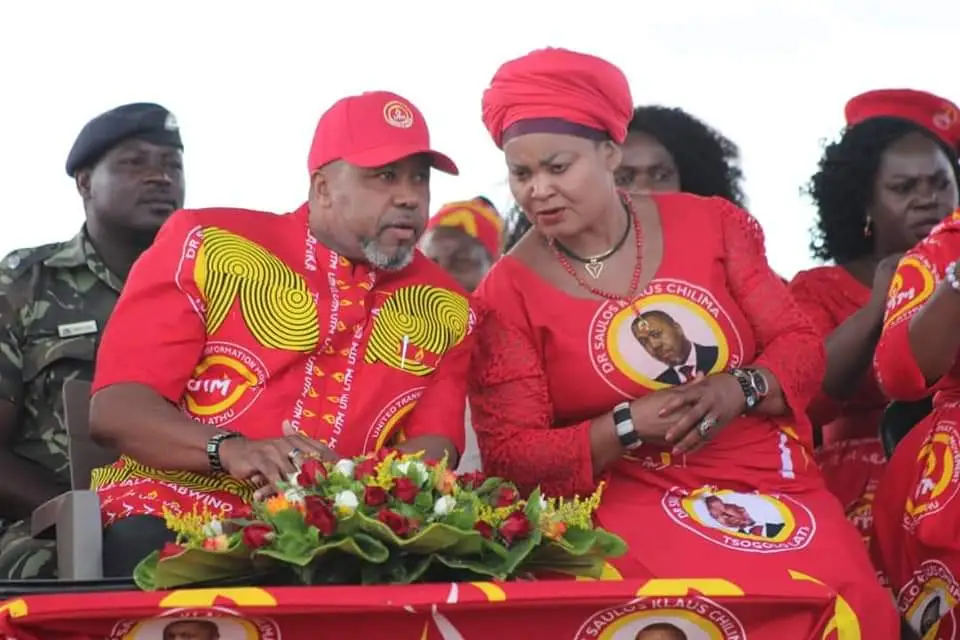
The ongoing political turmoil within the UTM and MCP could potentially benefit the Democratic Progressive Party (DPP) in the long run, despite their own internal challenges and the need to rebuild trust among the populace. Chilima’s visible presence alongside Chakwera at public events adds further intrigue and complexity to the unfolding political narrative in Malawi.
As the election campaign gains momentum, all eyes are on the courts to provide clarity on the legal challenges facing Chilima and the implications for the electoral process. The fiercely contested election, expected to be divisive along regional, religious, and ethnic lines, underscores the importance of resolving these legal issues promptly to ensure a fair and transparent electoral process.
In conclusion, the political landscape in Malawi is fraught with uncertainty and legal complexities, setting the stage for a highly contentious election. The outcome of the legal battles facing Chilima and the electoral dynamics between the MCP, UTM, and DPP will shape the future political landscape and the trajectory of governance in the country.
Read the original article on Malawi Voice


