Rédaction Africa Links 24 with Faraj Abdullah
Published on 2024-03-26 07:31:42
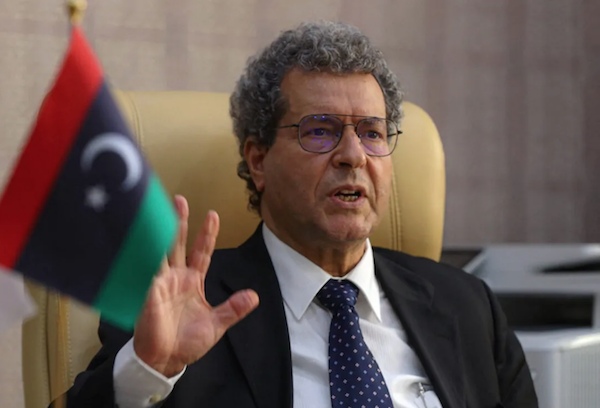
In a tense standoff between the executive and oversight bodies, Oil Minister Mohammed Aoun has refused to accept his suspension from office by the Administrative Control Authority (ACA), setting the stage for a potential legal battle.
Aoun spoke to reporters on Tuesday, adamantly stating that he had not received any formal notification of his suspension. He declared his intention to challenge the decision through legal channels, claiming that he had not been served with the suspension order from the ACA. “Every incident has its story,” Aoun cryptically added, hinting at his side of the narrative.
On the other hand, the ACA released an official statement asserting that it had enforced Aoun’s “precautionary suspension” from his ministerial position in accordance with Article 31 of its governing law. The decision, as per the watchdog, was a result of an ongoing investigation into Case No. 178, which reportedly revealed “legal violations” that necessitated Aoun’s temporary removal.
The directive from the ACA was based on recommendations from its General Investigation Administration director, who had examined evidence gathered during a corruption probe targeting the oil and gas sector. This unprecedented step represents a significant escalation in the already existing tensions between Aoun’s ministry and the oversight authority, with allegations of corruption and misconduct at the heart of the dispute.
Political analysts have sounded the alarm, cautioning that the impending legal showdown could deepen the divide between the opposing factions and potentially destabilize the fragile unity government. The implications of this conflict extend beyond the immediate parties involved, as it has the potential to impact the broader political landscape and governance of the country.
The clash between Aoun and the ACA underscores the challenges faced by institutions tasked with ensuring accountability and transparency in government operations. The outcome of this standoff will likely have far-reaching consequences for the country’s governance and could set a precedent for future interactions between executive officials and oversight bodies.
As the legal battle looms, both sides are gearing up for a protracted struggle that could shape the future of governance and accountability in the country. The resolution of this conflict will have implications not only for the individuals directly involved but also for the broader public trust in the government and its ability to combat corruption and uphold the rule of law.
In this high-stakes showdown, the fate of Oil Minister Mohammed Aoun hangs in the balance, with his future in office depending on the outcome of the legal proceedings initiated to challenge his suspension. The ultimate verdict will not only determine his political fortunes but also test the strength and independence of the oversight mechanisms in place to safeguard the integrity of government operations.
Read the original article on Libya Update


