Rédaction Africa Links 24 with Faraj Abdullah
Published on 2024-03-21 12:54:57
The House of Representatives in Libya recently approved controversial amendments to the country’s general amnesty law, expanding its coverage to include crimes committed prior to the 2011 uprising against Muammar Gaddafi’s regime. This decision has sparked mixed reactions due to its potential implications for the country’s political landscape.
The revised legislation now encompasses offenses dating back before the popular revolt that led to the downfall of the longtime dictator. However, it explicitly excludes individuals accused of suppressing the February 17th revolution that culminated in Gaddafi’s ouster. Those implicated in quashing the uprising are prohibited from holding official positions or participating in future electoral processes.
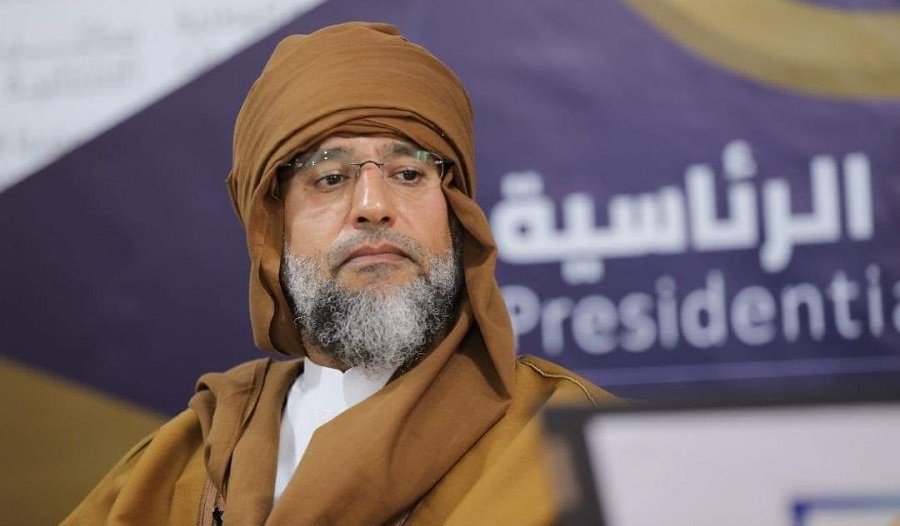
One notable figure affected by this development is Saif al-Islam Gaddafi, the son of the former ruler and once considered his successor. Saif al-Islam is currently wanted by the International Criminal Court for his alleged involvement in crimes against humanity during the violent crackdown on anti-regime demonstrations in 2011. The amendments effectively bar him from seeking public office or engaging in electoral activities.
The primary objective of these amendments appears to be thwarting the resurgence of influential figures associated with the Gaddafi era through democratic channels. By disqualifying key former regime members from participating in governance, the Libyan government hopes to safeguard the gains made since the overthrow of the autocrat and prevent a potential regression towards past authoritarian practices.
The decision has ignited debates within Libya, with supporters of the amendments lauding them as essential for upholding justice and accountability for past atrocities. Proponents argue that granting amnesty to all individuals, regardless of their involvement in human rights abuses, would have been unjust and detrimental to the country’s democratic aspirations. By excluding those implicated in suppressing the revolution, the legislation aims to uphold the principles of transitional justice and prevent the recurrence of past injustices.
On the other hand, critics view the amendments as a selective application of justice that serves political interests rather than the pursuit of truth and reconciliation. Opponents argue that by targeting specific individuals while granting amnesty to others, the legislation risks perpetuating divisions within Libyan society and hindering efforts to foster unity and reconciliation. They argue that a more inclusive approach to amnesty would be preferable to promote national healing and address the legacy of past injustices comprehensively.
The passage of these controversial amendments highlights the challenges facing Libya as it navigates a complex transitional period characterized by political fragmentation, security threats, and socio-economic challenges. The balancing act between accountability for past crimes and the imperative of national reconciliation remains a delicate and contentious issue that will continue to shape Libya’s post-revolutionary trajectory.
Ultimately, the implementation of the amended general amnesty law will be a crucial test for Libya’s commitment to justice, democracy, and the rule of law. The decisions taken in the aftermath of the 2011 uprising will shape the country’s future and determine its ability to overcome the legacies of dictatorship and conflict. As Libya grapples with these complex issues, the need for inclusive and transparent mechanisms for addressing past injustices and promoting national healing becomes ever more pressing.
Read the original article on Libya Update


