Rédaction Africa Links 24 with Faraj Abdullah
Published on 2024-02-29 10:06:26
Libyan political factions in Tunis took a small step towards resolving the country’s long-running crisis after two days of intensive talks. They emerged with an agreement on the outlines of a Libyan-led plan to reignite the stalled political process. The plan focuses on the formation of a new unity government that will oversee national elections under recently passed electoral laws created by the joint 6+6 committee, as stated by the House of Representatives.
Although details about the unity government and its yet-to-be-named prime minister were scarce, the statement mentioned that the new premier would be selected through a transparent and impartial mechanism based on the roadmap presented by the 6+6 Committee. This selection process would be done by consensus between the two councils and under the sponsorship of the U.N. mission. The United Nations Support Mission in Libya (UNSMIL) had not provided any immediate comment on the announcement.
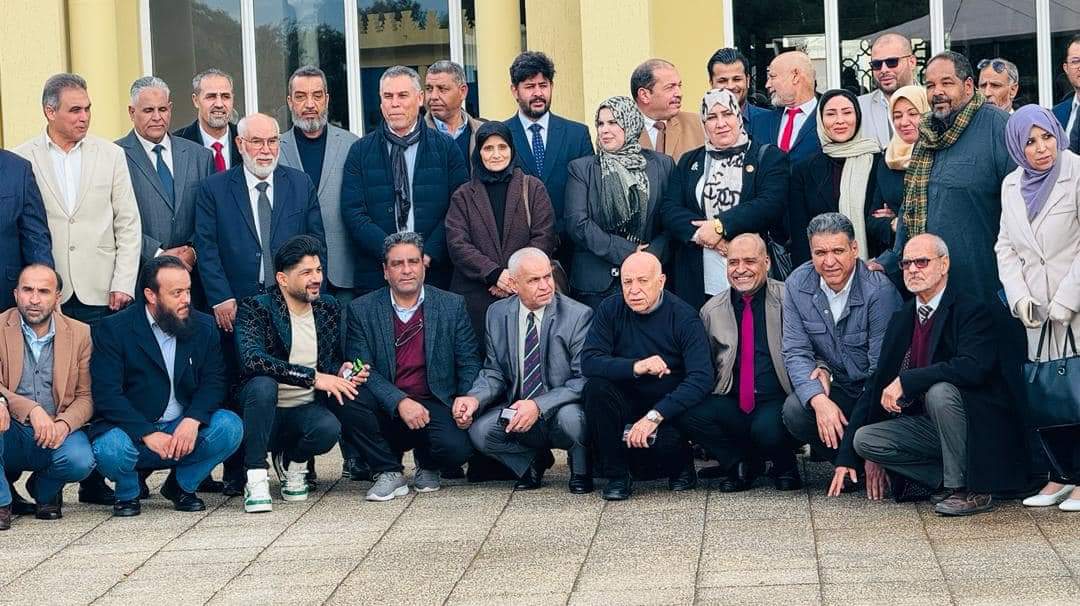
Approximately 120 participants, including members of Libya’s rival House of Representatives and High State Council, gathered for the intensive talks in neighboring Tunisia. While officials released a group photograph from the event, they did not disclose the names of attendees. In their joint statement, participants committed to empowering local governance and directing public funds straight to municipal authorities. They also announced the implementation of unspecified binding legislation and oversight mechanisms to tackle corruption and patronage.
The agreement marks a positive development in Libya’s efforts to overcome political divisions and move towards stability and progress. The commitment to establishing a unity government and holding national elections under new electoral laws demonstrates a willingness among key political factions to work together for the good of the country.
The fact that the plan was developed and agreed upon by Libyan stakeholders themselves, with the support of the international community through the U.N. mission, is crucial for its success. It indicates a growing sense of ownership and responsibility among Libyan leaders in finding solutions to their country’s challenges.
While challenges and obstacles remain on the path towards a peaceful and stable Libya, this agreement represents a step in the right direction. The focus on good governance, transparency, and combating corruption is essential for rebuilding trust among the Libyan population and laying the foundation for a more inclusive and sustainable political process.
The international community, including the United Nations, must continue to support and facilitate the implementation of this agreement to ensure its success. The road ahead will be challenging, but with continued commitment and cooperation from all stakeholders, Libya has the potential to emerge stronger and more united than ever before.
Read the original article on Libya Update