Rédaction Africa Links 24 with M Abdo
Published on 2024-04-07 21:07:39
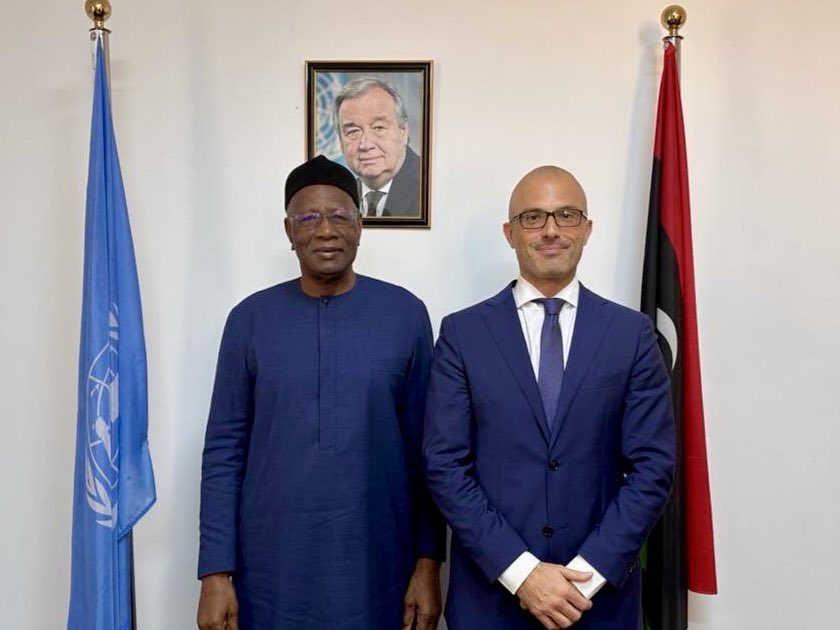
The European Union (EU) Ambassador, Nicola Orlando, recently met with UN envoy to Libya, Abdoulaye Bathily, to discuss the current political stalemate in Libya. During their meeting, they exchanged views on the challenges facing the country and the potential risks to its stability and unity.
Orlando expressed the EU’s continued support for Bathily’s mediation efforts and emphasized the importance of bringing key stakeholders to the negotiating table to pave the way for national elections in Libya. He highlighted the need for bold steps to be taken to address the concerns of the Libyan people and underscored the role of the international community in supporting these efforts.
“We agreed that the concerns of the Libyan people cannot be overlooked, and it is crucial for the international community to play a constructive role in resolving the crisis,” Orlando stated.
The situation in Libya has been marked by political turmoil and conflict for several years, with rival factions vying for power and control. The lack of a unified government has resulted in widespread instability, economic hardship, and humanitarian challenges for the Libyan population.
In response to these challenges, the EU has been actively engaged in supporting peace and stability in Libya. The EU has provided financial assistance, diplomatic support, and humanitarian aid to help address the needs of the Libyan people and facilitate a peaceful resolution to the conflict.
The EU’s commitment to supporting Bathily’s mediation efforts underscores the importance of an inclusive and transparent political process in Libya. By bringing key stakeholders to the negotiating table and facilitating dialogue among different factions, the EU hopes to create a path towards national elections and sustainable peace in the country.
In addition to its diplomatic efforts, the EU has also been working to address the humanitarian crisis in Libya. The EU has provided funding for humanitarian aid, including food, shelter, and medical assistance, to support the most vulnerable populations in the country.
Furthermore, the EU has been actively engaged in promoting human rights and the rule of law in Libya. The EU has called for the protection of civilians, the respect for human rights, and the promotion of accountability for human rights violations in the country.
Overall, the EU’s engagement in Libya reflects its commitment to promoting peace, stability, and democracy in the region. By supporting Bathily’s mediation efforts and advocating for inclusive political processes, the EU aims to help the Libyan people build a peaceful and prosperous future for their country.
Read the original article on Libya Update


