Rédaction Africa Links 24 with NewDawn
Published on 2024-03-28 08:47:50
According to a recent report by Greenpeace Africa and Greenpeace MENA, Egypt, Nigeria, and South Africa have emerged as the most polluted countries in Africa in terms of air pollution and the resulting health consequences. The report, titled “Major Air Polluters in Africa Unmasked,” highlights the significant impact of air pollution on public health and its contribution to climate change.
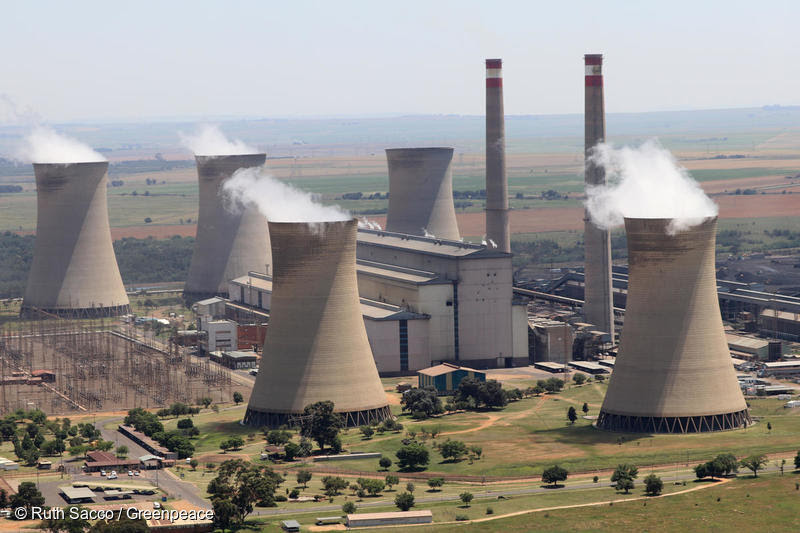
The report identifies the ten largest sources of nitrogen dioxide (NO2) in Africa, all of which are thermal power stations. Nine of these power stations are located in South Africa and are owned by ESKOM, while the tenth is in Côte d’Ivoire. The report also reveals that Africa is home to some of the worst nitrogen dioxide and sulfur dioxide hotspots in the world, primarily linked to thermal power plants.
Dr. Aidan Farrow, a Senior Scientist at the Greenpeace Research Laboratories, emphasized the lack of air quality monitoring in many parts of Africa, allowing pollution to remain hidden. The report underscores the serious public health crisis facing African nations due to air pollution, particularly from the burning of coal for electricity in regions like Mpumalanga, South Africa. Eskom, a public utility company with the government of South Africa as its sole shareholder, operates many of the most polluting plants in the region.
Key findings from the report include the revelation that exposure to air pollution is the second leading risk factor for death in Africa, and meeting World Health Organization guidelines could lead to significant gains in life expectancy. The report also highlights the significant number of premature deaths in Africa linked to pollutant emissions, particularly from fossil fuel air pollution in Egypt, Nigeria, and South Africa.
Furthermore, the report identifies six of the world’s ten largest NO2 emission hotspots and two of the world’s ten largest SO2 emission hotspots in Africa. Nine out of the ten largest SO2 point sources identified in Africa are thermal power stations, with one linked to a smelter complex in Mali. The report stresses that improving air quality to meet WHO guidelines could potentially increase life expectancy by up to three years in some African nations.
The report calls for urgent action from North African governments to address air pollution, including the installation of air quality monitors and access to real-time data. Sarra Ben Abdallah, a Greenpeace MENA Campaigner, emphasizes the importance of empowering affected communities to advocate for cleaner and healthier environments.
In conclusion, the report presents recommendations to address the critical issue of air pollution in Africa, highlighting the need for investment in clean technologies, especially in the energy sector. By reducing air pollution, not only can public health be improved, but it also offers a win-win strategy for combating climate change. International institutions are urged to play a significant role in sustainably developing the African continent and supporting efforts to reduce air pollution.
Read the original article on The Newdawn Liberia