By Africa Links 24
Published on 2024-02-13 04:00:00
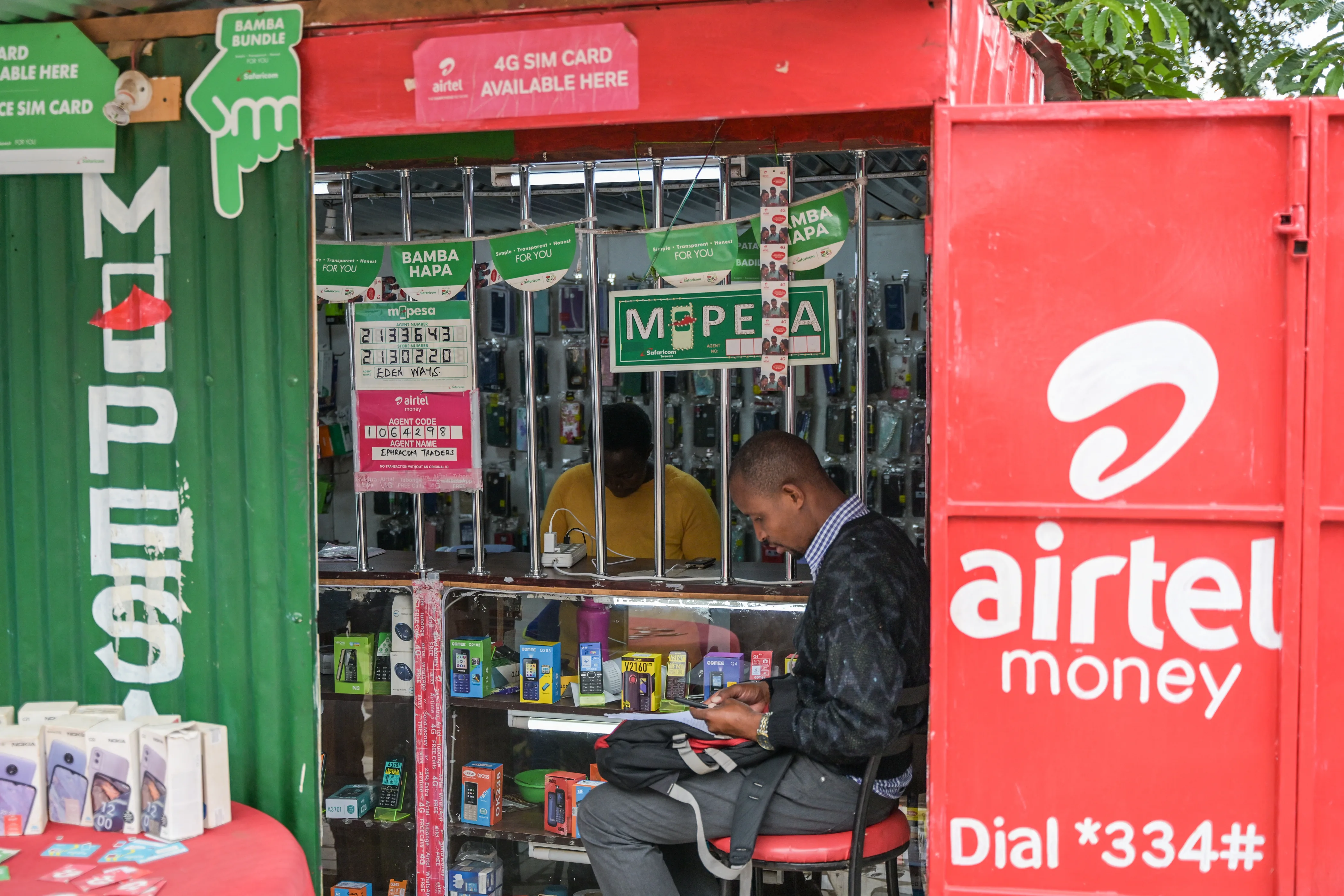
The success of efforts to deepen intra-continental trade, including the landmark African Continental Free Trade Area (AfCFTA), depends in large part on the existence of cross-border payments systems. However, despite the success of mobile money on the continent, cross-border payments still add unnecessary costs and delays to businesses and individuals, industry leaders claim.
During the Africa Prosperity Dialogues in Aburi, Ghana, panellists called on governments and regulators to accelerate efforts to build robust inter-country payments systems to support intra-continental trade.
Ernest Addison, governor of the Bank of Ghana, said that expanding mobile money access could empower the underserved populations with essential financial tools to help unlock opportunities for savings, loans, and secure transactions, as well as promote economic stability and growth. Quoting McKinsey, Addison noted that Africa’s e-payments industry generated approximately $24bn in revenues in 2020, even though it accounted for a mere fraction of all payments. This, he said, shows that e-payments have the potential of being a major growth pole for Africa.
Cross border payments, however, continue to be hampered by legacy challenges, including inadequate payment infrastructure, inconsistent regulation, limited policy coordination and user education, and security and fraud concerns. Addison pointed to the Pan-African Payment and Settlement System (PAPSS), an initiative of the African Export-Import Bank, as an ideal solution to facilitate efficient and secure financial transactions across borders, stressing its potential for scalability and innovation in cross-border trade. As at the end of 2023, 12 central banks, including those from the West African Monetary Zone (WAMZ) and the East and Southern Africa regions, had joined, with others on the verge of signing on to the platform.
Patricia Obo-Nai, chief executive of Vodafone Ghana, noted that operators had been able to solve the problem of interoperability in-country, meaning that money can be sent from one network to the other seamlessly. However, the inability to do so across borders takes a toll on customers who are unable to send money to family or business associates in different countries. For some customers, this means making withdrawals and sending money through offline methods. Obo-Nai acknowledged that regulators have concerns including data privacy, security, and exchange rates but said that mobile operators are able to address these concerns. Technological challenges have been addressed. The big hurdle is political will.
Eli Hini, chief executive of MTN Mobile Money, Nigeria, said that progress in Ghana showed what is possible elsewhere. “We have been able to enable interoperability in Ghana and now no one is worried about settlement because they know that process has been taken care of. That is what we need to achieve across Africa,” he said.
While lots of investments have been made in payment infrastructure, there is concern that only 60% of the capacity that is available is utilized by customers. Even though this is an improvement on 2014, when only 12% was in use, Angela Wamola, head for sub-Saharan Africa, GSMA, questioned whether investors would be encouraged to deploy resources towards systems that would take 10 or 20 years to reach usage capacity. “We have to ask ourselves a difficult question. What is it that we are not doing that is not allowing the infrastructure, the capital that has been employed to be utilised?” she added. Technology, she said, is the least of the problems. The challenge lies in leveraging legal frameworks and existing systems to make cross-border payments easier and more convenient.
Lacina Koné, CEO of Smart Africa, challenged operators not to be constrained by regulators but instead to focus on innovations that bring convenience to their customers. He argued that governments are not positioned to make the rules until the innovations are actually in place and urged innovators to focus on disruption and device solutions to the challenge of cross-border payments. “We need to wake up. It is only disruption that will enable us to leapfrog; otherwise we will continue to trail the rest of the world,” he charged.