By Africa Links 24
Published on 2024-03-26 14:18:38
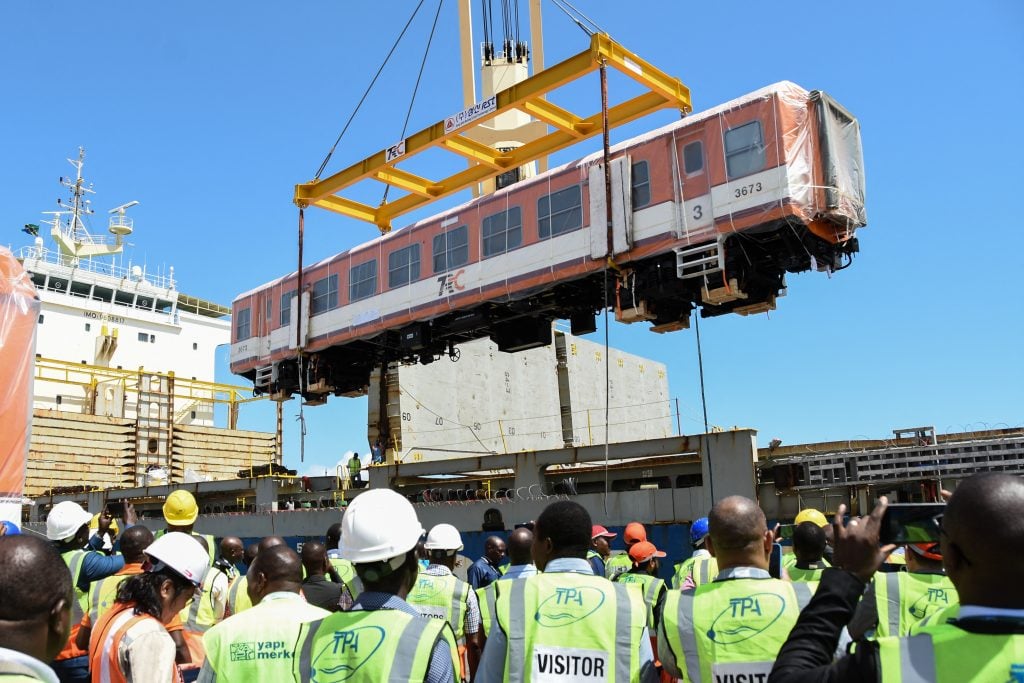
Tanzania’s Standard Gauge Railway (SGR) project is making significant progress towards a major milestone with the upcoming launch of the 300km section that will connect the port city of Dar es Salaam to Morogoro. Following successful trials in February, full operations on the newly built electrified line are scheduled to begin in July, as confirmed by chief government spokesperson Mobhare Matinyi.
The introduction of SGR electric trains is expected to reduce travel time between Dar and Morogoro to approximately two hours, down from the current four-hour journey by bus and five hours by train on the old metre gauge railway. This development is a positive step forward considering the project has faced delays since 2017. Now, the focus has shifted to the government’s ability to efficiently advance the remaining phases of the project. The ultimate goal of the SGR is to connect Tanzania with neighbouring Burundi, promoting regional trade and integration.
The financing needed to propel the SGR project forward has been secured. The African Development Bank approved $696.41 million in financing for Burundi and Tanzania in December to construct the 651km line. The AfDB will provide $98.62 million in grants to Burundi and $597.79 million in loans and guarantees to Tanzania.
The overall project cost for both Tanzania and Burundi is estimated to be $3.93 billion. The AfDB is expected to play a crucial role in mobilizing funding from various financial institutions to support the initiative. The bank aims to structure and mobilize up to $3.2 billion in financing from commercial banks, development financial institutions, export credit agencies, and institutional investors.
The SGR will facilitate smoother trade and boost manufacturing by connecting key locations such as industrial parks, inland container depots, and major population centers. This connectivity is anticipated to reduce the reliance on the current road trucking system, which is prone to accidents and contributes significantly to high road maintenance costs. The expected decrease in road traffic may also lead to a reduction in transportation-related emissions, supporting environmental conservation efforts.
Economist Churchill Ogutu at IC Group in Mauritius believes that the SGR will transform Tanzania by spurring additional infrastructure investments along the railway corridor. He highlights the importance of enhancing infrastructural investments in roads, inland waterways, and port efficiency to capture the gains of the rail project, not only for Tanzania but also for the wider East African region.
The Central Corridor, which Tanzania plays a pivotal role in, connects the port city of Dar es Salaam to inland locations in Tanzania, Rwanda, Burundi, and eastern regions of DR Congo. The corridor offers a strategic alternative to the busier Northern Corridor through Uganda and Kenya, providing a less congested route for traders from Rwanda, Burundi, and the DRC to access the Indian Ocean.
The mining sector in Burundi is expected to benefit significantly from the new SGR line. Currently, poor transport infrastructure hinders the full realization of Burundi’s mining potential. The construction of the SGR will enable Burundi to intensify the exploitation of resources such as nickel, lithium, and cobalt, generating substantial revenue for the country through the rail link with the port of Dar es Salaam.
Furthermore, neighboring countries like Uganda and Kenya are progressing with their own efforts to integrate by connecting their SGRs. Uganda plans to construct its first SGR connecting Kampala with Malaba along the Kenya border, while Kenya aims to extend its SGR to the Uganda border. These initiatives are expected to increase trade between the countries and further enhance regional connectivity and economic growth.
In conclusion, rail transportation plays a crucial role in stimulating cross-border trade and promoting regional integration in the East African Community (EAC). The completion of various SGR projects in the region will require effective project management to adhere to timelines and budgets. A holistic approach addressing all barriers to trade, including non-tariff barriers, is essential for fostering trade growth and enhancing regional connectivity in the EAC.