Rédaction Africa Links 24 with Kenyans.co.ke
Published on 2024-04-09 12:16:16
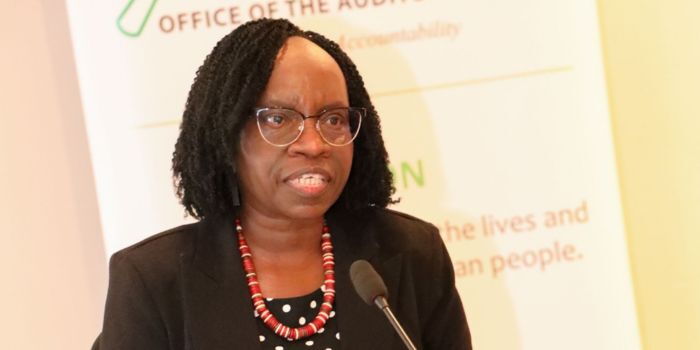
A recent report by Auditor General Nancy Gathungu has shed light on the lack of adherence to Section 7(2) of the National Cohesion and Integration Act, 2008 in many counties across Kenya. This section specifically states that no public establishment should have more than 30 percent of its staff from the same ethnic community. The report focused on the County Governments County Executives for the year 2022-2023, revealing alarming statistics regarding ethnic representation in various counties.
The report highlighted that 11 counties had employed over 90 percent of their staff from a single community. These counties include Nyandarua, Machakos, Nyeri, Kirinyaga, Uasin Gishu, Elgeyo Marakwet, Baringo, Kericho, Bomet, Kakamega, Kisii, and Nyamira. Among these, Baringo County under Governor Benjamin Chesire Cheboi was identified as having the largest number of county employees from a single community.
Furthermore, the Office of the Auditor General found that 97 percent of the workers hired during the period under review were from the dominant ethnic community. Governors such as Wavinya Ndeti (Machakos) and Erick Mutai (Kericho) were specifically noted for employing 96 percent of their staff from their respective communities.
In the case of Nyandarua County, Governor Moses Ndirangu Badilisha was accused of employing 2,264 out of 2,373 employees from his own community. Similarly, in Nyeri County, the audit revealed that 92 percent of the workforce was from the dominant ethnic community. Kirinyaga County, under the leadership of Anne Waiguru, employed 2,255 out of 2,448 staff members from the dominant ethnic community.
The trend of over-representation from a single ethnic community was evident in counties like Uasin Gishu, Elgeyo Marakwet, Bomet, and Nyamira, where 93-97 percent of the workforce was from one community. Governors Hillary Barchok (Bomet), Amos Nyaribo (Nyamira), Fernandes Barasa (Kakamega), and Simba Arati (Kisii) were also implicated in employing a high percentage of their staff from a specific ethnic group.
These findings paint a concerning picture of ethnic favoritism in the hiring practices of county governments, raising questions about the commitment to national cohesion and integration. It is essential for county leaders to adhere to the provisions of the law to promote diversity and inclusivity in the public sector workforce. The Auditor General’s report serves as a reminder of the importance of upholding these principles to build a more united and cohesive society in Kenya.
Read the original article on Kenyans.co.ke