Rédaction Africa Links 24 with Kenyans.co.ke
Published on 2024-04-10 16:22:46
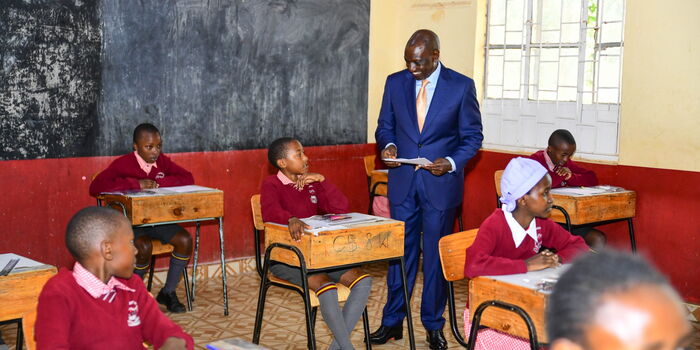
Kenya has emerged as a leader in mainland Sub-Saharan Africa with the highest Human Capital Index (HCI) score, according to the April 2024 Africa Pulse Report by the World Bank. The report highlights a significant achievement in education within the country, as the proportion of households with a primary school-aged child not attending school decreased from 17 percent in 2005 to 5 percent in 2021. This improvement has been attributed to the Government’s efforts to provide free primary education to its citizens.
As a result of this educational progress, Kenya has seen a remarkable growth trajectory, accompanied by a reduction in poverty and inequality. The Government’s commitment to education has played a crucial role in driving these positive outcomes, as reflected in the data showing a decline in the number of children not attending school. Additionally, households in Kenya have shown resilience in responding to economic shocks, such as fluctuating market prices and inflation, due to market-oriented reforms and advancements in pre-market outcomes like education and health.
Despite these advancements, Sub-Saharan Africa still faces challenges, with 60 percent of the 700 million people living in extreme poverty in 2019 residing in the region. The World Bank has identified two countries, the Democratic Republic of Congo and Nigeria, as having a significant concentration of extreme poverty, along with six other countries including Kenya. High levels of inequality have been identified as a barrier to poverty reduction, with nations experiencing greater inequality seeing slower progress in reducing poverty rates.
Looking ahead, Kenya’s economy is poised for growth, with a projected increase of 5.2 percent for the 2025/2026 financial year. This positive outlook is fueled by anticipated investor inflows into the country, paving the way for economic development and prosperity. The Government’s collaboration with international organizations like the World Bank, as evident from interactions between President William Ruto and World Bank officials, signifies a commitment to sustainable growth and poverty alleviation efforts.
In conclusion, Kenya’s remarkable progress in education and economic development sets a positive example for other countries in Sub-Saharan Africa. By prioritizing education and implementing market-oriented reforms, the country has been able to improve human capital outcomes, reduce poverty, and foster economic growth. With continued efforts and collaboration, Kenya is well-positioned to further enhance its position as a regional leader in promoting human capital development and sustainable economic growth.
Read the original article on Kenyans.co.ke


