Rédaction Africa Links 24 with Kenyans.co.ke
Published on 2024-02-28 09:07:51
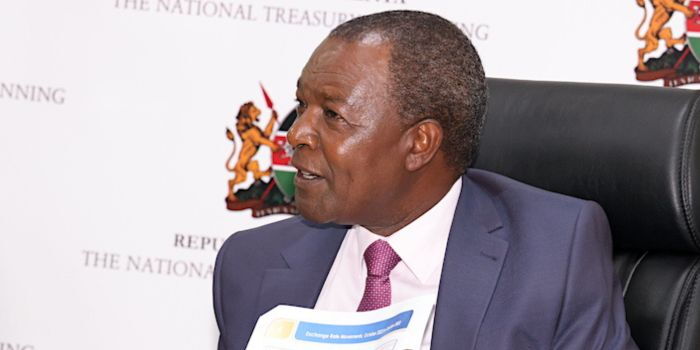
Treasury Cabinet Secretary Njuguna Ndung’u recently provided insights into Kenya’s decision to continue opting for long-term foreign loans, despite the ongoing Eurobond payback process. During his appearance before the Public Debt and Privatization Committee, chaired by Balambala Member of Parliament Abdi Shurie, on February 27, the Cabinet Secretary elaborated on the Medium-Term Debt Management Strategy (MTDS) for the financial year 2024/25.
CS Njuguna emphasized that the choice of long-term borrowing is aimed at minimizing refinancing risks and reducing the Average Time Maturity for domestic and total debt. By using long-tenor Treasury bonds for refinancing domestic debt, Kenya seeks to generate new deficit funding resources while decreasing the proportion of short-term domestic debt.
Despite the borrowing activities, CS Njuguna assured that Kenya will fulfill its current and future debt payment obligations without compromising other budgeted programs. He referenced the latest Debt Sustainability Analysis report, which indicated that public debt remains sustainable, although the distress level is heightened due to the adverse effects of various shocks experienced by the country since 2020.
Furthermore, the Treasury is collaborating with stakeholders such as the Central Bank of Kenya (CBK) and the Capital Market Authority (CMA) to enhance domestic debt reforms. The National Treasury is committed to sustaining the domestic debt, enhancing primary issuance performance, and fostering vibrancy in the secondary market.
CS Njuguna also pledged to reduce the present value of debt as a percentage of GDP from 67.2 percent to 55 percent within five years, in accordance with the recent amendment of the Public Finance Management Act on the debt anchor. These reforms aim to establish a credible yield curve for government securities.
The clarification from CS Njuguna follows concerns raised by the Deputy Auditor General regarding the heavy reliance on foreign loans by the National Treasury to offset public debts. The Deputy Auditor General warned about currency fluctuations following the Ksh219 billion Eurobond payback.
In conclusion, the National Treasury is focused on implementing strategic measures to manage the country’s debt effectively and ensure sustainable economic growth. CS Njuguna’s explanations provide valuable insights into the rationale behind Kenya’s borrowing decisions and the government’s commitment to prudent debt management practices.
Read the original article on Kenyans.co.ke


