Rédaction Africa Links 24 with Africanews
Published on 2024-02-02 19:14:42
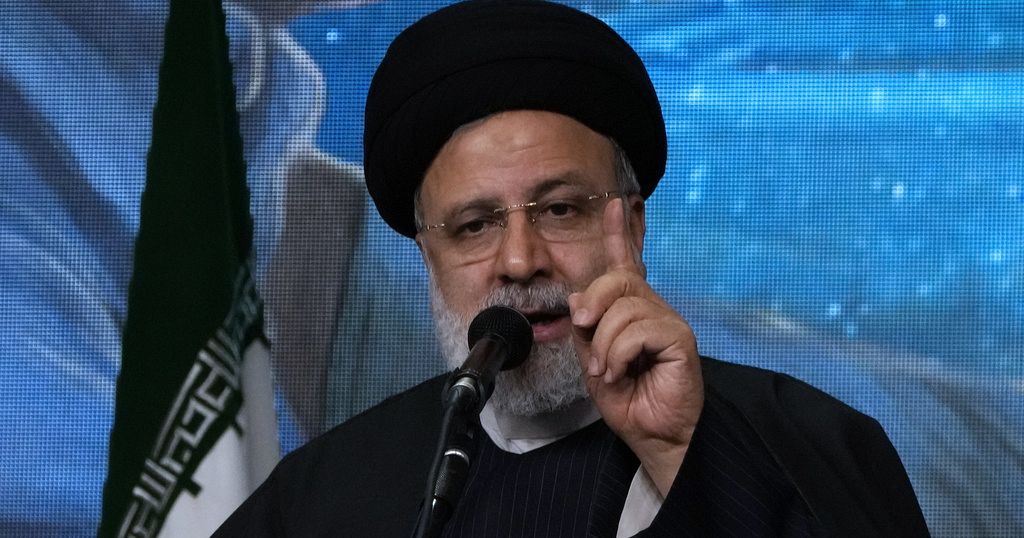
Iranian President Ebrahim Raisi emphasized on Friday (Feb. 02) that Iran has no plans to initiate a war, but it is prepared to deliver a “strong response” to any attempts to “bully” the country.
Raisi’s comments came in the wake of the U.S. government’s announcement that it is considering a response to an attack on its base in Jordan, where three U.S. soldiers were killed. The U.S. government stated that the Islamic Resistance in Iraq, a coalition of Iran-backed militias including Kataib Hezbollah, was responsible for planning and executing the drone attack.
Speaking to a gathering in Minab city, located in the Hormozgan province near the Strait of Hormuz, Raisi expressed Iran’s stance, saying, “(We) will not start a war, but if a country, if a cruel force wants to bully us, the Islamic Republic of Iran will give a strong response.”
While President Biden and White House officials have made it clear that they do not seek a broader conflict with Iran, they have also cautioned that the response to the deadly attack will not be a one-time action.
Raisi pointed out that in the past, when the U.S. sought to engage with Iran, it used threatening language. However, he noted a change in tone, saying, “Now, you don’t hear these words. You even hear from that side: ‘we have no intention of a conflict with the Islamic Republic of Iran’.”
Earlier in the week, the U.S. indicated that its response to the attack in Jordan could potentially involve targeting militia leaders and locations in Syria, Yemen, and Iraq. This development comes after the deaths of the soldiers, which marked the first U.S. casualties attributed to Iran-backed militia groups. These groups have been escalating their attacks on American forces in the region since the outbreak of the Israel-Hamas conflict in October.
In summary, Raisi’s remarks underscore Iran’s stance of not instigating a war while remaining prepared to defend itself against any perceived threats. The escalating tensions between Iran and the U.S., coupled with the potential for retaliatory actions, indicate a delicate and volatile geopolitical landscape in the region. As the situation continues to unfold, international diplomatic efforts and strategic dialogue will be crucial in navigating and resolving these complex challenges.
Read Original article on Africa News