Rédaction Africa Links 24 with Africanews
Published on 2024-01-31 18:08:27
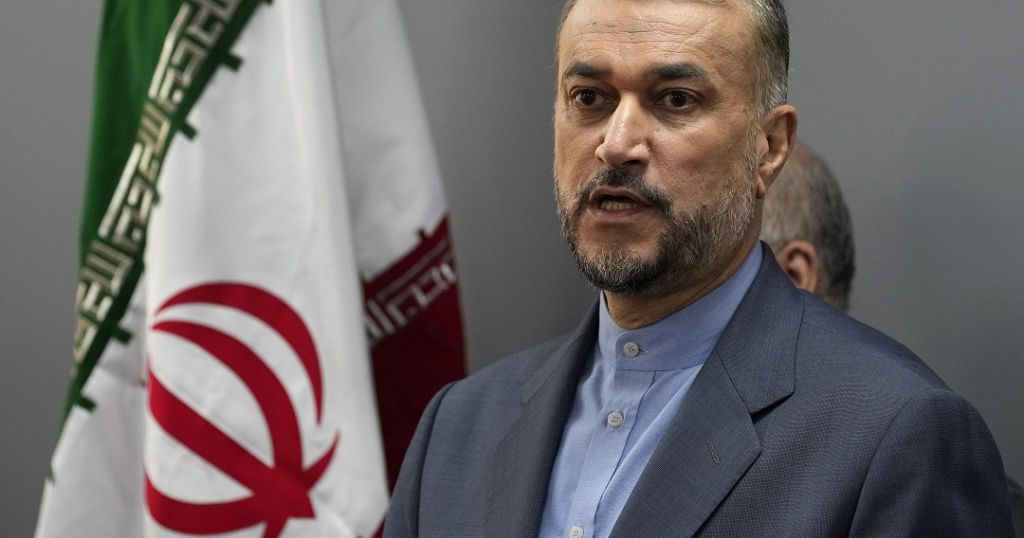
Iran’s foreign minister made a strong statement at a conference on foreign relations in Tehran, emphasizing that war in the Middle East is not the solution to the ongoing conflicts. The minister, Hossein Amirabdollahian, expressed concern over the unilateralism of the West and its unwavering support for the Israeli government, which he described as an “illegitimate, apartheid and occupying regime.” He criticized this support for undermining achievements in multilateralism and international law.
Amirabdollahian reiterated Iran’s stance on the issue, stating that war would only serve to worsen the security situation in the region and harm all parties involved. This statement comes in the midst of continued conflict involving Houthi rebels in Yemen, who claim to be targeting vessels in the Red Sea in an effort to stop Israel’s offensive in Gaza.
The war in the Israeli-Palestinian conflict has also manifested in other fronts, with violence occurring in the West Bank and along the border with Lebanon. The devastating impact of the Israeli military offensive in Gaza has resulted in the deaths of over 26,000 Palestinians and the destruction of graveyards, schools, places of worship, and archaeological sites.
The ongoing conflict in the Middle East has highlighted the need for a diplomatic solution and a collective effort to address the root causes of the violence. Amirabdollahian’s remarks underscore the importance of multilateralism and international law in resolving the complex issues facing the region.
Furthermore, the conference in Tehran served as a platform for discussing the role of foreign relations in promoting peace and stability in the Middle East. The need for a coordinated and inclusive approach to addressing the underlying grievances and tensions was emphasized by the attendees, who stressed the importance of dialogue and diplomacy in achieving long-lasting peace.
In addition to the immediate humanitarian crisis caused by the conflict, there are broader geopolitical implications that need to be considered. The stability of the region and its impact on global security cannot be understated, making the resolution of the Middle East conflicts a global imperative.
The remarks made by Iran’s foreign minister reflect a broader call for a shift away from unilateral actions and towards a collaborative, diplomatic approach to resolving the conflicts in the Middle East. The emphasis on the importance of multilateralism and international law is a reminder of the need for collective action and cooperation in addressing the complex challenges facing the region. It is clear that there is no military solution to the conflicts in the Middle East, and a concerted effort towards dialogue and diplomacy is essential for the region’s stability and the well-being of its people.
Read Original article on Africa News