Rédaction Africa Links 24 with Mohamed Elkorri
Published on 2024-04-10 19:55:00
Indeed, Kenya is facing a crisis of fertilizer distribution in its territory, which is causing distress among farmers due to the emergence of fake fertilizer dealers. This situation has forced the government to launch a wide repression campaign.
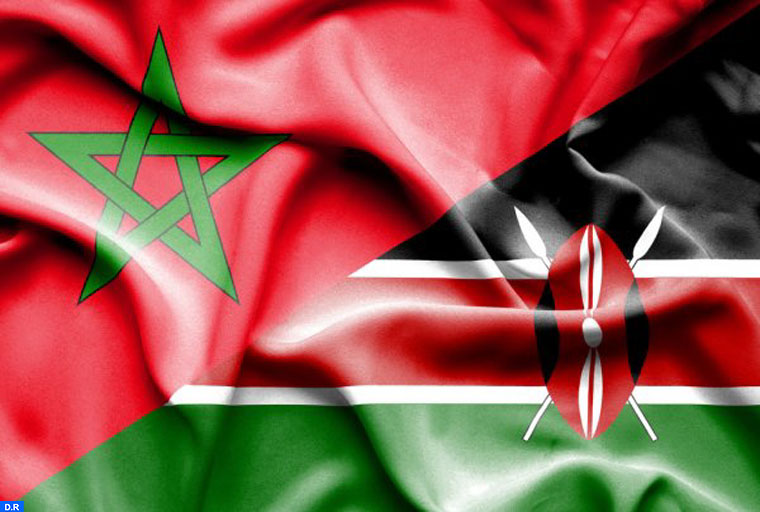
To address this crisis, President William Ruto plans to visit Morocco in the coming weeks to discuss the creation of a fertilizer industry in his country. According to information from this Sub-Saharan state, the official agreement for the creation of a fertilizer company in Kenya is expected to be announced during President Ruto’s visit to Rabat.
The same sources also state that the Cabinet Secretary for Agriculture, Mithika Linturi, is currently working with OCP to decide on the future of this establishment. This challenging situation will benefit Morocco, which will help this country facing a fertilizer shortage and putting its food security at risk.
As evidenced by the appointment of the Kenyan Ambassador to Rabat, Jessica Muthoni Gakinya, earlier this week in her country’s parliament, where she was subjected to scrutiny by the nation’s representatives before her official appointment.
Mrs. Gakinya, who works in Safaricom’s commercial development department, told the parliamentary commission that she is ready to promote Kenya as the best destination for Moroccan investments. The future Kenyan diplomat in Rabat also stated that the first step would be to encourage investors from the Kingdom to establish a fertilizer plant in Kenya, to facilitate access by farmers in her country to essential agricultural products.
Kenya is showing interest in Morocco
The opening of an Embassy in Morocco means that Kenya will elevate its diplomatic presence in the country from an honorary consulate in Casablanca, led by Ali Bajaber, a Kenyan national, to an embassy with a resident Ambassador.
Gakinya, who previously worked at the Kenya Fisheries Board, recounted her childhood in a lesser-known village in Embu County, where she grew up in a family involved in both teaching and agriculture.
She understands her country’s needs well and realizes her duty in her potential diplomatic mission to Morocco. When asked by Baringo central legislator Joshua Kandie about strategies to balance trade volumes, Gakinya replied, “There is significant potential for Kenya in Morocco”.
A look at the Kenyan market in 2019
Kenya imported mineral or chemical fertilizers such as potassium chloride at a total cost of 3.9 billion dollars, with a quantity of 10.52 million kg. Its suppliers were Jordan ($2 million for 5,500,000 kg), Germany ($915,000 for 2,223,400 kg), Russia ($362,000 for 1,008,000 kg), Switzerland ($207,000 for 550,000 kg), and Lithuania ($185,000 for 486,000 kg).
In the current context, OCP plays a key role in the global fertilizer crisis affecting food security. For the past five years, the number of people suffering from hunger has been increasing, especially in Africa. A context marked by climate change, the war in Ukraine, and local conflicts that have undermined previous progress towards achieving the United Nations’ second Sustainable Development Goal (SDG): eliminating hunger, ensuring food security, improving nutrition, and promoting sustainable agriculture.
Meanwhile, the African continent is experiencing significant population growth. Ensuring food security for its population is therefore a challenge, where the agricultural sector has a crucial role to play, especially in increasing its production sustainably.
In this context, Morocco has become a major player in food security worldwide. This major undeniable role boosts its presence on the international stage, making its fertilizers a diplomatic card that the Kingdom can rely on.
Read the original article(French) on L’Opinion