Rédaction Africa Links 24 with Ghanaian Times
Published on 2024-02-21 06:17:44
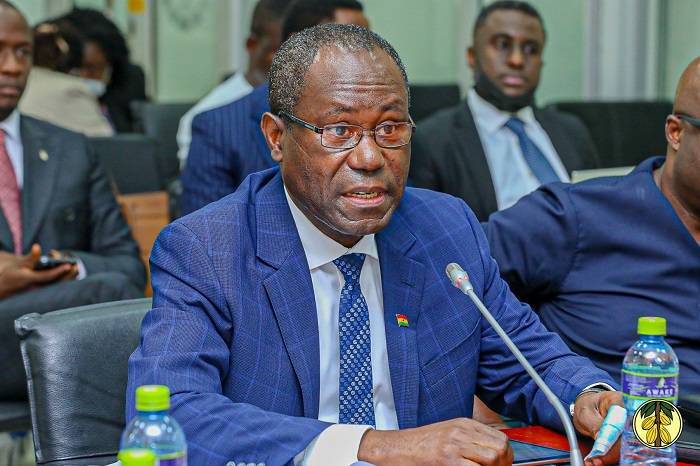
Ghana suffered a significant loss of 150,000 tonnes of cocoa beans in the last year due to the activities of smuggling, according to Joseph Boahen Aidoo, the Chief Executive of Ghana Cocoa Board (COCOBOD). To tackle this issue, COCOBOD has established a task force, including personnel from the National Security, to carry out regular operations to arrest the perpetrators and recover the stolen product.
A particular operation in 2023 in an unidentified community in the Volta Region led to the tragic deaths of two young individuals. Mr. Aidoo explained to the Public Accounts Committee (PAC) of Parliament that the low producer price variations in Ghana is a significant reason for the ongoing smuggling of cocoa to neighboring countries.
He emphasized that the root of the smuggling problem lies in the price difference between Ghana and Côte d’Ivoire. Mr. Aidoo stated that if the price variations can be addressed, there will be no motivation for people to smuggle their cocoa to other countries. He went on to clarify that Ghana engages in forward-sales of cocoa, allowing the Board to sell off 60 to 65 percent of cocoa produce as syndication at a significantly lower fee before it is harvested. In contrast, La Côte d’Ivoire sells on the spot, which gives farmers the opportunity to demand higher sales for their produce.
Mr. Aidoo announced that Ghana has developed a new producer price, which will be implemented in the new crop season to guarantee higher prices for cocoa beans. However, aside from smuggling, he pointed out that Ghana’s declining cocoa production is also due to the outbreak of El Niño disease and the activities of illegal mining in most cocoa-growing areas of the country.
This is not unique to Ghana, as Côte d’Ivoire, the country’s main competitor in cocoa production, also lost about 600,000 tonnes of cocoa to the disease. Consequently, COCOBOD has set up a desk to address illegal mining by engaging farmers and stakeholders, and has cut down cocoa trees affected by the disease through a rehabilitation project since 2020.
Looking at the numbers, Mr. Aidoo mentioned that cocoa output for the 2020/2021 season was 1,047,000 tonnes, the highest recorded in recent years. However, the impact of illicit activities, such as smuggling, the outbreak of El Niño disease, and illegal mining, has led to a forecasted drop to 750,000 tonnes for the 2022/2023 harvest, and between 650,000 and 700,000 tonnes for the 2023/2024 season.
Despite these challenges, Mr. Aidoo is optimistic that the rehabilitation of cocoa and other policies implemented by COCOBOD will result in a significant increase in cocoa production within the next four or five years. Addressing queries about a recent approval for a company to import cocoa beans, Mr. Aidoo explained that the policy of cocoa importation by foreign companies has been in place for a long time, enabling companies to obtain cocoa from various sources for blending and recipe preparation.
In conclusion, it is evident that Ghana is facing multiple challenges in its cocoa industry, leading to significant losses in production. However, with continued efforts and initiatives by COCOBOD, there is hope for a revival and growth in cocoa production in the coming years.
Read the original article on Ghanaian Times