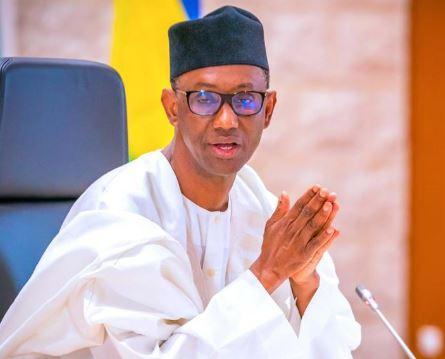
![Gabon: [Rethinking Gabonese Diplomacy: From Representational Diplomacy to Development Diplomacy]](https://www.gabonreview.com/wp-content/uploads/2024/02/Diplomatie_GabonReview.jpg "Gabon: [Rethinking Gabonese Diplomacy: From Representational Diplomacy to Development Diplomacy]")
Rédaction Africa Links 24 with La Rédaction
Published on 2024-02-21 10:45:23
Gabonese diplomacy traditionally focuses on representing the country abroad, without necessarily reaping concrete benefits. However, as emphasized by Auguste Ngomo, former ambassador of the African Union in Southern Africa, to SADC and to COMESA, international organizations are sources of opportunities. It is time for Gabon to evolve its diplomacy to leverage more economic benefits and development. The author proposes to strengthen the presence of Gabonese professionals in these institutions, to expand the diplomatic network towards emerging countries, and to establish partnerships between national and foreign private sectors. According to him, this offensive strategy would stimulate investments, technology transfers, and job creation in Gabon.
In the collective imagination of the Gabonese people, the function of Gabonese diplomacy is to represent Gabon in other countries or in regional, continental, or international institutions. This presence abroad aims not only to represent the country and protect its nationals present in those countries, but also to safeguard Gabon’s interests. The most visible element of this representation is the ambassador or the consul. This vision of diplomacy can be considered as classic. However, over time, diplomacy has evolved considerably… but not in Gabon. While our country is undergoing significant reform under the impetus of the Committee for the Transition and Restoration of Institutions, it is time for our diplomacy to also undergo an aggiornamento and contribute to the common effort of reconstruction.
Since gaining independence in 1960, Gabon has firmly adhered to the classic model of representation diplomacy. Currently, Gabon is represented in 35 countries: 16 in Africa, 9 in Europe, 6 in Asia, 3 in the Americas, and 1 in Oceania. The country is also a member of several regional (CEEAC, CEMAC…), continental (African Union, African Development Bank, Afreximbank…), or global (United Nations, WHO, WTO, OPEC, Francophonie…) institutions. For some of these organizations, Gabon is even a founding member. It is important to note that being a member of these different organizations entails significant recurring financial costs that weigh on the state budget and therefore the standard of living of the Gabonese people (contributions and other representation expenses). Every year, Gabon will spend billions of CFA francs for these representations, but what is the return on investment? Few people can answer this fundamental question. Because when thinking in terms of investment, the return on investment must be measured. In terms of benefits for Gabon, some will talk about the diplomatic influence of the country, others about the importance and strength of our diplomatic networks. However, few people will talk about job creation in Gabon, industrialization of the country, attraction of FDI (Foreign Direct Investment), hosting of regional, continental or international institutions… This kind of return on investment is of little interest to classic diplomacy. However, such outcomes would be very beneficial for Gabon and its population, whether it is job creation, unemployment reduction, or wealth creation.
To evolve Gabonese diplomacy from classic representation diplomacy to diplomacy in the service of development, it is necessary to know exactly what is happening in these international organizations. The perception that the Gabonese have of pan-African or international institutions is sometimes negative. For the Gabonese, these institutions are either useless (because they do not bring any concrete results) or harmful (because they can impose sanctions…). While some criticisms are valid, it is equally important to look at these institutions for what they really are: meeting centers where credits, subsidies, projects, and programs worth billions of dollars are conceived and managed. And every year, this money flows to countries that know how to position themselves and be attractive. They are also places where new institutions, agencies, national or regional offices are created, which will be sources of income, foreign exchange inflow, job creation, and catalysts for certain economic sectors: housing, tourism, hospitality… for countries that will decide to host them. Some African countries such as Ethiopia, Kenya, Rwanda, South Africa or Cameroon have understood these issues well. Systematically, their diplomats, whom I have regularly and for a long time been in contact with through my professional practice, fight to obtain the necessary returns on investment for their countries. These places are also networking, influence, and information-sharing platforms.
How could Gabon really derive tangible benefits from its presence abroad and all the money it invests at a loss? It is remarkable that out of the 35 countries where Gabon is represented, 60% are developing countries and 40% are developed countries. Barely 5% are emerging countries! Classic representation diplomacy monopolizes our diplomatic strategy and prevents us from reaping the fruits of our diplomatic investments. It is urgent for us to unapologetically ask ourselves how to use these international institutions to positively impact the development of our country through technology transfer, the establishment of industrial enterprises in Gabon, job creation, and national wealth creation. To derive financial, commercial, and economic benefits from our national diplomacy, we must add a new strategic axis to our current diplomacy. I propose to build this new strategic axis around the following pillars: Strengthening our presence in international organizations (aiming for top positions) Opening and/or strengthening diplomatic representations in emerging countries Development of business diplomacy (especially relations with foreign and Gabonese private sectors)
Strengthening our presence in international organizations. While their political situations present some similarities, why is Gabon currently under sanctions when Chad is not? Why this double standard? The presence and influence of senior Chadian officials within international institutions are undoubtedly not unrelated. To install and then reinforce this pillar, an unapologetic strategy of systematic placement of Gabonese professionals in high-level positions within different strategic institutions must be developed.
In order to influence policies or funding in favor of Gabon and ensure a regular flow of financial resources, programs, and projects, Gabon must have succeeded in placing numerous officials and senior professionals at high decision-making levels within these institutions. It is problematic not to have a senior official at the African Union, the United Nations, the African Development Bank, Afreximbank, the Francophonie… To exert influence, one must already be present in these institutions. In 2025 and 2026, elections will be held at the African Union and the African Development Bank. With 2 Commissioner positions reserved for Central Africa at the African Union, Gabon will have to position itself and develop an effective strategy to be elected. If, due to sanctions, the path is blocked, then our support for other candidates cannot be without reciprocation: Gabon must position itself in strategic positions such as chief of staff, advisors, ambassadors, etc…
Opening and/or strengthening diplomatic representations in emerging countries. In front of us, the economic and financial world is shifting from West to East. From the West to Asia. The first trading partner of Gabon is now Asia, although this continent represents only 17% of our diplomatic presence compared to 37% for the West and 46% for Africa. If we wish to take advantage of the economic, financial, and technological developments of the new world, it is urgent to develop and strengthen our presence in this new world. If we wish to be more opportunist and strategic, we should establish ourselves in emerging countries in the new world and take advantage of the economic benefits that will follow.
Developing relations with foreign and Gabonese private sectors. For this development diplomacy strategy to be truly effective, it must be based on the existence of a policy for the protection and…
Read the original article(French) on Gabon Review