Rédaction Africa Links 24 with Roxanne Bouenguidi
Published on 2024-02-16 00:11:09
Coming from practices of the past, the praise and calls for the candidacy of Brice Clotaire Oligui Nguéma resonate as an invitation to reproduce the mistakes of the Gabonese Democratic Party (PDG).
“Bad habits die hard,” says an adage. Like Omar Bongo Ondimba and Ali Bongo in the past, Brice Clotaire Oligui Nguéma is celebrated with emphasis by those accustomed to turnarounds and changes of heart. For 42 years, the founder of the Gabonese Democratic Party (PDG) was presented as an infallible man, “the weapon of the present and the future,” “our asset for the third millennium.” During the last 14 years, his successor was described as the guarantee of a “future in confidence” or an “emerging Gabon on the horizon 2025,” as a visionary, a misunderstood being but ahead of his time. We know the rest: we have seen people retract their beliefs to profess the opposite with the same aplomb. Yet, since the takeover of power by the Committee for the transition and restoration of institutions (CTRI), the same praises come back, triggering anger and mockery.
Although they may seem shocking or backward, these statements are neither a result of chance nor mere verbal slip-ups. They correspond to a culture and practice, inherited from the one-party system and maintained thereafter. For a good part of the national political class, public life is first and foremost a matter of personal interests. Positions and viewpoints change according to the circumstances and in line with the balance of power, the goal being to please in order not to move away from decision-making circles. Even if it means leading him astray, pushing him to fault, or diverting him from his mission, the leader must be praised. One must be the first to suggest acts that aim not at the general interest, but at his maintenance in power. We saw this with Gervais Oniane calling for the candidacy of Brice Clotaire Oligui Nguéma without caring about the opinion of his party or the impact of this action on the credibility of the Transition president. In another way, we saw it again with Hugues Mbadinga Madiya presenting an implacable indictment against Ali Bongo, his former mentor.
Certainly, politics is not a selfless activity. It is also a matter of interests. Certainly, positions should not be fixed. They can adapt to the context. But never have individualism and opportunism led to the implementation of common projects. Nowhere have they facilitated the conception of a collective plan. Neither the “refounding of the State” nor the pursuit of “major reforms” nor the “strengthening of the independence of the justice and the fight against impunity” are possible in an environment where every man for himself prevails, where the quest for prebends and political calculations outweigh loyalty, honesty, and selflessness. The “promotion and protection of human rights and public freedoms” or the “culture of good governance and responsible citizenship”? Such objectives cannot be achieved where duplicity, flattery, and renunciation guide action.
If it should prioritize “merit, a sense of responsibility, and accountability,” the Transition cannot accommodate flattery or untimely statements, little in line with the concerns of the moment. If it must promote “fraternity, tolerance, and inclusion,” it cannot hear speeches close to apostasy. Yet, for some time now, many personalities have been heading in this direction, as if they want to incite the CTRI to repeat the mistakes of the PDG. As if the fall of Ali Bongo has taught them nothing and does not say anything about certain methods. Certainly, in view of the upcoming presidential election, everyone is free to make their choice. But before calling for the candidacy of anyone, one must remember the primary mission of the Transition: the restoration of institutions. Instead of making multiple pleas, it is better to observe a period of widowhood. Especially when one has benefited from the fallen regime.
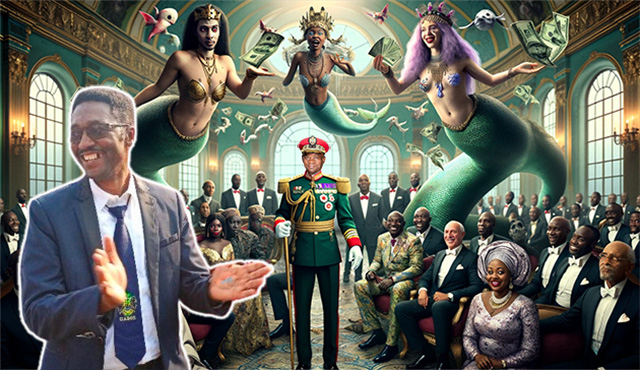
To prevent the Transition from straying from its goal, it is necessary to thwart opportunists of all stripes. By their actions, some protagonists give the impression of working towards its entrenchment, hoping to benefit personally. Others seem willing to lead the country towards a new controversial election, hoping to play leading roles within the state apparatus afterwards. If we want to ward off these two risks, we must show ourselves deaf to the calls of the sirens. If we want to lift this mortgage, we must denounce the practices of the past. For the good of all and each. For the success of the Transition.
Read the original article(French) on Gabon News