Rédaction Africa Links 24 with La Rédaction
Published on 2024-03-17 22:52:26
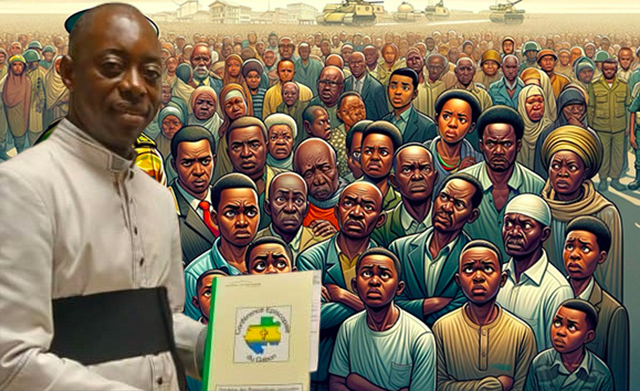
Two weeks before the inclusive national dialogue in Gabon, excitement is at its peak. Political parties, civil society, everyone is questioning the authorities’ decisions, sowing distrust. In the face of these uncertainties, the silence of Mgr Iba-Ba, the president of the talks, is increasingly criticized. As political calculations take precedence, an address from the Archbishop is expected to calm tensions around this crucial meeting.
For several weeks now, Gabonese society as a whole (political parties, elders and dignitaries, civil society, unions, and various groups) has been in a state of excitement. Everyone is coming out, at a frenetic pace, to take a stand on the latest developments regarding the organization of the inclusive national dialogue that the CTRI and the government intend to open on April 2nd.
From all these statements, it seems that there is, in general opinion, a challenge to the provisions recommended by the transitional authorities in relation to this momentous event in Gabon’s history.
In unison, as already mentioned by GabonReview in two successive articles (“Inclusive National Dialogue: Lockdown Whispers” and “Inclusive National Dialogue: Farce or Genuine Commitment”), decree n° 0115/PT-PR/MI of March 8, 2024 setting the outlines for the upcoming sessions, is much more divisive than it is supported by the nation’s vital forces. It raises more questions than it provides answers. Timelines, agendas, terms of reference, quotas and participation criteria, nature and composition of the preparatory committee, etc., the government and the CTRI are attacked on all fronts. And that’s an understatement.
Two weeks to the day before the opening of the session, the dialogue of the deaf and the growing cacophony raise fears of heated confrontations, as well as instill a climate of mistrust and distrust among political actors and civil society towards the rulers.
Expected and demanded speech from the president of the talks
According to many observers, the transitional authorities would benefit from creating channels of listening and dialogue with the nation’s vital forces to remove obstacles that could jeopardize the smooth holding of the future inclusive national dialogue.
In truth, public opinion is looking more towards the Metropolitan Archbishop of Libreville, whose apparent silence and inaction raise many questions and spark a lot of discussion in salons, cafes, and other places.
Mgr Jean-Patrick Iba-Ba, whose appointment as president of the talks for the future dialogue has never been contested, should take up the mantle to preach the good word and seek points of convergence with key players in Gabonese society. It is evident that the current government, now pressed for time, has procrastinated and “dilly-dallied” too much on certain preliminary operations, notably the collection of contributions over a period of more than four months.
Political calculations and an eye on the presidential election
All these hesitations and delays would, according to well-informed observers of the Gabonese political scene, come from the positioning battle that certain leading figures are waging behind the scenes, who have not given up on their dreams of ascending to the highest office. However, in the current state of affairs and at the end of the transitional charter, all current leaders, with the notable exception of the president of the CTRI, are not eligible for the August 2025 presidential election. This provision largely explains and helps understand the maneuvers and intrigues observed around the stakes of the future inclusive national dialogue.
Mgr Jean-Patrick Iba-Ba knows this, and the delegates will have to make a clear decision on this issue that sets all political networks and offices in motion. Logically, one cannot be both judge and party. For fair, transparent, and equitable elections, surely the organizers (transitional authorities), without exception, should not be allowed to run for the upcoming presidential election.
In any case, it would be preferable for the dialogue to take the form of a sovereign national conference, so that the resulting actions are enforceable, binding, and opposable to all.
The wise men and dignitaries of Gabon have legitimately expressed their concern about this. “Let us not be content to look at our finger, where the wise man shows the way to follow.”
– Amour Freez Kendrick
Read the original article(French) on Gabon Review