Rédaction Africa Links 24 with Loic Ntoutoume
Published on 2024-03-10 15:26:35
Just a few weeks before the long-awaited inclusive national dialogue, the conditions of preparation and organization are drawing sharp criticism from political actors and civil society. “A lack of transparency and absence of security guarantees” are calling into question the legitimacy and effectiveness of this crucial event for the future of Gabon.
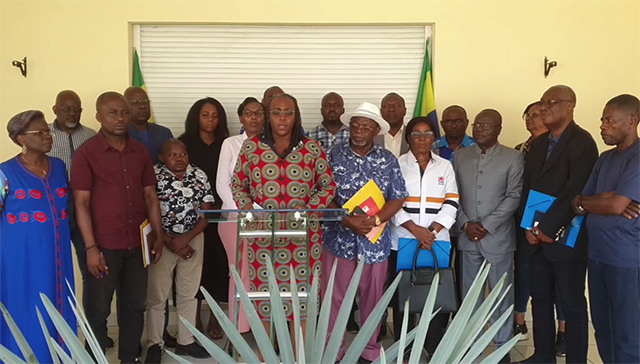
Just a few weeks before the long-awaited inclusive national dialogue, the conditions of preparation and organization are drawing sharp criticism from political actors and civil society. © GabonReview
As Gabon prepares to embark on its inclusive national dialogue meant to bring together all the forces of the nation to discuss the major issues of the country’s reconstruction, the preliminary conditions for this event raise serious questions about its legitimacy and effectiveness. On March 9, 2024, at the headquarters of the React party, several political parties including Gabon nouveau, Union nationale (UN), Parti du réveil citoyen (PRC), Mouvement de redressement national (Morena), Alliance démocratique et républicaine (Adere), Pour le changement (PLC), Parti des républicains indépendants (Pari) and civil society organizations including the Consortium de la société civile pour la transparence électorale et la démocratie (Coted), Copil Citoyen and Dynamique unitaire expressed their deep dissatisfaction with the current organization scheme of this meeting.
Among the main concerns raised, the glaring lack of transparency in the preparations for this major event is at the heart of the criticism. “While the nation’s forces are awaiting the outlines of this dialogue, i.e.: the type, format, participation criteria, legal scope of resolutions, participants are surprised to see a resurrection, or even a rehabilitation of the Gabonese Democratic Party (PDG) whose role and responsibility in the calamitous and chaotic management of the country that justified the liberating intervention by defense and security forces,” denounced the spokesperson of the collective, who is also the executive president of Adere, Armelle Doumalewa-Yembi Yembi.
Three weeks before April, the presumed start date of the discussions, this opacity is seen by these actors as a confiscation of the organization by government authorities, questioning the real willingness to foster an open and inclusive dialogue.
Furthermore, for these actors, the controversial role of the PDG in the country’s past governance has sparked strong reactions. For many, including actors who contributed to the past ills without acknowledging their responsibilities would not lead to a truly constructive dialogue. “The Gabonese people categorically refuse to dialogue with those they consider their past executioners, without evidence of repentance or contrition,” emphasized the spokesperson of the collective.
Faced with these seemingly legitimate concerns, the participants are laying down essential prerequisites to ensure the integrity and relevance of this national dialogue. They demand the establishment of an independent preparatory body, excluding any government influence, as well as security guarantees for all participants before, during, and after the Dialogue. They also call for the live broadcasting of the proceedings to ensure transparency and representativeness, as well as the freedom for each political party and civil society organization to designate its representatives.
Finally, the participants demand the convening of a meeting to draft a Code of Honor and call for a selfless patriotic participation, rejecting any payment of per diems or other forms of compensation, in order to preserve the integrity of this crucial event for the future of Gabon. “The challenge of rebuilding a new Gabon calls for a selfless patriotic participation without mercantilism and opportunism. The higher interest of the Nation requires a consensus to avoid the mistakes of the past,” concluded Armelle Doumalewa, also known as Yembi Yembi.
Similar Articles
Read the original article(French) on Gabon Review