Rédaction Africa Links 24 with Roxanne Bouenguidi
Published on 2024-03-21 17:56:35
Following the publication of decree No. 0115/PT-MRI of March 8, 2024, disappointment and resignation are beginning to be seen on many faces or to transpire in some statements.
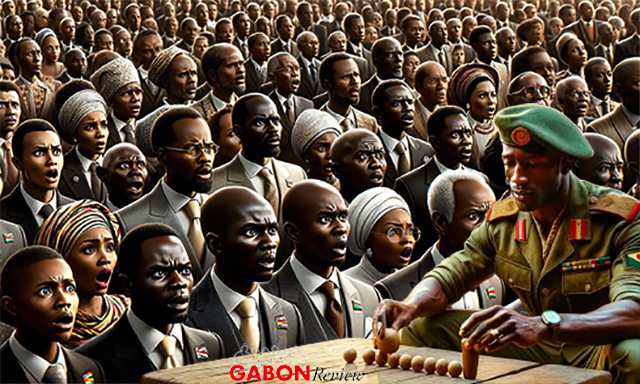
Unanimously considered a “decisive step in the ongoing transition,” the inclusive national dialogue could unfortunately end up being a damp squib: society may not obtain anything substantial from this meeting. This is the fear arising from the organizers’ refusal to hear the reservations expressed since the publication of decree No. 0115/PT-MRI of March 8, 2024. By excluding political actors from the board, this text tends to act as if the events of August 30 are not the result of a heretical political governance characterized by electoral rigging and all forms of fraud. By reserving a place for each legally recognized political party, it empties these proceedings of their political dimension, transforming them into a kind of citizen summit. By subordinating the publication of the list of participants to the issuance of a decree, it deprives social forces of the right to designate their representatives, opening the way to a suspicion that is both legitimate and widespread.
At the end of decree No. 0115/PT-MRI of March 8, 2024, the Committee for Transition and the Restoration of Institutions (CTRI) appropriates 64 places, the government 10, the Parliament 10, the Economic, Social and Environmental Council (CESE) 05, and the ministerial departments 30. In total, 199 participants are already aligned with the CTRI’s theses. Taking into account the presence of numerous officers or generals leading special delegations, this number goes well beyond. Announced as “political” and “inclusive,” will the Dialogue be so in reality? Will it be able to delve into the causes and sub-causes of this “irresponsible, unpredictable governance” denounced last August 30? All doubts are permitted. For now, Article 11 of the text restricts the possibilities by obliging participants to conform to the terms of the Transition Charter.
Obviously, this grand meeting will not lead to frank and sincere exchanges, as some questions are already considered taboo. This includes the possibility for Transition actors to compete in the next presidential election. Even if no one says it publicly, this restriction is very detrimental, as the Transition president is the only one exempt. As if the purpose of this Dialogue should not be acknowledged, decree No. 0115/PT-MRI of March 8, 2024 says nothing on this matter, leaving room for all interpretations: some now see it as an opportunity to formalize an almost unique candidacy, while others see it as an opportunity to extend the Transition. At the end of the day, speculations focus on everything except the essential: “the refoundation of the state in order to build strong, credible, and legitimate institutions guaranteeing a state of law, a transparent and inclusive democratic process, peaceful and sustainable.”
Against a widely held opinion about transitional justice, the organizers of the future inclusive national dialogue have not said a word. By doing so, they have jeopardized the chances of reaching a consensus version of certain traumatic events in our recent history. Furthermore, they have laid the groundwork for legal and institutional reforms that are not always suitable for the context. Can national reconciliation be achieved without truth, justice, and reparations? One cannot answer in the affirmative. For all these reasons, disappointment and resignation are beginning to be seen on many faces or to transpire in some statements.
Believing they have done the most difficult by ensuring the support of a good portion of the political class, the organizers of the inclusive national dialogue reveal their cards. Evidently, their entire strategy aims at staying in power, even if it means organizing a shell game. However, this ambition has never been a source of bold, profound, and democratic reforms. Everywhere, it has led to minor reforms initiated on the sidelines. Was this the initial commitment? Is it in line with the spirit of August 30? Each person can interpret it as they understand.
Similar articles: **No similar articles listed**
(Note: The image in the original article has not been included in this translated version)
Read the original article(French) on Gabon Review